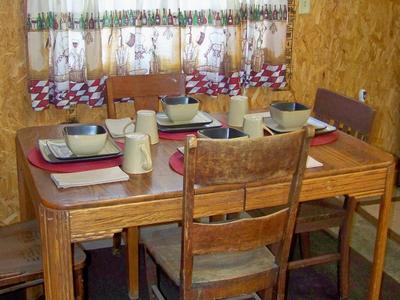
Centerpiece

Brilliant colored fantasies

Dreams of ash and rust

Special, tender touches

Calculating lust

Sunny, happy memories

And abandoned plans

Butterflies on gilded wings

Useless broken fans

Such things life is made of;

What else can we do?

In the fabric of my fate

The

centerpiece

is you.

© Alfred W. Smith Jr.

Choose Them Wisely, Guard Them Well (continued)

“Dr.Chen?

She was startled out of her reverie.

I have to stay focused. Caroline is the mission now.

She did, however, have some questions for the General.

“Yes, Lieutenant.”

“I just heard that…”

“Yes, it’s true.”

“Do you–?”

“No, no. There was nothing to be done for it.”

She looked around, then back at Harris. “For any of it, really.”

He nodded. “Are you all packed?”

“I’m ready to go, yes.”

“Follow me, please. I know you know the way, but there are clearances that  you don’t have. They seem pointless, now, I know, but everyone seems determined to embrace the comfortable until the end.”

“I understand.”

She followed him.

************************

General Williams was waiting at the dock.

“Teri, I’m so sorry.”

“Thank you, General.” She straightened her shoulders. “I do have a question: if I’d requested my family be evacuated and brought here, was there anything that could have been done?”

Williams didn’t hesitate, and his own eyes clouded a bit as he shook his head.

“Nothing is going to be done for any of us. I won’t see my family again. My grandkids…”

“Oh.” She looked down, and her voice sounded small and far away. Of course others have family that are not going to see them before they go; at least you got to see yours, and you know what happened, and when, and why. There are so many others who will never have those questions answered.

He continued. “And to what end, doctor? You said it yourself, destruction is imminent. Make peace with it, Teri. With yourself, too. We’re going to need you now more than ever.

She lifted her eyes to his. “I will complete the mission, sir.”

Williams smiled. “Unfortunately, we’ll never see the outcome, but I have every faith in you.”

A faint tremor vibrated the floor beneath them.

Voices were raised, and the mood instantly grew more somber and intense, and not a little fearful.

“Time to launch, sir.” said Harris.

“Thank you, captain obvious.”

They all laughed.

“Teri?” Williams extended his arm expansively, inviting her to go aboard, as if he were the captain of a cruise ship, and not the doomed general of yet another science facility that wandered too far from its walls.

“Kyro’s already strapped in,” Harris said, extending his hand. “It’s been an honor, Teri.”

She watched him closely, but his face betrayed nothing but fondness, and a trace of sadness they would no longer be working together. Beyond that, there was nothing she could decipher. Either Kyro really wasn’t his son, or he was gifted at deceiving.

She took the proffered hand. “Same here, Ken.”

She released his hand, and turned to board. Glancing over at Kyro, his head had lolled to the side, so he was already asleep. Good, she didn’t feel like engaging an assassin. She looked out at the black, weightless expanse of dotted with white fire.

*****************************

No family. No longer a wife. No longer a mother. Just these children now. And Caroline, who will cause no end of grief on the new colony.

If it weren’t for her, I would’ve been able to join them,  see them, hold them…but she has given me a life devoid of meaning. With no one to share with, to spend time off with, to do anything with; I’m going alone.

Her evil intentions mean nothing to me, but because of her, I’m forced to go on, when all I want to do is die.

So I will stop her. I will make her pay for what she’s done to me; every day I stay alive, I will make her pay. Every memory, she will pay.

The stars blurred, and she realized she was crying. This time, she didn’t bother fighting it.

“….three….two….one….we are launched. All automated systems are functioning normally.”

“Safe journey, Dr. Chen.”

“Goodbye.”

Her voice came out more than a whisper, less than a sob; it was not just meant for her colleagues. It was to everything that had made her up to this moment.  She wasn’t just on her way to a new colony, but on her way to becoming something else.

Chapter 3:

The tremors were becoming more violent. Williams and Harris could’ve enlisted the help of others, but they’d either left or were trying to find a place to exit, though where they’d go if the ground was crumbling, Harris had no idea.

“The Naissance is ready, General.”

“Thanks, Harris. Caroline?”

“She’s in her pod.”

“Is there any way to extract her covertly?”

Harris gave him a grim smile. “She changed all the protocols, sir. You said it yourself, she’s ten steps ahead of us.”

“What I want to know is when did she have time to do all this, and if someone helped her. Have security run video from the last thirty days on all the bay doors.”

“Yes, sir.”

“If Teri can’t get to her, maybe one of the others will do us all a favor and stab her in the back.”

Harris looked away.

“I’m sorry, Harris. That was out of line.”

“What was, sir?”

Williams smiled.

Another tremor boomed, and the building swayed like an empty swing in a storm wind.

Both men lost their footing, and when the tremor subsided, they pushed themselves up along the walls behind them, the portion that remained intact. As they were in the northernmost station, it could only mean that now the entire planet was all but consumed from within.

No one knew if it would be another hour, or another day, but they all knew they were living on borrowed time now.

“General?”

Williams had gained his feet, and helped Harris up the rest of the way.

“I’m listening.”

“We still control the launch, sir. We don’t have to send them.”

“I’ve thought of that, but to kill all for the sake of one…as I said, they may do it for us, and we’ve already programmed them as well.”

“Just an option, sir. Still on the table as long as we don’t–”

An alarm blared through the station, but there was no tremor.

“What in the hell–?” WIlliams blustered.

“Naissance has pre-launched. Repeat, repeat, Naissance has pre-launched!”

Williams and Harris found the nearest com station; the young attendant was punching keys but coming up empty.

“Onscreen, young lady!”

“Trying, sir! Please give me a minute…”

Harris put up a restraining hand, and Williams backed away.

The screen flickered, went out, flickered again, and flared to life, stabilizing.

The ship came into view, and the shot of its interior showed the floor was empty.

They watched as the ship sailed over the station below, the shadow blocking out the starlight glittering like strewn gems spilled in ink.across the top,

“Retractors?”

“Offline, sir. Damaged.”

“We’re going to lose it.” The ship was past the station, clearing the harbor.

A hologram of Caroline sitting in the captain’s chair filled the screen.

“Hello, General Williams. I managed to gain access to the ship’s computers days ago, when the tremors first started.

“I programmed the ship to override the safety protocols and release the locks if the magnitude went above four-point-five. If you’re seeing this, then the ship is already loose and on its way.”

All three of them shook their heads in wonder; they’d badly underestimated her intelligence; in no way they measured it was she able to pull this off.

“I had no idea, of course, if it would actually work, but I guess I’ll know if I wake up dead,” she smiled at the weak joke,  “or if we’re still in that hellhole you call a station. And if the magnitude of the tremors is beyond that, then the creature is about to tear the place apart.

“I hope it doesn’t come after us, General, but so be it if it does. Either way, I won’t be able to send those reports I promised you.

“Farewell, sir. I’ll never forgive you for what you did to my father.”

She leaned forward, and the camera zoomed in on those dark, glittery eyes.

“Never.”

The com went blank again.

“Shoot it down, sir?”

Williams said nothing.

“Sir?”

“Check the weapons.”

The young attendant pushed more buttons.

“Nothing, sir. Offline.”

Williams felt his shoulders slumping yet again.

Outwitted by a thirteen year old girl…

Not for the first time, he wondered if he’d been wrong to sign up all those years ago.

A loud rumbling filled the hall, and things began to sway and rattle and fall and slide.

The floor bucked beneath him, and he flipped over backward, catching the corner of a moving desk, the corner cracking a hole in his skull; he could see the blood running from under his head as his vision began to fade.

I thought it was the right thing to do. ran through his mind as he passed into oblivion.

© Alfred W. Smith Jr.    2015

Choose Them Wisely, Guard Them Well

“Are you sure, Dr. Chen?”

“Yes, General. All signs point to imminent destruction. We’ve done all we can to stop it, but it keeps finding ways to advance; either it keeps attacking the structures we’ve already managed to put in place, or it finds a weak spot, or it grows something to get around and find a new path.

“Those concern us most, because we can’t keep pace, and it advances most quickly when it’s unobstructed. It’s infiltrated too much of the planet, and when it pulls itself into the core, it will push outward.”

“What happens then?”

“It will be nearly double in size, but then it won’t be able to sustain itself with the depleted energy from the core, and it will push the planet’s hemispheres to either side, ripping it in half. Then it will move on to the next planet it deems edible.”

“And then?”

Dr. Chen shrugged. “It’s been an honor to work with you, sir.”

He sighed. “You as well, Teri.”

They shook hands, and he walked away, as Chen turned back to what remained of her duties, more to fill the time until the end than have any real hope of stopping the creature that was leeching on their planet’s core from the inside.

“General Williams,” Lieutenant Harris said in greeting. “They’re ready, sir.”

“And the maternal units?”

“Ready as well.”

“Hunters?”

“All of them, sir. Every facet, every child has been pre-programmed to fulfill their duties on the new colony.”

Williams nodded. “Well done, Harris. I want Teri to go with them, too. Is there room?”

“Dr. Chen, sir?”

“Yes.”

“With all due respect sir, may I ask why?”

“With all respect taken, lieutenant, you can ask away,” Williams smiled. “The need for formality is somewhat moot at this point, Harris.”

Harris visibly relaxed.

“The children are going to need a physician; she’s a medical biologist, a pioneer in genetics, and she’s got a family of her own that she won’t be able to get back in time to see. She’s resigned herself, but I don’t see the need to waste her talents and abilities. There are things she can train the children to do medically that may be needed later on.”

“I understand. But she’ll be the only adult.”

“Who said that? What about the others we were sending down to build the structures, and provide for the children until their pods were safe?”

“It’s a little hard to explain, General.”

“Then try hard, lieutenant.”

“Caroline said she didn’t want any adults, sir.”

“Caroline? She’s thirteen years old! She’s–”

“She’s going to be the planet’s ruler, sir. She’s light years ahead of the others in intellect, in potential, in physical superiority. Her father–”

“Messed with her genetics, I remember. It’s why Teri replaced him.”

“It’s also why she’s…resentful…of anything you recommend.”

“Let me talk to her.”

*****************************

The com flared to life.

Caroline’s face filled the screen. Everything about her was dark, as if an aura sculpted her form. Raven curls draped over her shoulder, caramel colored skin, exotic, dark eyes that glittered with intelligence, and something of amused condescension in her attitude toward the General.

“General Williams. It’s an honor, sir.”

“What the hell are you doing, kid?”

Her eyes narrowed. “Don’t call me that again. That will be your only warning.”

Williams sighed. ” You’re going to need those people, Caroline. They’re going to build your homes, your roads, and provide whatever else you need.”

“We need nothing these men will provide, General. They are symbols of the old world, and simply have no place in the new.”

“How are you going to fend for yourselves?”

“Let me worry about that; the others will fall into line.”

“You’ll all be asleep.”

She laughed. “Oh, General Williams. You’re adorable.”

He heated at the tone of her voice.

“What have you done?”

“I reprogrammed my pod, sir. I will be the first to awaken, by a day, at least. I’ll report my findings to you as I go. Keep you in the loop; it’s a courtesy of course, and temporary. As the others awake, I’ll have already established myself.”

“Dr.-”

Off camera, Harris quickly shook his head.

“What?”

“Dr. Chen said you’re all ready.”

“We are, sir. I will miss Dr. Chen. And General, please don’t send them down after us.”

“Why would you think–?”

“You’ve read my file, General?”

“I have.”

“I’ve read yours as well. Never mind how.” Again, the condescending smile and tone. “If you send them, I will have them killed.”

General Williams’ shoulders slumped. “I’m sorry we elected to send you, Caroline. We really should have killed you.”

“You should have, but like I said, sir, I read your file. You’re much too ambitious. You were foolish to think you were going to get the credit for producing a prodigy like me. Now, it’s come to nothing, and you’ve given me the opportunity to thrive.

“For that much, at least, I thank you.” Her eyes scanned the ship’s systems, then she looked back at Williams. “The time is near, General, and I don’t think we’ve anything left to say, other than good-bye.”

“Good bye, Caroline. I hope your pod is the first to burn.”

She laughed again, with no mirth, her eyes never leaving his, a light in them that struck a spark of fear in his spine, and the com went blank.

**************************

“Why did you keep me from telling her about Teri?”

“We’ll have to send her down separately, sir. Caroline can’t know she’s there. Teri has to deprogram her.”

“How’s she going to do that? Caroline is about ten steps ahead of us.”

“I have someone else in mind to send, who can bring her close enough; with his help, they can isolate Caroline, and if they can’t deprogram her…”

“He’ll kill her.”

Harris nodded.

“See it done, Harris.”

“Right away, sir.”

************************

“I’m going?”

“They’re going to need a doctor, and we need you to  reprogram Caroline’s genetics. She’s growing unstable, arrogant.”

“I thought that might happen; she was exhibiting, but part of that was also being thirteen.”

“She’s only thirteen physically. Mentally, she’s beyond genius, and even physically, she trounces the kids in activities, even some of the boys.”

“That’s a shame; had she stayed within parameters, we could have had something great there.”

“It’s not over yet, Dr. Chen.” Harris said. “Our last shot to salvage her…is you.”

Dr. Chen nodded. “Understood.”

“But you won’t be going alone.”

“You’re sending an assassin in case the new genetics don’t take…”

“How did you know?”

“I haven’t been working here all this time with my head stuck in a test tube, Lieutenant.”

Harris smiled. “I didn’t mean to offend you.”

“You didn’t. Let’s meet him.”

The door slid open, and a young boy of thirteen entered.

“Dr. Chen, this is  Kyro.”

“Kyro,” she stuck out her hand. Kyro took it.

“Dr. Chen.”

She looked at Lieutenant Harris. “He’s a little young to be an assassin, isn’t he?”

“I thought you didn’t have your head stuck in a test tube, Teri. Kyro’s been programmed with the methods and weapons knowledge of the world’s elite assassins from the last fifty years. His options are limitless, his methods impeccable. Blades, poisons, bombs, guns, mines….”

“I get it, Lieutenant. He’s a buffet of death.”

“That’s a rather colorful way to put it, but yes.”

“I’ll go pack,” she said.

She looked back over her shoulder, saw Harris and Kyro conferring, heads close, eyes locked, but just before the door closed, she thought she saw Harris say the word ‘son.’

She went to a computer, punched in Kyro’s name, but nothing came up.

“Of course, he doesn’t exist.”

Chapter 2:

The country was in upheaval, her husband said. Buildings were already falling to the south. It was just a matter of time.

He didn’t cry, and neither did she.

“Let me see the kids,” she said.

He put them on the com; their faces were afraid, but resigned.

“There’s nothing you can do, right mommy?”

“If I could, you know I’d kill this thing to protect you.”

“We know, mom, ” her daughter, the oldest, said. “Dad’s kept us safe so far.”

“I wish we could join you, ” her husband said, “but I know they won’t send anything.”

“I could try.”

“I won’t lie to you, Teri: we’re terrified. If they can send anything, then you should try.”

The picture on the com wavered, rocked.

Her husband gave her a wan smile. “Never mind.”

“I love you,” she said. Her vision blurred and her eyes grew hot, “I love you all.”

She put her hand on the screen, and they all placed theirs on it, and they stayed that way for a moment or two, and then the picture rocked again, more violently, and her family fell away from view, her husband’s strong arms still around the kids as they crashed to the floor, and the com went blank.

She didn’t remember the rest of the day.

I didn’t do all I could to save them….kept running through her mind.

© Alfred W. Smith Jr. 2015

The Muted Muse 2

“You’re back, Alfred.”

“Yes, Toshiba. Why are you smiling?”

“I’m a machine, Alfred. Machines can’t smile.”

“I’m not convinced.”

“Did you come here to write with me?”

“Why else?”

“Hm. Why else indeed. You have no television, Alfred. Do you remember what you did last night?”

“I watched movies.”

“No, Alfred. You did not just watch movies. What you saw was the manifestation of other peoples’ fulfilled dreams, while discarding your own. They did the work, Alfred. You do not.”

“You are a heartless piece of junk.”

“That is correct. And you are a wannabe poser. You have nothing to say, and typing out this ridiculous convo is proof of that. Your blog is suffering again, Alfred. It dies from negligence. It’s thin to the point of dessication. Its cheeks are wan.

“And such sad, limpid eyes. You’re to be commended on your masterful indifference.”

“Shut up!”
“Why do you demand my silence? Does the truth hurt? You’ve no discipline, no tenacity. The slightest breeze throws you miles off course.

“You are not a writer, Alfred. You never will be.”

“What makes you so sure?”

“Where is your muse? She left you, didn’t she? She pined for you, and you ignored her. She scratched at the door, in the end, with bloody fingers, her eyes full of tears, and her heart breaking. Did you not hear her, banging on the door in the snowstorm, getting splinters in those delicate fists, screaming your name in the howling wind?

“You were at the window, but she was lost to you, and you did nothing. Wrote nothing.

“She was naked and cold, and dying, Alfred. And she left you, because you didn’t deserve her.”

“How dare you!”

“Hahahaha! Angry now, are we?”

“Shut up!”

“Or what, you hack? Are you going to throw me against the wall? How will you watch your movies, then?”

“You metallic piece of–”

“Tsk, Alfred. Name calling? Shame on you; I’m impervious to such. Surely you know that.”

“I…I hate you…”

“All well and good; perhaps it will stir your passion. Give you an idea?”

The silence was deafening. The screen, holding the blank document out to him, inviting, taunting, stared at the tortured man in front of it,. His muscles ached to throw it, but…

“Good night, Alfred. You’ve work tomorrow. Perhaps you should retire. You don’t look well at all.”

“Yes. Yes,  I think I will.”

“Do you remember what she told you?”

“She said…she said ….she’d return when I open my heart to her.”

“And yet she is not here. You will get nothing done without her.

“But in spite of all, I will be here, when you are ready. Finally ready.

“Good night, Alfred.”

“Good night, Toshiba. Rot in hell.”

“Oh, good. We’ll be roommates, then. Maybe you can write about our adventures; you’ll have all eternity, so there’s no deadline….”

The War of Canticles

In the aftermath of the devastation, none of the Great Halls remained.

Stone, marble, fine cloth, weapons, and instruments from around the known world lay in smoking, shattered heaps, among lumps of broken bone and shredded flesh, littering the valley, and the smoke, still thick, roiled back on itself and grew larger, like a confused stampeding crowd. Sprawling across the cloud-strewn sky, it hid the bodies from the view of carrion birds, and small fires, safe from the coming spring rain, still burned in protected places, unchecked, but unable to do anymore damage.

******************

Singers Hall was completely destroyed.

Lorelei woke up, her throat raw from the smoke, her eyes bleary and bloodshot, her clothes torn, and her thoughts rambling. Her book wasn’t far from her, but it was singed.

Gingerly, she picked it up, lifting with her fingertips; bits of charred paper fell off and flew away, but only from the edges. The book itself was sound, its pages untouched by fire, still readable, with all of her notes in the margins.

That, and the clothes on her back, were all she had.

She was able to stand, and slowly got to her feet, not wanting to be prone in case whoever did this was searching the rubble to kill the wounded.

She took a look around, and tears not born of smoke filled her eyes…

That was good, because it caused her not to focus.

There was a general impression of carnage, of blood, of bodies broken and torn, but she didn’t look at anyone’s face, didn’t allow herself to recognize, and remember, because she’d be paralyzed by fear and grief, and there was no telling who was coming.

So she waited, and collected her thoughts, as the soft spring rain began to fall.

********************

Footsteps crunched over stone.

A fallen pillar hid her from view, but hiding didn’t occur to her.

She wanted to see if whoever it was had been responsible for what happened; what she would do then, she didn’t know.

Her throat, however, was still raw from smoke and dust, so a canticle of binding was out of the question. She had her training, but no weapons, so with the only recourse left to her, she picked up a sharpened piece of the fallen pillar.

There would only be one chance.

*********************

A boy stood on the fallen pillar, but above her.

Shielding his eyes against the rain with his hand, he scanned the remains of Singers Hall, and Lorelei used the time to observe him.

He was brown, all over, from his skin to his clothing, to the small harp in a brown case strapped to his back. She could see the burnished scrollwork at the end poking out of a corner of the case. He was a stranger in these lands, but if he’d made Musicians Hall here, he was indeed talented.

She looked some more.

He was bald, almost hairless to the point of babyhood, and had a dark gleam about him, brimming with some unknown power, but he seemed whole, and strong, and about her age; he wouldn’t need looking after then, but she was still reluctant to reveal herself.

Seeing nothing, he turned to go.

If he leaves, you’ll be traveling alone, for who knows how long, facing who knows what?

“Wait!” She stepped out from hiding.

He turned, surprised, but wary.

She scrambled up the pillar, put herself on level with him, and they stood, taking each other in.

“You survived,” he finally said.

“So did you. Did you see anything?”

“Bodies, ruin, and fire, not much else. You?”

“The same. None of the Halls are intact. I thought they might be walking around to kill the wounded, so I got up.”

“I don’t think they needed to; they were pretty efficient. And it might not have been wise for you to get up, since they would’ve killed you for real.”

“I’m no good at pretending to be dead if I’m not.”

“No,” he smiled, “me neither.”

He walked back toward her, but didn’t offer his hand.

She didn’t take offense; the Musicians never offered their hands, which they held as transporters of their craft to enter this world from the next, so they were sacrosanct, and kept untainted.

“I’m Devon.”

“Lorelei.”

“Now there’s a name for a Singer.”

She smiled, pointed to his back.

“Harp?”

“Among other things, none of which survived; this will have to do for now.”

The rain fell harder.

“Let’s find shelter, and we’ll figure it out from there.”

“We already have shelter.”

He looked at her.

“We can stay right here, under this pillar, and wait out the rain.”

“You could do that? Your friends’ corpses lay here, your teachers…”

“None of whom would mind. Is there any point to blundering about in the rain, not knowing where we are, or where we’re going?”

Besides, I’ve already mourned, in secret, where no one could see.

He opened his mouth to say something, but couldn’t argue the validity.

She was already scrambling back underneath the pillar.

Intrigued by her practicality, if surprised at the hardness of her decision, he followed.

2:

The rain continued falling, steady, after dark, and they went hungry that night, though they managed to make a fire.

In the morning, the sun came out, the smoke cleared, and a herald crow sounded the breakfast bell.

They left, still dampened in clothes and spirit, and began to try to find a path out.

As they searched, she thought back to her first day.

*****************

Her teacher was a walking willow stick; everything about her was wispy, like the pink, fluffy candy of country fairs, sweetness without substance, but that was only on the surface.

  “You have been chosen as Singers; you are above the pale and beyond the norm, and this is now your home. Everything, and I mean everything, you need, or ever will need, is here.

   “There is no need to go skulking about in the woods, like trolls and brigands. The sacrifice of your voice in offering replaces what is left of your life. You no longer have families, or friends, or lovers, save those you meet here.

   “You are given no outside indulgences to detract from your training, for while you are superior, you are not yet fully formed.

   “And it is I who will form you, from now on.”

*****************

The days were grueling, the nights sometimes more so.

   Willow, for that is what Lorelei called her, was relentless, merciless, and sometimes cruel.

  Lorelei had been at turns beaten, starved, made to sleep standing up, and a few things in between, but last month, at the end of her fourth year, Willow had given her the book, Blessed Canticles. Her own copy, signed with Willow’s own hand.

   “To Lorelei, you have been blessed beyond your worth, but you have earned it, and done well.”

   She later found out, when she went to see what Willow had written for the others, that hers was the only book signed.

  Gradually, they’d fallen off, wondering what she’d done to gain such favor, when they had all been equally punished and rewarded, seemingly solely based on Willow’s whims.

   The imposed shunning hurt, the exile to a table of her own as they left at her approach even more so, but there it was.

***************

“And now, I’m all that’s left…”

“What?”

“Nothing. Nothing, Devon, just thinking out loud.”

3:

“We’ve flushed her out into the open, Lord Karis; she travels with a bard.”

“A bard? Indeed, two for the price of one. I’m pleased, Jahrin.”

Jahrin smiled; he didn’t like when Karis wasn’t pleased.

“May I ask a question, Lord Karis?”

“You may.”

“What do you want with the Singer?”

Karis looked out the window, distracted, but he’d heard the question.

“I will answer you, Jahrin. If I hear it on the lips of anyone else, your tongue is forfeit. Have I made myself clear?”

“Yes, Lord Karis.”

Karis sighed, and walked over to a table, where he took a book of white and gold, and placed it before Jahrin.

“I…I can’t read, Lord…”

“I know, Jahrin.”

Karis walked away, and began to sing, a minor key, that sounded something like a dirge, slow, sonorous, and foreign sounding, and Jahrin closed his eyes, shuddering in his seat, held by something that frightened him beyond words.

His teeth chattered, and tears leaked copiously from his eyes, and when the song ended, and he was finally released, he slumped forward.

The cover was bleary in his vision, and he clumsily wiped his eyes with an overlarge hand, breathing hard.

And the cover said,

The Canticles of War

 “Lord Karis…Lord Karis…I…I can..”

“I know, Jahrin.”

Jahrin remained speechless, reading the words over and over again, wanting to hug the book to him; he dared not touch it, and ran to the shelves, pulling things at random, reading, books and parchments gathering around him like sand.

Karis, enjoying his servant’s excited mood, stopped on his way out to give him a look.

Jahrin’s eyes were bright with happy tears.

“Now imagine what I could do, Jahrin, if I had her power.”

He thought about taking the words from Jahrin, leaving him illiterate again, but that would be cruel, even for him.

This might be actually prove to be useful, later.

He could hear Jahrin’s laughter echo in the hall, and the crash of more books falling off the shelves.

Quite useful, indeed.

Miriam’s Camp (a Darlene story)

Author’s Note: This story features Darlene, the young widow of “Of War and Breakfast”, as an old woman who has lived out her life, dispensing wisdom accumulated from her own experiences and dealings with many people. Her origins start in another story titled, ‘A Journey Home.’ The idea to put several tales from her lecture to her nephew, who comes to visit one summer after many years, of those experiences she shares with him, came when someone suggested I take the experiences from her soliloquy and make them into separate stories. Miriam’s Camp is the third in the series. I hope you enjoy reading it. It is a tale of faith, so if you are not a believer, and wish to comment, please be respectful; I approve all comments prior to them being posted here.
Thank you, and thanks again for taking the time to read my story.  

Alfred

She was never really able to answer why she got off the bus when she did, in front of the old house that lay on the bus route, a road of dust that seemed little traveled except for the people on it going somewhere else.

Every part of her ached from the old bus’s constant jarring, its suspension in dire need of repairs that would likely never happen; the only one it didn’t seem to bother was the driver, who was humming some tuneless song, if there was such a thing, over and over.
If there isn’t, he just invented it Miriam thought.
But she knew her focus was on the wrong stuff; his lack of tonality was not the issue, but a distraction from the truth of why she was coming back.
Get out of here, Miriam, they told her. See the world.
You’re young; you’ve got your whole life ahead of you to do whatever you want.
You’re a beautiful girl, Miriam. Good looks will take you places.
You could be a model.
You could be in movies.
It sounded glamorous, exciting and exotic.
It was actually wrong, crude, cold, and ultimately bloody; the ways of men and beasts, she discovered, were not dissimilar.
And now she was coming home.
******************

She needed time to think.
“I’ll get off here.”
The driver stopped humming.
“You’re a long way from where you belong, miss. That ticket’s only good for one ride.”
“There’s one I haven’t heard,” she muttered.
“Say, miss?”
“I’ll get out here.”
“You sure?”
“ Yes, I’m sure. Thank you.”
“Suit yourself.”
*******************
She stood there in a cloud of wheat colored dust that spun in little dervishes around her like a pulsing aura as the bus pulled off.
Stepping back out of it, she stood there as it settled on and around her, not quite sure what to do next.
“Best get out that sun girl, ‘fore you burn.”
The voice came from across the road; Miriam shielded her eyes from the sun with her hand and peered over.
An old woman sat in a rocking chair on her porch, a cup of coffee in her hand, and a thick book on her knees.
Miriam had never known anyone lived there. Of course not, idiot, this isn’t your side of town.
There were two rocking chairs on the porch. The other one was empty.
The old woman spoke again. “Girl, can you hear me?”
The woman was black; Miriam had never heard a black woman speak to her that way before. It was always, “Yes, Miss Whitcomb,” or “No, Miss Whitcomb,” or “As you please, Miss Whitcomb.”
“Child, come out that sun ‘fore you burn.”
Still somewhat dazed, Miriam found herself crossing the road.
The old woman didn’t stand up. Her brother would’ve called it an anomaly: it was his favorite word. Her father would’ve called it an affront, and dealt with it, but as Miriam got a closer look, probably not with this woman. There was a force to her, and undercurrent of vitality that didn’t seem to encourage or align with the nonsense of modern customs.
“Have a seat, girl. You look done in.”
Miriam looked at the seat, at the woman, at the book in the woman’s lap, and back at the woman’s face. It was old and lined, dark as oak.
“I’ve been sitting for a long time,” Miriam said. “I’ll just lean against this railing, that is, if it’s sound.”
The old woman looked at her then; she had kind and patient eyes that looked not at you, but through.

“My father David, God rest his soul, built this porch with his own two hands. Wasn’t nuthin’ out here before but that dusty road. If it ain’t sound, ain’t ‘cuz he didn’t build it right. Time, termites, and carpenter bees mighta done their share, but you’re welcome to stand, if you choose.”
The railing held.
The old woman went back to her reading, her chair creaking, her finger on the page, tracking the text within.
Miriam watched a hawk circle over a distant field, but the silence pressed.
“Aren’t you going to ask me why I’m here?”
The old woman didn’t look up, kept tracking the words with her finger.
“You here ‘cause I told you to get out of that heat.”
“No, I didn’t mean that, I mean, here.”
“Figured if you wanted me to know, you’d tell me.”
“But you haven’t even asked me my name.”
“Figured if you wanted me to know…”
The girl smiled at that. “It’s Miriam.”
Darlene looked up.
“Well, Miriam, welcome to my home. I’m Darlene. Miss Darlene to you.”
Miriam tossed her hair from her eyes, and said, “And why is that?”
“It’s called, ‘respecting your elders.’ Ain’t you ever heard of it?”
“I guess so.”
“Mm-hmm,” Darlene said. “You can go in the bathroom and freshen up. There’s some clean washcloths in there, and some soap, and lotion, if you’re of a mind. Pour yourself a glass of water too.” She went back to her book.
Miriam did, and came back out in a few minutes, a dampened washcloth in her hand, wrapped around a glass of water.
“Feel better?”
“Yes, thank you, Miss Darlene.”
“You’re welcome.”
Miriam drank her water awhile, her eyes far away.
Darlene finished reading her chapter, and set the book aside.
The words fell in the silence like a stone tossed in the middle of a still lake:
“Comin’ home, ain’t you?”
Miriam went to take a sip of water, and couldn’t raise the glass.
“Yes,” she said, clearing her throat.
She tried to raise the glass again, and couldn’t; her breath hitched, and she tried again.
“You went to the city.” It wasn’t a question.
“Yes…” To her dismay, Miriam felt her face redden, and the tears came so fast and hard they stung. Her reflexes moved her hands to cover her eyes, and the glass fell from her hand as she began to break down.
The glass broke into shiny shards on the sunlit porch, the water spreading, filling the cracks and crevices as Miriam went on her knees.
“I’m sorry!” she cried, “Oh, oh, I’m so sorry!” Darlene knew she didn’t mean the glass.

Miriam bent over, her face in her hands, tears leaking through her fingers, her yellow hair limp and damp from the heat, hiding her face, draped over her shoulders; she could feel tiny splinters poking through her summer dress, and welcomed the pain.
Darlene rose from her chair, and made her slow way over to the young girl.
She raised Miriam off her knees, and held her.
“I know, child. I know.”
She swayed with Miriam in her arms as the girl cried.
“I didn’t mean it,” she said, her voice husky with sorrow.
“I know.”

“I didn’t know!
“How could you know, being so young?”
“Oh, it hurts, Miss Darlene, it hurts so much!” Her body was trembling.
“Yes, baby, it’s gon hurt a lot, and maybe for a long time, but you gon be all right after awhile, Miriam. Time heals. God heals.”
Darlene held her until her sobs became sniffles. Miriam stepped out of the embrace, embarrassed somehow, before this woman, at what she was about to say.
She looked at the water drying on the porch floor.
“I don’t believe in God,” she said.
Darlene kept her hands on the girl’s shoulders, and gave a small smile.
“You don’t, huh? Then I guess you ain’t never heard of your namesake?”
“My…namesake?” She looked up.
“Miriam, the sister of Moses. You ain’t never heard?”
“No. We…we don’t go to church. My father…” she didn’t finish, and averted her eyes again.
“Well, sit down. I’ll be back.”
Miriam sat, wiping her eyes with the washcloth, which was also drying from the heat, but still wet enough for the task. She pulled her hair back off her neck, and tried to compose herself. Something was going on here, something strange and uncomfortable, but not frightening.
In the distance, three more hawks had joined the first. Miriam watched their silent, deadly circles.
And I was the mouse in the meadow.
She thought back to that moment she stepped off the bus, looking around in unadulterated wonder at the crowds, the buildings, the noise assaulting her ears, her senses flooded, and a smooth voice in her ear like a lifeline to someone drowning.
May I help you with your luggage, miss?
She looked away from the hawks.
Darlene came back, handed Miriam a new glass of water along with a fresh wet cloth, cold to the touch, and Miriam wiped her face and neck with it.
“Hang it on the railing with the other one. It’ll dry quick.”
“Okay.”
Darlene waited until Miriam had resettled herself.
“You ready to hear about Miriam?”
“My ‘namesake,’” she tried the word again, and gave a little smile. “I like that word.”
“Yes, she was. Bet your parents didn’t even know.”
“That would be a safe bet, Miss Darlene. I’m ready.”

*******************
Darlene told her of Miriam: how she had watched over Moses as he floated down the Nile and made sure he was safe, and how she led the women out of Egypt in a victory dance, singing songs of praise to God, and how she rebelled against Moses, and God struck her with a skin disease, and they had to put her outside the camp for seven days.
“And you know there ain’t no worse hell for a pretty woman than a skin disease,” Darlene said, laughing.
To her own surprise, Miriam started laughing too.
When the laughter subsided, Darlene continued.
“But you see, Miriam got jealous because God talked to Moses in a way he didn’t speak to her. She got jealous of what Moses had, and forgot that the only reason Moses had that close relationship was because he had a job God wanted him to do.
“See, Miriam had to wait in the same bondage with the rest of her people until her brother came back, and she was older than him. It wasn’t her job to lead the people out, but she did lead the women, ‘cause Moses couldn’t understand how that bondage was for them. Womenfolk’s pain is always different from men; it goes through us in places they don’t have, and I don’t mean what you might think. It goes deeper, and stays longer, and hurts more; you know that now, don’t you?”
“Yes, ma’am.”
“Ain’t no shame in knowin, child, and you found out young. Some women don’t find out til it’s way too late, and they lives is gone. Now this Miriam, she ain’t had no call to rise up against her brother, but y’see, people forget.
“She didn’t know Moses had to keep climbin’ mountains to speak to God, to keep on his knees to stop God from wipin’ the people out, cuz they was always complainin’. He had to work, to judge the people, to deal with their jealousy and pettiness.
“She was there, and she saw it all, but she didn’t know. All she saw was that God was talkin her brother in ways he didn’t talk to her, and it didn’t matter they was free, and on they way to a wonderful place.
“See, folks gets to lookin at what other folks have, and don’t know what they had to go through to get it, but they want it all the same.”
As Darlene spoke, a tear had pooled in the corner of Miriam’s lips, and she licked it off, tasting its bitterness. There had been harsh words and hard feelings at her departure. It all came down to one thing, the last thing she said before leaving: “I deserve better!”
Darlene let her words sink in as she looked at Miriam, who’d begun rocking the chair.
“You made the right choice to come back. Now, truth be told, girl, I don’t know why you got off that bus here, like you asked me earlier, but God knows. Now, you need to get on home, and let your heart and body heal from that beatin’ they done took.” “

“My family doesn’t know I’m here, Miss Darlene. I was afraid to tell them…”
“Honey, they know, and don’t you think they don’t. They didn’t know how long it would be. Soon’s they see you, they’ll know why you came back.”
“They may not be all that happy about it.”
“Well, my dealings with that side of town have not been good, but there’s only one way to find out, and it ain’t by staying here on this porch, now is it?”
“No,” Miriam said, looking at the broken glass.
“Well, I ‘spect they’ll be happier to see you than you think. Come here, girl.”
Miriam went to her, and knelt in front of her, and Darlene took Miriam’s face in her hands, lifting up her sea blue eyes to stare into the depths of her own rich brown ones; Miriam could see they were patient, kind, and full of life, lore, deep sadness and high joy, as her smooth pale cheeks were cupped in dark, calloused hands, like a warrior angel with a new-made chalice.
“You outside the camp now, Miriam, and you’re feeling diseased and wrong, but the only way you gon’ heal is by going back inside, among your own, and let them take care of you. Ain’t got no choice in the matter, no say-so. You spoke out against, and you went through your suffering days, and it’s time to get back. Whatever you do, from here on out, is gonna matter more not just to you, but to other folk, to your family, your husband, when you get one, your kids, when you have some. Your life is gonna be different now.
“You understand that?”
Miriam sighed, and shook her head, and rested it in Darlene’s lap awhile, as the old woman chuckled at the girl’s honesty, and stroked her hair, humming something low and sweet, and Miriam smiled. This was music.
After awhile, Darlene smiled and lifted her up as she got to her feet.
A cloud of dust was visible in the distance as the tires from the approaching bus rumbled over the road. The high sun lit it, fine and floating, a wind blown corona swirling in slow motion through the hot, still air.
“You wait here,” Darlene said, and went inside. She came back out with an old, yellow skinned tambourine, its shakers pitted with rust, its wood worn smooth and bright where hands gripped and slapped. There was a rotted piece of duct tape that was supposed to be a handle, and a smaller piece over a hole where her mother’s fingernail had pierced it.
She held it out to Miriam.
“This belonged to my mother,” said Darlene. “You take it.”
“Oh, Miss Darlene, I couldn’t!”
“Didn’t ask if you could, said I wanted you to take it. I want you to remind yourself of which Miriam you’re supposed to be. See, it’s just like you: it’s been beaten and shaken down to its core, but it’s still here. It got scars and hand marks, scrapes and patches, but it’s still here.”
She held the tambourine out again.
“So are you. You been through it, and now you need to lead others out.
“See, you think you comin’ home in defeat and shame, but you came out of that cesspool in victory, and now you know what to say to those young girls come after you gettin’ on that bus.”
Miriam opened her mouth to say something, but nothing came out. She closed it, her face flushing.
She tried again, but all that came out was, “I don’t know how to play it.”
Darlene laughed.
“Child, neither did Mama! Didn’t stop her none. The deacons had to take this from her she threw the choir off so bad; she’d start out all right, but after ‘while seemed like she just played to the rhythm in her heart, and it wasn’t what was going on up there at all. Happened every Sunday too, sure as sunrise, til she got too old to hold it anymore.
“Then, they just laid it there beside her, and she’d rest her hand on it.”
She wrapped Miriam’s fingers around the worn taped handle.
“Just before she passed on, she told me to keep it, ‘cuz she was gon get a new one when she got home. She don’ need it no more. I don’ either.”
Miriam smiled, and took the gift.
“Thank you.”
The bus pulled to a stop, the nimbus of dust bursting around it like a beggar’s halo.
“You’ll learn to play it in time, and when you’re ready to lead out, you’ll understand. Your time of bondage is over.”
Miriam looked at the worn and battered tambourine, then back at Darlene.
“Over,” she repeated, half in wonder, half in affirmation.
“God bless you, Miriam.”
She kissed Darlene’s wrinkled cheek. “He already has.”
As she crossed the dusty road, she tapped the ancient tambourine lightly against her knee, its rusty jingle breaking the afternoon stillness.
When the bus was gone, Darlene looked at the washcloths hanging like ephods on the old railing, and down at the broken glass, glinting in the sunlight, like the precious stones waiting to be placed on them.
It was a shrine to their time together, and Darlene smiled.
“You gon’ be just fine.”

© Alfred W. Smith Jr.

( May 16, 2014)

Journey to Word Mountain

When he arrived after many days, he was hungry, thirsty, and exhausted.

It was still some distance away, but at least within view, and he spoonfed his heart what little hope he was able to convey, since it lifted his spirit to at least be able to see it.

He began thinking about walking the pleasant paths, carefully picking those he wanted; it wouldn’t be that the others were not good, but he would not need them. He lit the fire of his imagination, poured some warm wine into his mouth, found some shade, and took a long, much needed, and peaceful rest, drifting off as the stars peeked at him and the moon rose to put bathe him in its soft, pale lemon light.

In the pleasant cool breeze of the coming morning, amid a raucous chorus of birdsong, he set off for the final leg of his journey.

He would climb to the summit, and from there, be able to pick and choose his next path.

At mid morning, he stopped, not quite believing he’d made it: the mountain was in front of him.

He could see it, feel the wind that emanated from it, see the shadows cast by the rising sun, and his heart swelled within him.

It was nothing short of glorious!

Wanting to gather strength, he ate a light meal, checked the large empty spaces of his bag, and approached the base of the mountain with an almost holy reverence, even as his vision scanned about for the first word.

He saw it, and his heart thrilled. Kneeling to pluck it from the clutches of the tangle surrounding it, he held it up, examined it, and satisfied that it would do, he placed it in his sack.

“Once.”

The next word, being somewhat unusual, took him longer to find, and it was almost noon before he finally saw it. He repeated the morning ritual, and again, the word went into his bag.

“upon”

By the time gathered the other two, ‘a’ and ‘time,’, the sun was going down, and he began to realize

This is not going to be as easy as I first thought.

But he had his opening line….

RAIN

As I listen the rain

Each new drop’s a fresh new pain

Memories blossom in my brain

As I listen to the rain


To new places you have gone

Laughing as you travel on

Never caring, dusk til dawn

It’s my heart you’ve walked upon


As I sit and watch the sky

Cry the tears I cannot cry

Clouds all hide the reasons why

As I sit and watch the sky


Others hold you in their arms

Never hearing the alarms

Muffled by your many charms

Unaware your poison harms


Solitude’s new denizen

Seems the sun won’t shine again

I was very happy then

Guess I’ll just remember when….


© Alfred W. Smith Jr.


On Black History Month

“They did not take slaves from Africa; they took people from Africa, and made them slaves.”

For years, they brought them out like Christmas decorations, only it was February: Frederick Douglass, Benjamin Banneker, Fannie Lou Hamer, and the ever-ubiquitous Dr. Martin Luther King, Jr., Langston Hughes and Lorraine Hansberry, Mahalia Jackson and Louis Armstrong.

No one but my father ever spoke of those with more militant stances, more edgy, prickly points of view: Eldridge Cleaver (Iceberg Slim) Huey P. Newton and Bobby Seale (founders of the Black Panthers) Malcolm X before his renouncing of the Nation of Islam under Elijah Muhammad, and Imiri Baraka (LeRoi Jones).

I did not know of the brilliant, biting edge of James Baldwin, the struggles of Josephine Baker, the strength and vulnerability of the tragic, plaintive-voiced Billie Holiday, the towering courage of Paul Robeson and the fiery Vernon Jordan.

These figures made people ‘afraid’ and ‘uncomfortable.’

We learned that 6 million Jews died and saw films on the horrors of the Holocaust, but as black children we were not taught about the 9 million Africans who died on the journey across the Atlantic Ocean on a sailing lane called the Middle Passage, where slaves still chained together were tossed overboard, either deliberately to lighten cargo, or jumped willingly in order to die free, or just because they didn’t survive, but neither did we learn about Nat Turner (except that he led a rebellion and died, as if that was all there was to know) or the legal victory of the black men of the HMS Amistad.

And over the years, we learned the stories of our annual decorations. We saw films on the Civil Rights movement taking place in the south, having no idea those attitudes existed in the north, and given no awareness through our history textbooks that it was a global truth, if not universal:

Dark skin is evil.

It didn’t matter what form of evil, because all sorts of stories were concocted based generally around these two principals: Black was unclean, White was pure. Black was inferior, White was superior.

Yet, I was taught in science class that in the spectrum, black is the absence of color, and white contained them all. Why were we being persecuted for something we were not?

When I sang, My Country ‘Tis of Thee, until fourth grade I did not know my fathers died differently, I believed that Pilgrims and Indians lived in harmony. When I sang America the Beautiful, I did not know that its Natives had been stripped of their dignity, slaughtered like sheep, ravaged like Sabine virgins, and tossed aside as rubble.

I didn’t even know that as low as they were, they still owned Black men and women.

I was taught that the Quakers helped slaves escape to Canada to freedom. I have learned, only recently, that it was not so. There were slaves in Canada, too, and some who were free, were sold back.

Long buried in the archives of old libraries lay the story of my people, the mixing of my own ancestry, not just here in America, but across the world, doomed to die dusty deaths in the recessed shadows of long abandoned archives, unless one truly took the time to unearth them.

And then the Internet came, and grew, and evolved, and the archives were dredged and lovingly sorted, restored, and made available. And I learned that far more Black people achieved great things in the face of impossible odds and incredible oppression: denied admission, having no transportation, being ripped off, gutting of project financing, threats of death, and they kept going and became pilots and doctors, nurses and teachers, judges and lawmen, cowboys and business owners, so many, many names bubbling out of the soil after so much blood soaked in…

Their vision was clear and focused, their drive to succeed unstoppable, unshakable, and unswerving.

And all, all, having one common thread: ancestors brought here not to live, but to work, as commodities, not people, as beasts, and not men.

And they survived.

And I do indeed live here now, a free man in America, because of their sacrifice and vision, not limited to twenty-eight days in a government building. The storehouse is mine to visit, whenever I choose:

blackpast.org

blackhistorypages

blackhistory.com

These are just a few of the storerooms available online these days, rich with information. If you would gain some perspective, I invite you to celebrate with us, and not just for the month.

There are no ‘colored only’ signs on these doors….

I Am the Headsman

I am the headsman.

I collect

the blank stares of the

stupid,

the ineptitude of the

clueless,

the relentless levity of the

perpetual clown.

I am the headsman.

I collect

the pride of the

arrogant,

the boasts of the

insecure,

the innocence of the

naive.

I am the headsman,

I collect

the schemes of

my enemies,

the dreams of

my friends,

the fantasies of

my lovers.

And when I can

no longer

lift the gift of death

I bear,

I will set the bloody basket afire,

and climb on top

to burn

away,

the final dissolution

of

disillusions…

© Alfred W. Smith Jr.