

Category: Fiction

THIRST
Ocean Enchantress
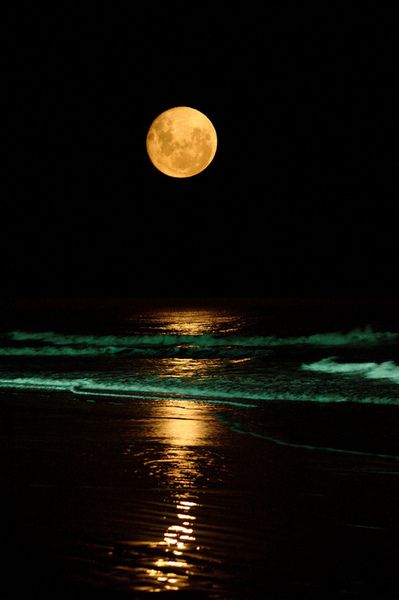
She has the power to summon spirits, but only by the ocean…a mystery she’s going to work on solving, before it might be too late.
Sailing Home
Author’s Note: A small boy is fishing with his grandfather; as they talk about life, thoughts and feelings emerge that make a lasting impact on the both. The story is told from the point of view of the young boy’s memory now as a grown man.
I was sitting with Grandpa as he cleaned his catch with a knife that he always had, seemingly forever.
The skritch it made against the scales as he worked it with expert hands was like the rhythmic slap of waves on the shore.
His deft fingers never seemed to get caught on the hooks, though he showed me where they had, when he was first learning. Callouses covered the tender skin there, but never covered over the lessons.
I watched the shallow water eddy about my ankles as I sat on the boat’s edge, watching the wheeling gulls hoping to steal a fish or two, though grandpa always left them something.
“Hey Grandpa?”
“What is it, sailor?”
“Why do you always feed the gulls?”
“Folks call ’em the rats of the sea. I call ’em good luck.”
“Why? The fish swim away when they see them.”
“Yep. Right onto my hook.” He leaned over to catch my eye and said with a wink, “Fish ain’t too bright.”
Then he’d laugh his gentle laugh, and give me a fish head to examine. Somehow, they always looked surprised to be dead.
A gull wheeled in close, and I threw the head into the water to watch them dive and scramble and chase, until finally a victor flew away, three others in pursuit, but there were always others, and they flew in close and bold, curious to see if I held any more treats, but I splashed at them, and they wheeled off, calling me names in their language.
I ran my fingers over the scales of one that was close to me, but didn’t pick it up. The gulls were big, and I was small. I wasn’t afraid, but I didn’t want to test how far they’d go.
“I wonder what they think about when you pull them up…” I said.
“Don’t guess they think much at all.”
“Why?”
He’d finished cleaning the fish, and walked slowly over, and carefully sat next to me, and dipped his ankles in the water next to mine, and the water sloshed in harmony around all the ankles now, and gently swayed the boat beneath our weight.
“I guess they’re in a lot of pain, and just want it to end…” his eyes got far away when he said that, and I knew who he was thinking about.
“Like Grandma?”
He nodded, and took off his glasses, cleaned them with his shirt tail, and dabbed at his eyes with his sleeve.
“Yeah, like Grandma.”
He looked at me then, and put his arm around my shoulder, and we watched the gulls for a while.
“And like me.” he said.
“What hurts?”
“Nothing in particular, and everything in general,” he chuckled.
I smiled, not fully understanding, but he knew that.
He cleared his throat:
“Life’s a lot like a boat,” he said. “You start out in a small craft, and as you travel further out, you take on more, and the craft’s got to get bigger, has to be able to hold all you get. But if you get too much, it slows you down and the journey takes longer. You make more mistakes because you’re always making adjustments for the things you have. You with me…?
“Yes, sir,” I said, proud of myself that I actually sort of got it.
“And then the storms come, and the stuff you have can help weigh you down, and keep you steady, or it can shift and help the waves flip your boat. If it does that, which is most of the time, you not only lose the things, you lose the people too, the people who’ve helped you to become a good sailor. Still there?”
I nodded, swinging my feet in the surging surf, making foam, dangling a piece of seaweed from my toes.
“And then, eventually, you have to get where you have to be. You have to take the boat home, and get rid of the stuff, because it’s just too much. Some of it you drop off along the way, and some of it you unload when you’re back. The journey’s over, and your stuff’s gone, and you’re just glad to be home, in the quiet. You like that?”
“Sometimes,” I said. “When I’m reading, or thinking about stuff.”
“You thinking about this?”
I looked up at him, because his voice had changed. “Yes, Grandpa, I am.”
He tousled my hair, and laughed his gentle laugh again. “Good man.”
“Grandpa?”
“Hmmm?”
“Are you sailing home, now?”
“I am, son.”
“To Grandma?”
He sighed, and looked out at the setting sun.
“To her, and a whole bunch of other folk you don’t know,” and his sleeve moved again, but I couldn’t see if he was crying.
“You getting rid of stuff?”
He chuckled at that, and again, I smiled with him, unsure.
“Most of it’s gone now, but there’s a little more to go.”
“Oh. Wellll, could you tell her I said hello?” As I spoke I tried to write the word “Grandma” in the mud with my big toe, but the waves kept pushing new mud over it. I wrote it anyway, knowing I’d finished it, that it was still under there somewhere, and it would last for all time.
He smiled, a bit sad, “Ok, sailor. I’ll do that.”
We gathered up our catch.
As we walked home, me with my small sack, him with the bigger one and the fishing rods, I turned to look back at the empty boat, sitting empty on the stilling water, in the fading light, and thought about the time he wouldn’t be there with me.
I stopped, and gestured for him to bend.
He did, and I kissed his cheek.
He straightened, a bit puzzled.
“What’s that for?”
“In case you sail for home before I say good-bye.”
*********************************
I was cleaning my catch, and he sat on the edge of the boat with his ankles in the water.
I threw him a fish head, and he caught it, turning it around to look at it as the gulls grew bolder.
Satisfied he found what he was looking for, he kicked his feet, making foam, and hummed a tune, looking at the sea birds.
He watched them for a time, turning the fish head like an hourglass, but he didn’t throw it.
The blue of the sky deepened as the sun dipped toward the horizon.
“Hey Grandpa?”
“What is it, sailor….?”
© Alfred W. Smith Jr. 2014
In the Temple of Her Heart

Lisa’s Last Dance

The Marked Princess (cont)

Trace
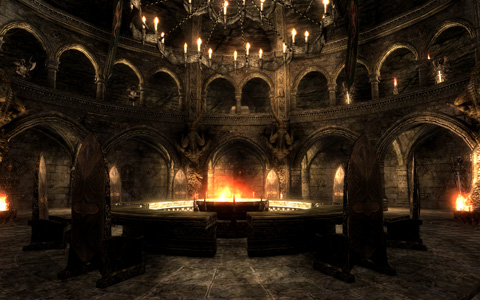
“This way, sir.”
The serving girl’s voice was tremulous as she led the man into a great banquet hall with high ceilings.
What illumination there was came from ensconced torches, but the fires seemed subdued, intimidated, as they made a futile attempt to eradicate the shadows pulsing in their wavering light.
On the dais were the thrones, and on the thrones were the dead king and queen, bedecked in their finest, cold as the fires were hot, and dead as the silence that permeated the place.
Their mouths and eyes were blood filled, their mouths in rictuses, as if they’d just eaten raw lemons.
Overall, the effect was one of scary clowns.
Their crowns reflected amber flares from the torch fires.
As they entered, the serving girl began to cry anew, and turned and ran, leaving the stranger alone to contemplate the bizarre tableau before him.
He looked at them a long moment, and was about to step closer, when to his right, two people entered and stepped up onto the dais.
A boy, and a girl, both finely bedecked as well.
They stopped before the dead couple, and bent to look at their faces.
Reaching out their hands, they touched the wrists to search for signs of life that long departed.
Satisfied there were none, the girl straightened first, and saw him, and touched the boy on the shoulder; he still preoccupied with the king’s face, straightened at her touch and saw her pointing.
They both looked at him with calm curiosity, as if he had a familiar face but they’d forgotten his name.
“Who are you,” the boy said.
“I am Trace.”
“What do you want here, Trace?” the girl asked.
“I’ve come to see who killed the king and queen. Are you their children?”
“We are,” said the boy.
“You don’t seem to be grieving.”
“We’re not,” said the girl. “They were awful to us.”
“And now you stand to inherit their thrones. Did you kill them for that?”
The boy stepped off the dais, the girl trailing, as they approached him, and stopped some five feet away.
“We have no intention of occupying the thrones of the dead; we’re leaving.”
“For where?”
“None of your concern,” the girl said.
“May I ask your names?”
“You may,” she said, “but we won’t answer you.”
“You’re here to investigate the deaths of our parents, and you don’t know our names?” the boy said.
“This is not my homeland,” Trace said.
The boy looked at the girl, and she nodded. “I don’t suppose there’s harm in it.”
“I am Kihari,” the boy said.
“Anjallay.”
Trace looked past them at the thrones with their occupants.
“I would say it’s a pleasure, but given the circumstances…”
Anjallay looked at them too. “Yes, the circumstances.”
“We’ll leave you to it, Trace. We’ll send the servants in to clean up when you’re done.”
“Where can I find you?”
“We’ll find you,” Kihari said. “Let’s go, Anjallay.”
Anjallay took Kihari’s arm, and turned to smile at Trace as they walked past, and out of the banquet hall.
Trace walked up the dais, walked behind the thrones, placed his right on the king’s, his left on the queen’s, and whispered his spell in the dark.
******************
Everyone was in high spirits; laughter, dancing, drunkenness, gluttony, groping under skirts, rubbing of raised crotches, moans and grunts from dark corners, and over it all, the light hearted music from musicians who large eyes betrayed they were fearful of the chaos around them, but dared not play badly for fear of the king’s displeasure.
A servant girl approached, buxom and golden haired, and the king’s eyes roamed over her as if she were a fertile field, which in his mind, she was.
The queen looked her daggers and ice at him, but he ignored her.
The dark wine shimmered in gleaming crystal glasses, and the queen took hers and poured it over the girl’s head.
The king’s eyes followed the rivulets wine running down into her cleavage.
She blinked, and though her face twitched to blubber, she dared not under the queen’s murderous glare; she curtsied, whispered, “Your majesties,” and quickly walked away.
“That wasn’t necessary, Milal.”
“As was your undressing her with your eyes, my ‘lord.’”
He turned to her, reached for her hand.
“You know it is you, and only you, that I truly love.”
She did not take his, and kept her eyes on the dance floor.
“I grow bored,” she said, and rose to leave, and could not.
Her eyes grew large, as she tried again, and barely managed to lift the folds of her gown.
“Is something wrong, dear?”
“I can’t get up…my legs…Natay, I can’t move my legs…”
Natay went to stand up to call out for an attendant, and found he couldn’t stand either.
“What’s happening?” He looked out over the floor, and the people, obsessed in their festivities, were oblivious.
He went to shout, and his throat seized, as if a giant had him by the throat.
He tried to turn his neck, but could not; from the corner of his eyes, he looked at Milal, and she was convulsing, her fingernails scraping, hands shaking as she trembled.
Her eyes began to bleed, and she went still, her hands going slack, fingers loose, and a pool of blood filled her mouth and bearded her chin, spilling in rivulets down the elegant gown.
Natay’s own eyes were growing dim, but unlike her, he didn’t convulse; a massive jolt of pain hit his chest, as if a giant had stepped on his exposed heart; his eyes and mouth spurted red liquid, and he gurgled and moaned, and his death rattle was loud on his trembling lips, which finally grew still.
*************
A scream ripped through the hall, loud and long and high, and as everyone turned to see the screamer, she pointed at the dais.
At first there was a ripple of laughter, mixed with some confusion, wondering if the royal couple was playing a joke.
An older nobleman called for the physician; he arrived quickly, his bag in his hand.
“You won’t be needing that,” the nobleman said, close to his ear.
The hall was quiet, except for the crackling torch flames.
The physician approached dais, his eyes searching, but his voice fearful, low so only they would hear his reprimand.
“If this is a jest, majesties, it is done in poor taste at the expense of your guests.”
He touched them both, and quickly drew back his hands.
Turning, his face pale, his voice thick with sadness and anger, he said, “Call the guard. The majesties are dead, murdered on their thrones.”
Amid screams and cries, the guards entered and cleared the room; it took a long time, but eventually, the hall was empty except for the physician and the Captain of the Guard.
“What should we do, doctor?”
“I know a man who can help; he’s in the next town. He will come tonight, if paid well. Send a messenger to get him.
“His name is Trace. He is a mage, and he will tell us who did this.”
“The king forbade magic.”
The doctor sighed. “He is not a position to refuse, and beyond wellness, Captain. I seek his murderer,” then he gestured, taking in the queen. “Their murderer.
“Send the messenger.”
The captain nodded, and they walked out together into the hall, where two guards with severe faces, pinched from the fear of things beyond their ability to see or control, kept vigil over the dead.
“And Captain, send him to me when he arrives.”
“I will, doctor.”
They parted in opposite directions.
******************
Trace took his hands off the backs of the thrones.
His palms were crisscrossed with keloidal scars that receded back to smooth flesh even as he looked at them; they always plagued him during a tracing.
The weakness he felt in his legs was dissipating, and he pushed himself away, not having realized he leant against the large, high backing for support.
The blonde serving girl was the only one who’d approached the dais in the time before the poisoning, but the queen did not drink her wine, yet was still struck, and struck first, by whatever spell had killed them.
It was a place to start, and Trace went to inquire of her whereabouts.
© Alfred W. Smith Jr. 2015
Mist Eri

I was dying.
Cold, hungry, thirsty, and weak, lost in the mountains, with no stars to guide as the rain fell, and fell, and fell.
I slipped, staggered, stepped into mud, cut my fingers, wrists and arms fighting for life on the sharp crags that seemed determined to defeat me.
When night came, I was blessed with a shallow ledge that had some cover above it, and I rested, sure that this night was to be my last, hoping too, that the indifferent god I served heard at least this one prayer, and granted me leave to depart.
He did not.
**********************
I woke before the sun, and the rain had stopped.
Not in a hurry to start another weary journey to get nowhere, I took a moment, in spite of my dire needs, to admire the grim, sodden beauty of the view.
Mist was everywhere, gray and somber, moving across the valley like spirits in purgatory, neither light nor dark, trapped in a slender slice of the bleak void where nothing laid claim to anything.
It wrapped around the mountains too, like soiled white banners, and as I rose and stretched, something cold seemed to touch me.
A patch of skin on my forearm grew wet from the contact.
I gasped, and turned, and there she was, insubstantial as the wind, and present as the rocks all around me.
“What?”
I dared not move, lest it shove me from the ledge.
I am no ‘what’, but ‘who?’
I could see the shape of her, white in contrast to the gray, but there was no face to speak of; I could see through where the eyes should have been, and what would have been her hair kept bunching and dropping across her what would have been her shoulders, all of mist, all rolling like the banners and spirits, spreading apart, and gelling together in a rhythmic cycle, as if hands were moving it, as if in tandem with a heartbeat.
Human shaped, but nothing close to human.
“Has my rest here disturbed you, spirit?”
No. Indeed, it has given me company through the night. You are far from home.
A hole again, where the mouth was, but the mist moved around it like living flesh, in the manner of a woman speaking.
“I do not know which way my home lies.”
Then I will guide you.
“I am too weak to descend, now. I won’t survive the journey down.”
Then I must make you strong.
“How will you accomplish that?” My voice grew annoyed; I just waste
If you but follow, I will make you strong. Come.
“Very well. You said that you were ‘who,’ not ‘what.’ May I know the name of my savior.
I am called Eri. It has been long since I last saw men here. They passed through in days of old, with instruments of harm. We did not let them cross, and they rest below these paths you trod.
“The mist in the valley below…”
The shape gave a single nod. “They are the souls of men, unable to find respite, desperate to attain peace, but their many victims pursue. The valley is ever shrouded with their hunting.”
I shuddered at the thought.
How many? How long?
The sun rises, and I will leave you then, despite my will to stay. I cannot fight the sun. Will you follow?
“Yes, Eri, I will follow.”
She engulfed me, and the coolness of the droplets that made her refreshed me; my bones were free of pain, and my muscles of stiffness. My vision sharpened, as did the contrasting shades of pewter and silver, iron and lead, metal and steel, and she appeared again in front of me now, and began to glide over the narrow path.
The sun began to glow on the eastern horizon.
I could feel my mouth smiling in amazement.
“Follow. We don’t have long.”
And I followed her.
© Alfred W. Smith Jr. 2015
Nomad

I was down on the waterfront, looking out at the waves, watching the boats and jet-skis, looking over at the private beaches, where the sun shone more brightly, and the illusion of a better life beckoned like a whore in a neon lit window.
One last time, I wanted that illusion.
One last time, to try to make it real for me.
That’s why I was down here, burning up in the high humidity of a day in July, waiting for the contact to give me the latest information on my final assignment:
Who do I kill next?
I’m called Nomad. My real name was erased years ago; I didn’t like it anyway.
No family to speak of, no wife, and no candidates for that position on the horizon, I was free to travel and murder at will.
It was a dangerous life, and so far, I’d come out on top; that wouldn’t always be the case, I knew, and there were times it got close, but not close enough.
I lived with it; death was the dance partner who every now and then stepped on your toes and kneed you in the balls just to let you know she was not enjoying your company.
The contact waddled up, all sweaty and wheezing, trying to light a cigarette with the lighter in his right hand while he fished around in his pocket for the chip with his left.
“Here.” He held it out in his sweaty palm.
I took a napkin out of my pocket and took it from him; he narrowed his eyes at me, and I smiled, and he looked away.
I put the chip into the port they inserted behind my ear, and heard the locking click.
The file took shape: holograms, maps, pictures, names, dates, locations, and finally the target.
“Who is he?”
“Your counterpart in that country.”
“And we want him, why?”
“You don’t get paid to ask questions; with him removed, you actually make more money.”
“He looks like he’s twelve.”
“It’s not like you wouldn’t do it if he was.”
That was probably truer than I cared to think about at the moment. I let it pass.
“You gonna confirm, Nomad? It’s bitchin hot out here.”
I confirmed.
“You leave in two hours.”
I nodded.
He walked away, gave a lazy wave, and the bullet burst his skull like an overripe melon.
Gonna be late for my flight…
© Alfred W. Smith Jr.
 Beyond Panic