Leiko and the White Wolf (4)

The evening meal, as it turned out, was less a somber affair than Ko would’ve thought; the monks were smiling, even chatty, after grace was said.

They passed the plates along with good natured jokes about round stomachs and big appetites.

The servants, probably neophytes, hung around behind the monks, waiting with refills, smiles of amusement on their faces; Ko took notice of that too, and thought it a good thing they weren’t being reprimanded.

She sat next to Koji, who did have a round stomach and big appetite, and didn’t seem to care what the others thought of it, and he served her from the platters of food that came his way.

Her stomach growled, and she had to force herself to exercise control.

The scents of the cooking here were different, more smoky and pungent; in her home it had always been tangy, with some sort of orange spice her mother liked to use. It was peasant fare to be sure, but it was filling, and Ko couldn’t remember ever going to bed hungry.

Her diet had consisted largely of fish and the things that preyed on fish; her mother grew her own vegetables, and was fast in the kitchen after long years of arduous experience in her own mother’s small kitchen.

But the monks here seemed to eat well, despite the seeming indolence of their calling.

She noticed Akira watching her, and gave him a small smile to assure him she knew what was going to happen, and she was prepared: he was ready to introduce her to the rest of the monks.

The servants cleared away the dishes and utensils, and Akira stood and signaled for silence, which came as abruptly as the chatter had after grace.

“Brothers, I have news.”

They gave him their full attention.

“We have, in our midst, a young lady that we have taken from her homeland, and her parents’ side, to train in the path of Rei, thunder and lightning,  for reasons she does not, as yet, know, but will in time.

“Brothers, I give you Ko of Iwai.”

Ko stood, stepped back from the table, and bowed low.

Murmurs of approval at her manners and training buzzed briefly through the assembly, and when Ko straightened, Akira had sat down, and they were all watching her.

A thrill of nervousness coursed through her, as her eyes fastened on the man at the head of the table, the one whose eyes now bore into her as if they would have her soul or know the reason.

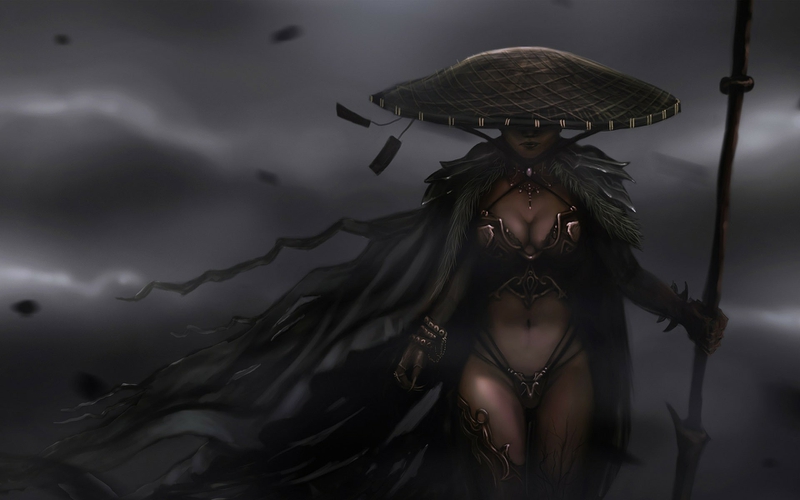
He was tall and broad, with a silver mane and full whiskers, luxurious and immaculate, handsome in a long, dark blue hakama with a white wolf head sewn over his heart.

“Welcome, Ko, to Dosojin Monastery.”

Ko thought his eyes could pierce granite, but she decided not to be cowed; it wasn’t an easy decision, since she couldn’t stop her knees from shaking.

“Welcome? It was not my choosing; my father sold me for reasons I don’t know. Akira has tried his best, but to be honest, elder, I am not a little angry.”

The table buzzed again at her forthrightness.

“I know that I’m here because you feel you need me; how I can deliver you from whatever it is men such as yourselves are threatened by, you will have to reveal to me sooner rather than later.

“For all that I’ve been kidnapped, since I cannot return to Iwai, it seems I must do what I can.

She turned to Brother Koji.

“Thank you, Brother Koji, for taking care of me. If you will excuse me, Brothers, I slept through most of the afternoon, and I need to make a list of belongings that I, as a female, will need.”

Hakurou and Akira remained expressionless, but the looks around the table ranged from surprised affront to amusement.

“May I be excused, elder?”

“You may, Leiko.”

“With respect, my name is Ko, elder.”

“I am changing it for the duration of your time here; you are Leiko now.”

She seethed, but bowed in resigned acquiescence.

“Thank you.”

She left, her mind swirling with emotions: surprise at her boldness, bordering on disrespect, and a slight flush of pleasure at the reaction she got.

Her name, Ko, meant dutiful daughter.

The name he’d given to her, loosely translated, meant ‘sarcastic one.’

Given her behavior, she supposed she earned it.

She was smiling in spite of herself.

Leiko. Thunder and lightning indeed.


****************


Hakurou roared with laughter, and the monks themselves, not quite knowing what to make of things, laughed too, albeit nervously.

“Akira,” he sputtered, “you’ve grabbed a tigress by the tail.”

“It would seem so. I will go speak with her.”

Hakurou waved his hand. “Bah, leave her be. She said nothing untrue, and slighted no brothers. Think on it a moment, and if what happened to her happened to you,” he looked around the table, “any one of you, you’d be inclined to be ill-mannered too.

“Send for a village girl to get the supplies our female will need.”

He sat down, the gaiety leaving his eyes, and as he regained his breath, he addressed them.

“The threat from across the sea grows, gentlemen. The witches play their pipes, and light their fires, and mate to sacrifice the offspring, and the isle mist has a scarlet cast to it, and it is darkening despite the resplendent dawns we enjoy here.

“It is a real and distinct possibility that they could be lost to sight, if the mist gets thick and dark enough.

“I know they’re beginning to conscript an army, wielders of steel, to slay us outright, so their magic can be saved for the extraction of their treasures from our soil.

“You know the history of our battle, and our victory came dear.

“Now we have a weapon, one girl against an army, and the path of Rei has been forbidden us for centuries, if not millennia. It is a dark and terrible practice, but we have weakened ourselves, and there is no time for us to catch up to them.

“We needed a woman to fight against women, for a man trained in the way of Rei will not be effective. The battle is aligned by gender; male for male, female for female.

“This is the way the Rei have always done it.

“Leiko is that weapon. Her feistiness could prove to be a two-edged sword.”

He cast a sidelong glance at Akira, and grinned, briefly, “Akira, I trust that you are up to the task.”

There was light laughter.

Akira didn’t share in it, only nodded.

Brother Koji spoke. “As her attendant, I too, will do what I can to aid Akira.”

“Thank you, Brother,” Akira said.

“Yes, Koji, that would be appreciated,” Hakurou said.

“Hakurou?” one of the other monks asked, “If she invokes Rei, will it not destroy us too?”

“It could. But we have ever known that it is better for both to die, than for one to be unleashed, unchecked, across the world.

“In the taking of their lives, we may be sacrificing our own; the path of Rei has been untrammeled for longer than men can remember, and in its dormancy, it gathers power.”

He leaned forward across the table and looked at each man until they were newly focused on him.

“That means that when she destroys the island, it may be too much for her to control, and we will die as well in the ensuing destruction, by tsunami, by earthquake, by fire, and there will be no escape.”

He sat back.

“Consider carefully what lies ahead, and if any one of you wishes to leave, see me no later than midnight tonight, and be on your way by first light.

“Leiko’s training starts tomorrow.”


Leiko and the White Wolf (3)

Ko stopped looking around her; the day was as damp as her spirit.

Perhaps the sun would be out another day, but she knew that places by water were often clouded of a morning, depending on the surrounding countryside.

She and Akira walked in silence, their own footsteps soft on the streets.

There had been no one to greet them when they disembarked, no horses for travel, no wagon.

Akira had taken back his robe, but not before asking if she was warm enough.

She said she was.

“Good. I cannot appear before my master unclothed.”

Having seen something of Akira’s power, she was surprised that he used such a word as ‘master’ in such a nonchalant manner, and didn’t want to think about the man who might be stronger.

“Who’s your master?

“You will meet him when he sends for you.”

“When will that be?”

“When he feels like it.”

She didn’t feel like playing the slippery eel word games Akira seemed fond of, at least with her.

Perhaps if I were a boy he’d share more freely.

“Akira?”

“Yes?”

“Why did you seek me out, and not a boy?”

“Gender did not matter, Ko; it was a matter of other things.”

“But I-“
“Enough, Ko.”

He said it calmly enough, but she knew better than to answer.

“All things, in time,” he reminded her.

“All right.”

“We are here.”

Ko looked up at the monastery, on the summit of a medium sized hill, shrouded by yet more fog, with torches burning like captive, dying stars above the crenels.

A bell pealed, signaling their arrival, but Ko saw no watchtower.

“How do they know we’re here?”

Akira smiled down at her, and gave no reply.

I want to stomp on his foot Ko thought, and instantly regretted it, not knowing if he could read her thoughts.

If he did, he gave no sign.

A monk in a dark red robe with gold piping opened the doors, and two more in similar garb stood in the middle of the entrance, bowing from the waist to Akira.

“Welcome home, brother,” the monk on the right said.

“Welcome to our guest,” the monk on the left said.

Akira stopped, and greeted them with a slight bow of his own.

Ko followed his lead, and the monk who greeted her grinned.

“We part here, Ko. Brother Koji will take you to your quarters. I will meet with you again at evening meal.”

Ko felt a shot of anxiety rush through her; she said she didn’t trust what Akira said, but she trusted Akira.

He said no one would harm me, and time would prove it true.

“This way,” said Koji, and Ko followed, feeling the eyes of the other monk and Akira watching her.

Another test. I mustn’t look back or he’ll know I’m afraid.

She quickened her step until she was beside Koji, and felt the weight of their eyes lifted.


**************

Brother Koji had a kindly face, clean shaven and rotund, like his body.

To Ko, he looked like a barrel with legs, and she smiled at the image, but didn’t laugh.

“A pleasant memory, young miss?”

She blushed, as if he’d heard her thought out loud, but the lie came easy enough.

“Yes, Brother Koji. I was just thinking of home.”

His eyes grew soft in sympathy. “I hope you will see it again one day, young miss.”

Ko felt bad about the deception, but what he said actually got to her, and she felt the hot sting of tears pop up.

“It is my only wish,” she said, mourning that her father was a coward, and her mother as shadowy and vaporous as the dark corners she seemed to prefer dwelling in when they were indoors.

“Well, while you are here, I hope you will come to find some pleasantries to keep your days fulfilled until then.

“Here we are.”

He opened the door for her, and stepped out of the way.

Her room at home had been small and cheaply furnished, but that room was a palace compared to this one.

There was a bed, with a thin blanket, thin mattress and flat pillow, and a nightstand on which sat two pieces of bad pottery that were a pitcher and cup, and a ceramic vase of dubious use tucked into a shadowy corner.

A wooden chair and desk occupied the wall opposite.

“Welcome, young miss,” Koji said. “I will return for you when it is time for the evening meal.”

He bowed, and walked away.

Ko wanted to cry, scream, and faint all at once, but the fight was out of her, and she merely sat on the edge of the bed, her mind numb and her vision blurry, until the events of the day overwhelmed her, and she threw herself onto the mattress, and wished herself dead.

Her eyes only granted part of her wish, and merely closed.


************

“Hakurou will see you now, Akira,” the monk who greeted him said.

“Now? I thought he would wait until after the evening meal.”

“As did I, since that is what he first ordered, but upon your arrival, he saw no reason to delay.”

They arrived at a set of large, black marble doors with bronze, vertical handles shaped like swords, though the edges were dull to prevent cutting.

“Thank you, Brother.”

He left.

Akira opened the door; his master had no need of guards.

He walked in on his master pouring a second cup of something brown and potent, and he turned and smiled, waited for Akira to finish his bow, and offered him the cup.

They drank in silence, though Akira felt the weight of the elder’s power observing his face, as if deciding whether or not he would take the life of a spider that landed on his last piece of bread.

“Another?”

Akira coughed, and waved his hand.

“Ha! You would be sober for vespers, then. That’s good. Ever the faithful monk, you are Akira.

“How fares our young charge?”

“Her father handled things poorly, and she spit in his face as she left him behind. Of course she was scared, and sullen at first, but seemed to resign herself to things soon enough, and peppered me with questions I had to stop. Also, she is quick-witted, and not easily frightened.”

“You did not tell her why she was chosen.”

It wasn’t a question, but Akira answered to assure him.

“No.”

“Good; leave that to me. Spitting in her father’s face, though, shows rebellion.”

“Rebellion is often the outcome of betrayal, Hakurou. Is that not why we need her?”

Hakurou finished his second drink, poured another, and under his silver white mustache, Akira heard his voice deepen almost to sorrow as he let out a heavy sigh, nodding.

“It is.”


Leiko and the White Wolf (2)

2)


In time, her captor’s robe did its job, and Ko was settled into it, wrapping it up around her shoulders, and over her head. The weight of the wide, waterlogged hat had grown heavy, and it now sat on the bench beside her.

She saw the small crew sneaking glances at her, though what they could see with her hidden inside the robe, and with the thickening fog, she didn’t know.

They seemed content to do no more than that, since, as her mysterious captor told her, the journey was not long.

He’d abandoned his post at the stern, and now stood in the bow; those mysteriously bright eyes were probably piercing through the fog to watch for the shore line.

Ko, feeling more relaxed, more due to inactivity and the receding of the adrenaline from her father’s betrayal than being comfortable, decided to stretch her legs, and join him, and perhaps get some answers to some of the questions she now had.

When she stood beside him, he acknowledged with a brief look, and turned his attention back to the unnaturally smooth river.

“What do I call you?”

“I go by many names.”

“I just need one.”

He smiled at her sarcastic quickness.

“Akira.”

“Akira…I like it.”

“I am pleased.”

“How much longer, Akira?”

“I can see the coastline now.”

“Through the fog?”

“Yes.”

“How?
He turned to her. “Are these the questions on your list?”

She shook her head.
“Then I am under no obligation to answer them.”

“That’s rude.”

“Yes, it is.”

She looked up to see if he was joking, and thought she saw him just barely hide the trace of a smile.

“Hold your questions, Ko, until we are both warm and fed, and you have settled into your quarters. I will reveal things to you as you need to know them, and not before.

“Do we have an understanding?”

Considering there was nothing she could do to force anything, she nodded.

“Say it.”

“Yes, Akira. We have an understanding.”

“I am pleased.”

“Land!” the front oarsman called. The word reverberated, but the fog muffled it; it sounded strange to Ko, as if a ghost had shouted.

Akira offered them no guidance, and Ko, who couldn’t see anything, felt a little flutter of worry, but with the familiarity of long years, the oarsmen guided the boat into the city harbor with alacrity.

Ko took her hat, and shook off the loose water that remained; it was no longer raining, but it was still too damp for the hat to dry.

Akira placed a small sack into the front oarsman’s hand, and Ko could hear the clink of coin inside it.

He nodded once to the oarsman, who bowed from the waist, and shooed his crew off the boat to disappear into the fog.

He reached for Ko’s hand, and she took it; his hand was warm, and her own felt like a nestling in it, somehow safe and warm, and the weariness of recent events began to tire her now; she didn’t want to relax, wanted to stay on her guard, but Akira was making it difficult.

“And what do I call this land, or does it too, go by many names?”

“Only one: Dosojin.”

“Dosojin…the god of roads.”

“You don’t like it?”

“I’m not sure.”

“It is named such because there are many paths.”

“Paths to what?”

“To your destination.”

“Where is that?”

“That is for you to find, Ko. I am only a guide, but you must tell me where you want to stop.”

She shook her head, her voice edgy now, frustrated with the seemingly constant evasion.

“I don’t understand, Akira.”

“I don’t expect you to; you are trying to force what should come naturally. Look, I know that what happened to you was traumatic, and you feel more like a plucked weed than anything else, useless, therefore without value, but I also understand the weather is inclement, and the circumstances surrounding your selection cannot be easily explained in the span of a ferry ride.

“There is much for you to learn, and much more to think about, and I have told you no harm will befall you.

“And as much as that frightens you, you must take me at my word, until time proves it true.”

As they walked, she fell silent, and looked around her.

The city, town, village, whatever it was they were walking through, wouldn’t give up its secrets.

The streets were empty, and the shops dimly lit.

The fog seemed to have an oppressive quality, almost as if its ethereal weight had strength and substance.

She had no impression of color, or structure, or design; the fog sat like a cosmic toad over everything, and Ko soon gave it up as a lost cause.

Akira, for his part, seemed lost in his own thoughts the closer they came to where she was supposed to be.

So, father, you have sold me to Dosojin…the god of roads…of many paths.

But I see only one way out.


Leiko and the White Wolf (cont)

Ko walked down to the ferry, the mud squelching under her feet, pulling at them when she went to take the next step, as if the ground didn’t want her to leave.

The man who’d stopped her merely watched her board, watched her father skulk away in the pouring rain, soon lost even to his sight.

He took note that Ko never turned to watch him go.

She stood with her back to him, saying nothing, her hat her only real protection, and her hands bunched up her clothes as she swaddled herself, trying to keep in what little warmth remained.

A weight fell across her shoulders, a shimmer of color, and she realized the man had given her his own robe, a bit too long, but warm with his own heat, and a tinge of something between musk and mandarin, not unpleasant….but not her father.

She murmured a ‘thank you’ over her shoulder, still not moving.

He gave the order to move, and the ferry creaked and groaned and listed slightly.

Ko grabbed the rail for balance, and stumbled a bit as she got used to the motion.

The current seized the boat, and it swerved, then straightened, and glided across the water as if there were no rain at all.

Realizing what happened, and not wishing to know, Ko watched the river water spackled with fat raindrops rush past them.

“You are using magic to make the ship resist the current.”

“No, Ko. Magic is in another realm; I am using power.”

She turned that over a moment, then told him the truth.

“I don’t understand.”

“That is why you are here.”

“I am here,” she sighed, “because my father is a poor fisherman.”

He chuckled, to her surprise.

“That is a level-headed conclusion, but not entirely the truth; I sought you out, Ko.”

She turned then, watched him, though he was still looking out over the stern of the ferry.

“Sought me out?”

He turned and walked toward her; he was slender, but strong, and moved with confidence on the wet deck.

His face was kind, but authoritative; he was handsome, in a way the men of her homeland were not. His skin was darker, and age had stamped a seal of authenticity to it that he would probably die at sea.

His facial hair framed the lower part of his face, neatly trimmed, and tinged with gray.

His eyes had radiance to them, not natural, but a soft light seemed to emanate in the whites of his eyes. Ko couldn’t be sure if it was real or her imagination.

“There is much to explain, but the journey is not long; take your ease under the awning, and think on your questions. I will answer them all.

“You have nothing to fear, Ko, not from me, or any man on this ship, or where we are going.

“Do you believe me?”

She sensed this was some type of test, and knew what he wanted her to say, but she decided not to say anything anyone wanted to hear; she was the victim, after all.

“No, I don’t.”

He said nothing, but inclined his head, looking at her in a new way.

A small smile flashed across his lips, and he went back to looking over the stern, as she went underneath the awning.

Sitting down, she watched him watching the past, his bare torso pelted by the rain, as she sat shivering, not entirely from the cold, under the awning, and wondered what her future held.

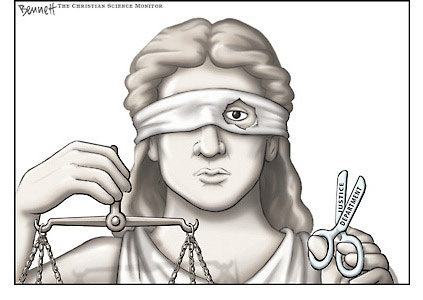
Justice = Just Us

So as a cop, you don’t even have to engage the tween with the TOY gun in the department store. No criminal record, no threat to you, himself, or anyone in the store, but he never even got a ‘drop your weapon.’

Just pull up, and bang.

When we’re innocent, cops plant evidence.  Alabama ‘police’ did it for 10 years. Where’s the outrage from #ALLLIVESMATTER?

Make up your mind:

Don’t want us ‘thuggin,’ but won’t hire us.
Don’t want us on welfare, but don’t want us educated.
Don’t want us holding political office, but it’s okay if it’s a ball or a microphone we sing and rap into, as long as we’re not decrying supremacist / oligarchal bullshit disguised as ‘policy.’

Then redline the districts to remove black representatives, and put them in districts where prisoners can’t vote.

Then talk about ‘reverse discrimination’ when it used to be called ‘hiring on merit’ before.

Worried about terrorism? Guess it takes one to know one.

Time to segregate, on our own terms, for our own reasons, to rebuild ourselves, our youth, and our communities. Stop celebrating Kwanzaa for a week when we’re not living out the principles 24/7/365.

We weren’t brought over here to live, but to work, and as long as we’re not turning a profit for anyone else, we can ‘go back to Africa.’

But let’s get back to Black Wall Street instead. Let’s build schools where our youth will excel and begin to invade the halls of power: science, law (and its enforcement),  finance, technology, and trade, in the same numbers we seek to invade the NFL and NBA.

We’ll be talking about a different country then; help is not coming from the outside, and for damn sure reparations are not coming for slavery. You’re paid less for the work you actually do, as opposed to the work you didn’t, where no one was paid at all.

Stop rapping about money and hoes and guns and drugs, and pull your pants up so you can stand up and man up. You do know by now that showing your ass means anyone can screw you, and screw you over?

If you ‘love your hood,’ stop poisoning its people with drugs imported from countries that don’t like you either, and shooting your brothers, and impregnating your sisters with babies you can’t take care of from behind bars. You leave them vulnerable, like Tamir was vulnerable.

Stop riding around in expensive cars through neighborhoods that look no better than bombed out Syria, talking about ‘I got mine’ before the cops add it to the Criminal Forfeiture fund to pay for their bodycams, which they’ll turn off the next time they aim for your heart.

Poverty is a mindset; it just manifests as an economic factor.

Wake up. Strap up (your mind first, your home second).

The revolution has started, and it’s not only televised, it’s being broadcast all over the world.

Resolve in your spirit, now, to answer this question:

How long are you willing to remain a target?

Overmorrow (6)

6)

I waited just outside the Summoner’s door as once again the yellow, green and blue eyes of the night creatures flecked the darkness as they came to watch me and wait for the ideal opportunity.

In time, as they eyes crept closer and closer, Jirus appeared at the top of the rise; his eyes were still that pale blue.

“Mitre Harkin.”

At his greeting, the eyes began to recede into the trees.

I walked up the rise and he took my hand.

“Vilus is back at the camp, and the meat is cooking. Did you do what you needed?”

“I did.” I stopped, and since he held my hand, he stopped with me.

“I may need your help later. I’m afraid that the Dark Wood won’t be spared this time.”

He nodded.  “I didn’t think it would be; with the departure of so many, there are holes in its protection, and what magic remains has faded, or weakened, to the point where we’ve been vulnerable for some time.”

We began walking again.

“We’ve been relying on reputation to keep out intruders for some time. The truth is, Mitre, you wouldn’t have been able to get as far as you did if everything was still intact.

“The original barrier prevented travel through the last of the hill country, and you were very lucky to survive.”

That was a sobering thought, but I let it pass.

“So no, we won’t be spared, and we’ll help in any way we can.”

This time, he stopped, and looked up at me with a rather fierce expression.

“But I’ll not put Vilus in harm’s way for you.”

I was taken aback, and said so. “I would never ask you to do that.”

We started walking again.  “War makes men do all sorts of things they’d never do.”

I had no answer for that either.

We arrived at the camp, and Vilus ran up to me and hugged me.

“Were you able to help her, Mitre?”

The most expedient thing to do in the moment was lie, one of the first things I vowed never to do when I donned the temple’s robes. Already what Jirus told me was proving true.

“Yes Vilus, I was.”

She smiled.

“The food’s ready,” Jirus called.

As we ate, they regaled me with some of their more dangerous hunting stories, and while they weren’t exactly feral children, if their exploits were true, they were relentless in their pursuit, and brutal in their killing.

They said nothing of their family, or how they came to be alone, much less survive, in the woods all these years, and nothing of how they gained their hunting prowess, and why the animals feared them so.

Something told me that if I asked, I would lose them, so I didn’t.

That’s a tale for another day.

It was what my father often said to us when we’d ask him for another bedtime story because we didn’t want him to go, and we didn’t want to go to sleep. Sometimes he’d indulge us, but when he didn’t, that’s what he’d say.

I felt it applied here.

Soon time and quiet exacted their price, and the light in the children’s eyes was flickering as their lids closed as they too, fought sleep; but as the fire died, their stories trailed off into light snores

Knowing I was safe as long as I stayed close, I watched the unfed fire dance across the embers, and darken, and took what rest I could in the remainder of the night.


*****************

In the morning, Vilus woke me.

“Mitre Harkin, it’s time to go.”

I woke up, rubbing my eyes, my face, as I looked about to see Jirus not in the camp.

“Where’s your brother?”

“He got your horse.”

“He found it alive?”

She smiled. “Yes, and it’s already saddled for you.”

She took my hand.

“It’s not dark, Vilus.”

“I know.”

She gave my hand a little squeeze.

Friends again.


******************

Jirus held the reins as I mounted, and I gave the bag with the rest of the gold.

“That’s very generous, Mitre.”

“You’ve more than earned it. I only hope you find it of some use before the demons come, before their masters gain more power.”

“I wish we met under better circumstances.”

“Well, we have a chance to make them better before we meet again.”

“I’d like that.”

“Me too,” Vilus said. She handed me my crossbow.

“Thank you. Both of you.”

“Until we meet again, right, Mitre Harkin?”

“That’s right, dear Vilus. That’s exactly right.”

I turned the horse, who took off at a gallop, eager to be back on familiar ground.

I didn’t bother turning around this time, because I didn’t want to see the empty space.

The sun was rising.

Overmorrow had now become today.


Reiko and the White Wolf

It was raining hard when Ko’s father helped put her straw hat on, and told her they were going fishing.

Ko looked for her mother, but she was cloaked in shadows, cooking something tangy that made Ko’s mouth water, and her stomach growl.

“It’s raining, Father.”

“Yes, I know, but Mother needs fish, and they come to the surface for fresh water when it rains. We’ll catch them quickly, and return. You’re so good at catching them, we’ll be back in no time at all.”

His words of praise warmed Ko to the task, and she eagerly followed him down to where their fishing boat was tied on the aging, rickety pier. Ko used to think it would be fun to fall in, but with the rain and wind, and the high waves out in the harbor, she hoped the planks would hold her and Father’s weight.

It was hard to see with the rain blowing in almost sideways, but Ko was determined, and driven by hunger, to see this through, and have more warm words of love from him.

As they walked, a faint roll of thunder rumbled in the distance, and Ko took her father’s hand. He held it, and smiled down at her, and she took comfort in that.

He would keep her safe.

When they arrived at the harbor, a boat was docked beside theirs, bigger, darker and foreboding, and a man in a wide straw hat with tassels stood on the deck, watching their approach.

Ko slowed down, and her father did too, but then he said, “It’s all right, Ko.”

She relaxed, but didn’t let go of his hand, part of her still wary; the boat was a ferry, and it was unusual that it was such a remote part of the river. This was a land of small farms and local fishermen, and everyone knew everyone, and their business, and their children.

The man on the deck didn’t seem affected by the rain at all, and except for a narrowing of his eyes when they got close, he hardly seemed to acknowledge them.

Her father let go of her hand, and a little thrill of fear and anxiety went through her.

He spoke quickly to the man on the deck, and then their hands touched, so quickly that Ko wasn’t even sure it had happened.

Turning around, he looked at Ko, and beckoned her to come closer.

She went, not knowing what else to do, but felt the sting of tears behind her eyes, and dread in her spirit.

“Are we using this boat to fish, Father?”

“No, Ko. I must fish alone, and you must go with this man.”

He reached for her to bring her by the hand, but she backed away, staring at him, incredulous, and her solid grounding in him turned to soaked mud.

“I will not. I will not!” Ko was turning to run, when she saw the man thrust out his right hand toward her, fingers spread, and it was as if she’d grown roots.

“Father, help me! Why are you letting him…? I can’t move! I can’t move!”

“I’m sorry, Ko. I can’t undo the bargain I struck with him.”

“Bargain? A bargain? I’m to be sold, like some market piglet?!”

The man on the deck called out: “The winds and waves rise, ‘father.’ Is she coming with us, or do we return for you?”

She saw him flinch when the man mocked him.

A realization cold as the river rain settled over her.

“Mother’s pregnant, and you can’t afford me.”

Her father began to cry. “I’m sorry, Ko, so very sorry.”

Ko walked toward the boat, and stopped beside him, but he couldn’t look at her.

She leaned as if to kiss his cheek, and spit in his face; he felt it dribble along with the raindrops that mingled with his tears.

“‘Father,’” she used the same mocking inflection, “I haven’t begun to  make you sorry.”


Obasi’s Honor

The sun was hot on his skin, and the camel he rode began to stumble.

He is going to die, but not me. I will do what I must.

Behind him lay the bodies he’d killed, but it had been, at best, serendipity, and not skill.

He would rather that it had been skill.

The town was in the distance, indistinct in color from the sand everywhere, save that it had shape, and he could see the shapes of the buildings through the haze and the heat shimmer that felt like it would boil his eyes in their sockets.

I did not avoid being a sacrifice only to have my bones bleach in this merciless sun.

He stopped, and taking the knife he pilfered from the body of the man that had sought to tie the rope around his neck, he put his hand on the camel’s neck and said a silent prayer of thanks to its spirit for providing him life.

And he cut its throat with his spiked club, ripping out the spike and cupping his hands around the fount that spurted as the animal bellowed a final curse, and toppled. The taste of its blood was rancid and bitter in his mouth, but he was going to die if he didn’t drink, and water was not to be found.

And as he had no water, he made no urine, or he would have used that instead.

He was tempted to skin the camel and make a tent, but the sun had crested its zenith, and would be down soon; if he skinned it now, night would catch him crossing the dunes, and the chill wind would ice the blood that was now boiling.

Breathing heavy against the urge to vomit, which would dehydrate him further, the burning sand licking at the sides of his feet in the leather sandals that adorned them, he took the spiked club from the camel’s neck, and pushed on.

Distance was a tricky thing in the desert, however, and if the town wasn’t as close as it looked, he would be covered over by the relentlessly flowing sand, buried in an unmarked grave so deep and remote his ancestors would never see him.

“You will not die, Obasi. Your ancestors will strike you in the afterlife if you do.”

He didn’t know if the part about his ancestors was true, and anyway, it was a promise he wasn’t sure he could keep; he only knew that if he didn’t hear himself make it, he wouldn’t survive.


********************


Two horsemen came out to retrieve him from the sand, where he’d vomited and lay in a pool of rancid blood.

“Fool boy, drank the blood of his camel.”

“How do you know?”

“The hairs on his robe, his skin. He was unskilled, and favored by the gods that he made it here.

The guard that noticed the hair threw the boy across the saddle, and with the other, he walked his horse back.

The watchman called. “Is he alive?”

“Barely, but yes.”

“Take him to see –“

“I know, I know. He needs water though, and now.”

The watchman threw his canteen down, and they dribbled water into the boy’s mouth, held him as he sputtered and coughed, gave him some more, and he spat.

The water was threaded with bright red strands of bile, and both men made the sign against evil.

“Get him out of here,” the watchman said.

The other guard proffered him to take his canteen back, but the watchman smiled and shook his head.

“I’ll get another; he can keep that one. I should’ve let the vultures have him. If it hadn’t been for their circling, I wouldn’t have seen him.”

“You did well to save his life; these things come back to you.”

“As I well know. Take him quickly.”

They proceeded to the town sick house, as they called it, and the boy began to stir.

They were carrying him on a horse, sideways across the saddle, as if he was a sack of something heavy and unpleasant, but he didn’t know who ‘they’ were or where ‘they’ were taking him, but their robes were dark, in stark contrast to the sand, and against the normal dress of white and tan, which kept the heat of the sun away.

He noticed they were on a road of stone.

“Where am I?” His voice came out like a croak, and he coughed.

The horse nickered in warning, not liking the smell of stale camel blood in its nostrils.

“In the land of Fatinah, south of your lands. We are taking you to the sick house; our doctor is an elder, and will see to your needs. Rest now, boy. There is time enough for introductions and conversation; this is not that time.”

Not willing to trust his voice again, or have the horse bite him, he closed his eyes and mouth again, and swayed to the animal’s rhythm, his insides rolling, as unconsciousness reclaimed him from the waking world again.


Liar Fire

Recommended reading on WriteHere: Liar Fire – http://wh.tl/151119-2

Source: Liar Fire

Ariana by the Sea

Ariana by the Sea.