Sailing Home

Author’s Note: A small boy is fishing with his grandfather; as they talk about life, thoughts and feelings emerge that make a lasting impact on the both. The story is told from the point of view of the young boy’s memory now as a grown man.

I was sitting with Grandpa as he cleaned his catch with a knife that he always had, seemingly forever.

The skritch it made against the scales as he worked it with expert hands was like the rhythmic slap of waves on the shore.

His deft fingers never seemed to get caught on the hooks, though he showed me where they had, when he was first learning. Callouses covered the tender skin there, but never covered over the lessons.

I watched the shallow water eddy about my ankles as I sat on the boat’s edge, watching the wheeling gulls hoping to steal a fish or two, though grandpa always left them something.

“Hey Grandpa?”

“What is it, sailor?”

“Why do you always feed the gulls?”

“Folks call ’em the rats of the sea. I call ’em good luck.”

“Why? The fish swim away when they see them.”

“Yep. Right onto my hook.”  He leaned over to catch my eye and said with a wink, “Fish ain’t too bright.”
Then he’d laugh his gentle laugh, and give me a fish head to examine. Somehow, they always looked surprised to be dead.

A gull wheeled in close, and I threw the head into the water to watch them dive and scramble and chase, until finally a victor flew away, three others in pursuit, but there were always others, and they flew in close and bold, curious to see if I held any more treats, but I splashed at them, and they wheeled off, calling me names in their language.

I ran my fingers over the scales of one that was close to me, but didn’t pick it up. The gulls were big, and I was small. I wasn’t afraid, but I didn’t want to test how far they’d go.

“I wonder what they think about when you pull them up…” I said.

“Don’t guess they think much at all.”

“Why?”

He’d finished cleaning the fish, and walked slowly over, and carefully sat next to me, and dipped his ankles in the water next to mine, and the water sloshed in harmony around all the ankles now, and gently swayed the boat beneath our weight.

“I guess they’re in a lot of pain, and just want it to end…” his eyes got far away when he said that, and I knew who he was thinking about.

“Like Grandma?”

He nodded, and took off his glasses, cleaned them with his shirt tail, and dabbed at his eyes with his sleeve.

“Yeah, like Grandma.”

He looked at me then, and put his arm around my shoulder, and we watched the gulls for a while.

“And like me.” he said.

“What hurts?”

“Nothing in particular, and everything in general,” he chuckled.

I smiled, not fully understanding, but he knew that.

He cleared his throat:

“Life’s a lot like a boat,” he said. “You start out in a small craft, and as you travel further out, you take on more, and the craft’s got to get bigger, has to be able to hold all you get. But if you get too much, it slows you down and the journey takes longer. You make more mistakes because you’re always making adjustments for the things you have. You with me…?

“Yes, sir,”  I said, proud of myself that I actually sort of got it.

“And then the storms come, and the stuff you have can help weigh you down, and keep you steady, or it can shift and help the waves flip your boat. If it does that, which is most of the time, you not only lose the things, you lose the people too, the people who’ve helped you to become a good sailor. Still there?”

I nodded, swinging my feet in the surging surf, making foam, dangling a piece of seaweed from my toes.

“And then, eventually, you have to get where you have to be. You have to take the boat home, and get rid of the stuff, because it’s just too much. Some of it you drop off along the way, and some of it you unload when you’re back. The journey’s over, and your stuff’s gone, and you’re just glad to be home, in the quiet. You like that?”

“Sometimes,” I said. “When I’m reading, or thinking about stuff.”

“You thinking about this?”

I looked up at him, because his voice had changed. “Yes, Grandpa, I am.”

He tousled my hair, and laughed his gentle laugh again. “Good man.”

“Grandpa?”

“Hmmm?”

“Are you sailing home, now?”

“I am, son.”

“To Grandma?”

He sighed, and looked out at the setting sun.

“To her, and a whole bunch of other folk you don’t know,” and his sleeve moved again, but I couldn’t see if he was crying.

“You getting rid of stuff?”

He chuckled at that, and again, I smiled with him, unsure.

“Most of it’s gone now, but there’s a little more to go.”

“Oh. Wellll, could you tell her I said hello?” As I spoke I tried to write the word “Grandma” in the mud with my big toe, but the waves kept pushing new mud over it. I wrote it anyway, knowing I’d finished it, that it was still under there somewhere, and it would last for all time.

He smiled, a bit sad, “Ok, sailor. I’ll do that.”

We gathered up our catch.

As we walked home, me with my small sack, him with the bigger one and the fishing rods, I turned to look back at the empty boat, sitting empty on the stilling water, in the fading light, and thought about the time he wouldn’t be there with me.

I stopped, and gestured for him to bend.

He did, and I kissed his cheek.

He straightened, a bit puzzled.

“What’s that for?”

“In case you sail for home before I say good-bye.”

**************************************

I was cleaning my catch, and he sat on the edge of the boat with his ankles in the water.

I threw him a fish head, and he caught it, turning it around to look at it as the gulls grew bolder.

Satisfied he found what he was looking for, he kicked his feet, making foam, and hummed a tune, looking at the sea birds.

He watched them for a time, turning the fish head like an hourglass, but he didn’t throw it.

The blue of the sky deepened as the sun dipped toward the horizon.

“Hey Grandpa?”

“What is it, sailor….?”


Sleep, children. ( dedicated to the innocent victims of madmen)

Sleep, children.
The cowards who’ve stolen your childhood will pay.

Sleep, children.
For now with your friends you will no longer play.

Sleep, children.
Your parents must carry your bodies away.

Sleep, children.
Tomorrow for you will not be a new day.

Sleep, children.
And know that you will always

be loved.

© Alfred W. Smith Jr.
December 17th, 2014
Sleep, children.
All rights reserved

D Generation

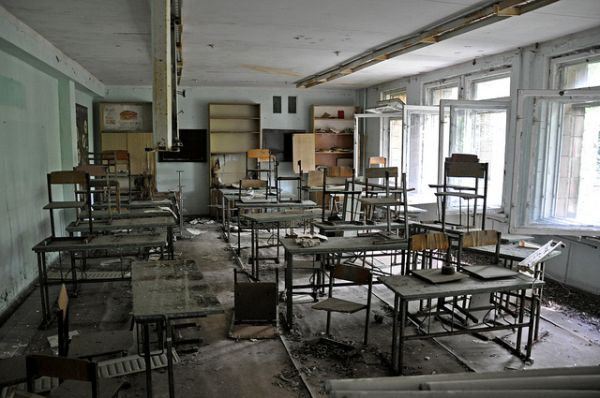
pripyat-abandoned-school

The state of education in the US is deplorable.

Now that we’ve stated the obvious, sensei, what’s the solution?

Stop looking for innovative ways to teach students that include the whole child. Teachers must hold parents accountable to see to their own child’s emotional needs, just as parents want to hold teachers accountable for the academics. I’m not saying teachers shouldn’t be involved in their students’ lives at all; by default, they already are, I’m saying there are aspects of the child’s life that are not the teacher’s responsibility, though it seems that increasingly, the circumstances of their students’ lives, regardless of income level, dictate they have to be.

We are now fostering feelings instead of dealing with academics, and consequently the children of today can’t read, write, spell or multiply; America is falling fast on the international front because we no longer treat our children like they have brains capable of being challenged.

Did you ever think you’d see the day America adopts teaching methods from other nations instead of being a leader?

It isn’t fair, and it isn’t right. The rich kids are arrogant and selfish, and the poor kids are angry and rebellious, and the teacher has to deal with those two extremes and the spectrum in the middle, teaching to multiple learning types, with special needs kids thrown into the mix.

Administrators must stop being cowed by the fear of potential lawsuits and state, clearly, their policies on bullying, dress codes, class behavior and school citizenship. If it doesn’t come from the TOP DOWN (no pun intended on the dress code), your teachers are adrift with no paddle when trying to enforce these things individually in their classrooms.

“But the culture has changed.” That’s because it was capitulated to and not challenged. I had a student once whose mother was in prison, and had told her daughter: “It’s okay for you to give teachers attitude if they give you attitude.” With her mother’s backing, she proceeded to do the first part, not taking into account the second part, because she had very loose interpretation of teachers “giving her attitude,” which was pretty much “be quiet, sit down, and do your work.” Instead, she was allowed to take class time away from students who were doing exactly that, as well as interrupting lessons with her nonsense.

And when her Mom got out she was all too happy to come in and challenge the school, on more than one occasion, until the district finally had enough and expelled her child, who I guess by now has followed in her mother’s footsteps and is doubtless in jail. I overheard another student tell one, “My dad hates teachers.” Obviously, since she was failing her own classes because of her father’s mindset, they both felt justified when he came in to rant.

Kids I had in sixth grade were getting locked up their first or second year of high school, though I delivered the message over and over again. Another time there was a kid with an alcoholic mom who me and another teacher were finally able to get to who graduated high school early.

And then there was the boy I met in sixth grade who was growing up in a family of nine, determined to be an A student, and well on his way to achieving it.

So what’s my point?

At some point, circumstances cannot be blamed. I wouldn’t say I grew up in poverty, but I didn’t have a lot. What I had was two parents who realized how important exposure to the world beyond the streets of the South Bronx was, and who tolerated no nonsense, even though they weren’t together. I had a mentor who looked out for me, and I had, for the most part, my love of reading to sustain me. At some point, I looked around the decaying neighborhood of my childhood and said, “There is nothing here I want to be a part of,” and so I hit the books.

With my decision came all the accompanying name-calling and bullying, but I was determined and stayed my course. When I left the neighborhood to move to a new one, I never looked back, and I never went back. Recently I pulled it up on Google Earth, and there is less there now than before. The large 5 story pre-war structures are mostly gone, replaced with a one-story project building, and the neighborhood I moved into (another part of the Bronx which was not yet labeled, “South”) which I left after I got married, now has security gates on the building where I lived.

You HAVE to give your children options. Clean your neighborhoods, re-prioritize, organize, meet to advance your child’s education, and not to blame others for dropping what is essentially your responsibility. Yeah, circumstances can be daunting, but they needn’t be overwhelming. You have the power to change things, but if you don’t, who will?

It bothers me that people can’t seem to see the contributions they make to their own imprisonment. My daughter once asked me who would I be if I didn’t have the parents I did. I was honest enough to say that I couldn’t answer that question, because I had those parents, but it didn’t seem like anything complicated they did, or spectacular, or used any kind of pop-culture strategy, they simply did what they were supposed to. I knew my report card was going to be reviewed, and I knew that I couldn’t announce to my family that I was being held back. I knew they would ask me what I had for homework, and I knew that they loved me enough to keep me in line.

As for getting out of the bubble I lived in, the subways and gypsy cabs were available to everyone. I don’t know why more people didn’t take advantage of it, seemingly content to hang out in the neighborhood for the most part. When I got old enough to ride them myself, I did, and went back to revisit those places my parents had taken me, to see them with older eyes and a different view, to walk streets where I was a stranger and sometimes unwelcome, but I needed the reinforcement to stay motivated.

I was fortunate too, that NY was a multicultural mecca, and that Manhattan was the convergence point for all of them. My route usually started at Columbus Circle and went up as far as 125th St to as far down as West 4th St, and sometimes into the South Street Seaport. I met people, and saw things, both good and bad. I observed, and I learned, and I listened.

I was comfortable in Irish bars and Times Square dives that sold cocaine (never got in a bar fight, or robbed, thank God; and no, I didn’t buy any coke. Patrons who did usually wound up with the dealer’s people ‘looking’ for them. Trouble a new father didn’t need, didn’t want, and stayed away from, thank you. In that regard, the South Bronx taught me well all by itself).

As a result, I was comfortable in the Bronx Zoo and the Museum of Natural History.

I went to the Apollo and Carnegie Hall and Broadway.

I went to baseball games and ballet performances.

It all shaped who I was, and informed me that there was a better way to live, and a better way to do things. I didn’t achieve a lot of it because I wasted a lot of time spinning my wheels in PA (see previous post),  but the awareness of it kept me in pursuit, and as Yogi Berra said, “It ain’t over til it’s over.”

Today, it all shapes my writing, probably to a larger extent than even I realize, since I’m finally, for the first time, doing it for me, rather than as an assignment, in my 50’s.

So let’s see what happens with this writing thing….

In summary:

Teachers are NOT the enemy.

YOU are the vanguard of your child’s future.

You can hold the teachers accountable if they don’t do their part, but do yours. 

It matters to your child the most when you do.