Night Roads (con’t 2)

We walked back in silence; that is to say, Alazne and I were silent. The thick forest was alive with sounds of the creatures of night, hunting and being hunted, croaking, cricketing, rustling, whooshing, hooting, clicking, buzzing and glimmering.

Alazne knew the way back, with no second guessing. As a tracker and hunter, I was impressed, if a little unnerved. She had advanced skills for someone her age, and I had questions I didn’t want answers to, so I stayed quiet and followed in the wake of light from her lantern.

Walking down the paved path to Amia’s door, my heart began to beat faster, part nervousness, part excitement, and if I had to really analyze it, part fear. It had been years since we were together, and though I had no idea how time had been to her, I knew what it had done to me, and it wasn’t pretty, and it hadn’t been kind.

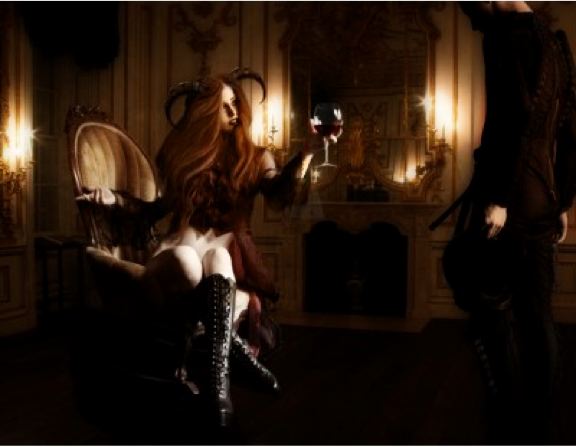
She sat in the light of a healthy hearth fire, her legs curled under her, her auburn hair gleaming in the firelight. Her evening dress was a sky blue trimmed with dark blue curlicues that ran the length of her sleeves and around her waist.

Fixing her bright green eyes on me, I almost stumbled.

“Haskell, my friend! It is good to see you.”

“Hello, Amia.”

She rose from the chair like a queen about to spit on a peasant’s head, and kissed me lightly on the cheek.

Alazne had made herself disappear; I could tell it was something she had a lot of practice doing.

“Sit, please.” Amia indicated the chair opposite her. I sat, and she poured something into a cup and passed it to me. It was steaming, and smelled like bitten warm plums in high summer.

“The best of Inkara wines.”

“I’ve always liked Inkara.”

“You’ve always had reason to.” She smiled at me, and against my better judgement, I smiled too.

“It’s where we met,” she reminded me.

“How could I forget?”

“If you didn’t forget, why didn’t you come for me?”

“If I’d known you wanted to be found, I would have.”

“You left me, Haskell. I can’t begin to tell you what I needed to do to survive.”

“Do I need to know?”

“You selfish, pigheaded–”
I put the cup on the table next to me, and stood up.

“Where are you going?”

“I’m leaving again. You have no claim on me, Amia, and I’ve none on you. Whatever game you’re playing, I want no part in it. I don’t know how you found me,  I don’t know why you sent a child I don’t know to bring me here, but to invite me here to reprimand me because I’m not a mind reader–”

She stopped, and seemed to collect herself. “I’m sorry, Haskell. Please, sit down.”

“No.”

“Suit yourself,” she said, sitting. “I need your help.”

“You…”

“Yes, Haskell. I need your help. I have no one else to turn to. I made inquiries, and they told me you were traveling here, to my homeland. I left this place, but I had Alazne stay and tend it, and keep away intruders.”

I sat, curiosity getting the better of me; Alazne was slight of build. She looked like a waif that would reach a weight of ninety pounds in a soaking rain.

“Who is she?”

Amia smiled. “There’ll be time for that later. She’s more formidable than she looks.”

I let that pass, and after an appropriate moment, I brought it back to the subject.

“What’s your problem?”

“I came across some information I wasn’t supposed to; there’s a council gathering against the Priestess Guild. They’ve been accused of sorcery. I need to warn them.”

“Are you part of them?”

“I made my attempt, and they were to get back to me. I don’t know my status.”

“So what role does the council play?”

“They want to kill them. They’re afraid of the arts the priestesses use, and they think they’re going to take over the land.”

“They have more than enough power to do that if they want; the council should know that.”

“The old council did. This new one is headed by a firebrand named Malika. She’s made it her mission to disband the Priestesses and see them executed for witchcraft.”

“But they’re mostly Healers, right?”

“There are some who dabble in the darker arts. We, or I should say, ‘they’, have their secret sects as well, but they are not involved in a take-over bid. That isn’t true, and the council knows it isn’t.”

I sipped some more of the plum wine, and savored it this time.

The fire crackled cheerfully in the silence we’d left as Amia took a sip for herself.

I sighed, knowing I shouldn’t have asked, but those green eyes were pulling me back out of the center of myself, and my resistance crumbled like a fortress of sand.

“What do you want me to do?”

She threw a purse of gold and a rolled up scroll at my feet. “Hire some mercenaries, or whoever you trust, and kill the men on the council. Their names are on the scroll. Take as long as you need to, and don’t say a word to them; I know how much you like to talk, even during a fight.”

I swallowed. She had the truth of it; if I knew I was better than the person I was against, and going to win, the taunting was inevitable, though completely unnecessary. I couldn’t help it.

“And Malika?”

Her green eyes sparkled like emeralds with a phosphorous center. It gave me chills, and I quickly suppressed the memory of the last time I saw that fire.

“I’ll take care of her. Since I’m not one of them yet, it can’t count as betrayal.”

“All right.” I picked up the pen and signed the agreement, then the other form for the supplies. “Where do I sleep?”

Amia laughed, and it was like chimes ringing in a major key, in a gentle wind, on a cloudless day.

“Alazne will show you out,” she said.

Alazne was at the door, holding it open, lantern in hand, the wind frippering her cloak about her.
I chuckled at my stupidity, but there it was.

I made a grand sweeping motion with my arm.

“Lead on, Alazne,” I said, slipping out after her as the door closed by itself behind us, driven by Amia’s power, and I heard the lock click.

© Alfred W. Smith Jr.
The Mark of Cane

The children were crying, wrapped in chains and manacles, covered in scars from when they’d first resisted.

They didn’t resist now. They couldn’t if they wanted to; they were hungry and tired from their long journey.

The slavers let them sleep, but didn’t feed them for a few nights, though they kept them in drugged water. In days they were gaunt, bedraggled, and dejected.

After five days, they gave them scraps, and watched them pummel, kick, and bite each other for an extra piece, laughing and betting.

After ten days, when they began nearing the city, they fattened the kids who survived the fighting up with full meals to make a decent presentation at auction, and peace reigned in the camp once more, for a time.

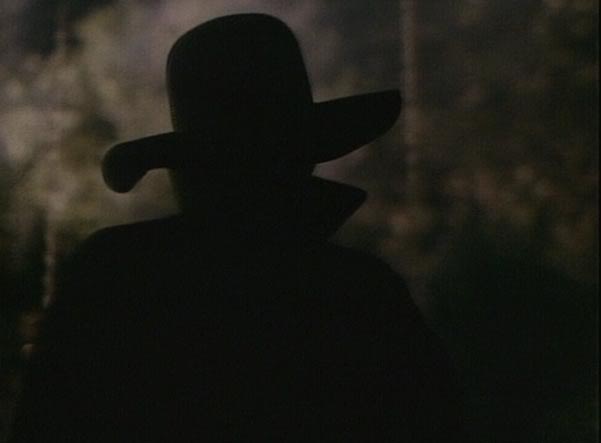
A day’s ride out from the city gates, the slavers woke to find their sentries dead, and the children gone. A dark figure in a broad brimmed hat stood among them as they approached him in a circle, their leader stepping forward, his own knife drawn, to confront the silent intruder, who had his head down inside the hood that hid his face.

“You have until a minute ago to bring those brats back, or tell me where they are.”

The figure, his eyes hidden by the brim, gave an enigmatic smile, and then he lifted his eyes, and looked at the slaver.

The slaver’s skin sloughed off his body in a red, wet heap, and his flesh and bones sagged like sludge, collapsing in red, gory mound, spreading out in a pool of meat and guts and bone.

He heard the sound of men crying out, vomiting, shouting, cursing, praying, and finally, running.

In less than a minute the camp stood abandoned.

The figure turned to go, when the curtain on the leader’s tent parted, and a dark-haired young girl of some twelve or fourteen summers emerged. She looked at the pile of flesh that had only last night claimed her maidenhead, and left her crying and bruised, then she looked at the figure.

“Who are you, mister?”

“My name,” he said, as he removed his hat and bowed to her, “is Cane. Come with me, and I’ll take you to the others.”

Having nowhere to go now, she put out the last of the campfire, and walked toward him, stopping to spit on the red, stinking rubble of her rapist, gave her hand to Cane, and the two of them left the camp without looking back.


© Alfred W. Smith Jr.

Throne of Armageddon

Empty scabbards

and

broken swords

carelessly tossed

before the

empty throne

Dead torches hang on dampened walls

lighting

Death’s way in perfect

darkness

Distant thunder,

softly rumbling, makes

gentle inquiries,

whispering names of

souls long

vanquished.

All is

ended.

All is

lost.

Behold the throne

of

Armageddon

who no longer

reigns

© Alfred W. Smith Jr.

Soyala and the Traveler

I was lost in a strange forest.

Looking about, exploring, the trace of a finger on a blossom, the parting of the river current with a dipped finger, the dappled sunlight of high summer in a shady grove, I called out to answer a whispering voice.

A rustle of branches, so slight I thought it a woodland creature, and she emerged into the clearing, saw me seated on the rock, my knife at work on an apple, and without fear she approached.

Her flowing, bell-sleeved gown was the pale green of a young pine and didn’t seem to bend the grass with its trailing train.

“Why are you here?”

I looked up, bemused more than startled. “Why do you ask?”

“For the sake of knowing.”

“I was…called…here…” I gestured with my knife to take in the grove in general.

“Who called you?”
I smiled. “Was it not you?”

She did not smile. “If it were me, I would not have asked.”

“I don’t know, then.  Am I not welcome?”

She came further toward me, stood before me, examining, her eyes large and luminous. They were just shy of hypnotic, but with power, nonetheless.

“All are welcome here.” Looking deeper, her eyes sparkled with many things, magic, mischief, mystery…

“Ah, good.” I sliced the apple and offered it to her on the tip of the knife She took it with her fingers, munched awhile, looked about the grove.

“You live here?”

She seemed to give it thought before she answered.

“It is more like we live in each other.”

I began to think she might be mad, so I grew cautious.

“May I ask your name?”

She sighed.

“I have many, and they are all equally unimportant, but if you would name me, I am Soyala.”

I offered her another piece, which she also took.

“I’m pleased to meet you, Soyala.”

“And I you, Traveler.”

“How did you know I was here.”

“I heard your call. There was something in it worth seeing.”

Again, the hint of madness. “How can you see inside a call?”

She looked at me as if I were the dumbest of beasts, then smiled indulgently, and placed her slender hand on my chest.

“The heart, Traveler. The heart speaks for the soul; there is music in the call, and yours was sad. It ached with loneliness, and so I came to keep you company for awhile. ”

I looked at her in amazement, surprised to find a tear rolling down my cheek.

With profound tenderness she took the hem of her green robe, and daubed it off my cheek.

There was a stain of blue there, swirling with various shades of it, before finally deepening, and staying dark.

She looked into my eyes. “You have been alone a very long time. It is love you seek, but I cannot offer it to you, Traveler, or I would give it freely, and you could stay here forever.”

“No one lives forever.”

“But love does, Traveler.”

She pulled back, straightened, smoothed her robes, looked off into the distance, and said it again, softer. “Love does.”

She took my hand and led me from the rock.

“Come, I will walk with you to the edge of the grove, back to the road, and our time here together will end.”

“But you said I was welcome.”

She smiled. “I said all are welcome, and they are. But none may stay.”

We walked in silence, the only sound the random trill of birds, and the rustling of her robes, and the crunch of my boots.

Finally we emerged into the light of a westering sun, deepening in shades of amber and tangerine and persimmon, lighting the stitching of cirrus clouds afire from below.

“Will I see you again?” I asked.

She took my face in her hands, and searched my eyes for the depth of the question.

“When you love again, Traveler.”

She released me, took the rest of my apple, and walked away; I heard the rustling of her robes as she left me, and watched her disappear into the trees.

I started down the road and looked up.

The last of the sun was almost gone, and the darkening sky was blue and green, trimmed with a vestige of gold.

And the evening star slipped across the sky, a silver tear from the moon’s saffron cheek, and guided me home.

The Thing in the Corner

The Thing in the Corner

will not let me share

in its mystery

It keeps fanatically to itself,

gazing wistfully at the moon

Its skin ripples in the dawn-winds,

and it gives

a little whimper of a yawn,

stretching til it’s pencil thin

Sometimes it peers curiously at me

as if I were the Thing in the Corner

but I’m not

I’m the Other Thing in the Opposite Corner

of the Same Room

I try to be friendly though, I really do, so it’s not as if it’s

entirely my fault or anything.

Perhaps one day, when we’re both sad, we’ll meet in the

center

of the room and

cry

sympathetically

Til then, it keeps its secrets, and I keep mine.

And now here comes the morning mist

to enshroud the Thing in the Corner once more in

mystery,

and I remain

out in the open, a

vague and random

clue.

© Alfred W. Smith Jr.

Open Space

I like to laugh out loud

over nothing

in

open spaces

so they can’t catch me

with

the net

© Alfred W. Smith Jr.

A Handful of Stars

If you could

hold a handful

of

stars

what would you do with them?

puff them away

like

dandelions fluff

and make

random wishes?

toss & scatter them

like

silver coins

into the

sea?

make clusters of them

spin

like

pinwheels?

or let them

slowly slip

through your

fingers

spilling them

back into

the sky?

If you could

hold a handful

of

stars

what would you do with them?

© Alfred W. Smith Jr

Knight’s Watch (2)

Markis gave no thought to himself, and bolted from his room down to his father’s.

He kept the door closed but never locked it, in case he had to get to Markis, or Markis had to get to him.

Markis dreaded the latter circumstance, but it was here now.

There were no lights on; his father slept in total darkness, and Markis knew he would be at a disadvantage if she attacked.

Cautious, straining to listen, he cracked it just a little, and gave his vision time to adjust to all the familiar shapes of furniture the room contained.

Nothing seemed amiss; nothing was disturbed.

He allowed himself a brief smile of relief, but she’d been sitting in his father’s reading chair, watching him.

Her eyes flashed that serpentine yellow again, and Markis found an edge of anger fueling his fright.He opened the door all the way, opening himself first if she were of a mind to do anything, if she hadn’t already…

“Come in, Markis. We’ll chat awhile.”

He understood the threat under the pleasantry, and Markis closed the door behind him, still in the dark.

“My dad…?”

“Won’t hear us. He’s asleep, and I haven’t hurt him. Cross my…well, he’s asleep. I won’t hurt you either, sweetheart. Come. ”

Soft light flared from her, and suffused the room, and she beckoned him.

He was wary, but glad he could at least see her now.

“What do you want from me?”

“It’s not a small thing. Since you saw me, us, do what we did, I’m obligated to ‘request’ that you keep silent.”

“Who would I tell? He disappeared, along with whoever was helping you set him up.”

“True, but the people I work for have reason to take more precautions these days, and they’re not the type to trust promises. In addition to your silence, I have to ask for your assistance.”

He barked a laugh. “Why would I help you?

She looked pointedly at the sleeping figure, snoring softly under his comforter, at peace in spite of his pain, then back at Markis.

“Don’t threaten him!”

“Calm down, Markis. The threat isn’t coming from me.”

He calmed, but it took a moment.

“What do you need me to do?”

She got up, came toward him, strong, supple body beneath her clothes, the air around her engulfing him, heady with a scent he couldn’t identify, and something in her eyes that locked him in tight.

Her hand on his chest was warm, but sent shivers through him.

Her other hand on his stomach as she lifted his shirt warmed him elsewhere.

Slipping behind him, she raked her nails lightly, and steam rose from his flesh, but he wasn’t burning.

Her lips brushed his earlobe, her voice husky with her own desire.

“I don’t know yet, darling, but I know where we can start.”

It seemed to him he melted to the floor as she pressed him down, and time was no longer of the essence.

*********************

He woke in a dimly lit room, a storage room of some kind, full of cases and casks, and he realized he was in the bar across the street from his place, underground. He’d come down here with his dad sometime when the owner would ask him to help with a restock before the place opened.

Markis realized they’d bound his arms and ankles, but they didn’t gag him, and he didn’t hurt anywhere. Testing his limbs in his bonds as surreptitiously as he could, he was satisfied nothing was broken or gone.

“Ah, Markis, you’re awake.” A man’s voice, sonorous, quietly forceful, used to getting his way.

“And this is how you say good morning?”

To his surprise, laughter rippled around the room.

“Remarkable,” the man said, but what he meant by it, Markis didn’t know. “Forgive our primitive precautions.”

The ropes fell off, crumbled to fibers as if old and desiccated, and Markus rubbed his wrists.

“I’ll get to the point: I’m asking for your help. The man you saw so hastily, mysteriously dispatched was in fact looking for us. We found him first. His people want to destroy us.”

“And there’s a reason you shouldn’t be destroyed?”

“Who wants to be destroyed? Who really desires destruction?”

He had no answer.

The man continued. “We took advantage of his drunkenness. He was a fool to let his guard down.”

“So what’s my part?”

“Help us locate them.”

“How?”

“I won’t tell you unless you agree, and though you might want to agree now, I’m not going to accept it now. I’m going to give you some time to think about it.

“Your father, and the rest of your family, will be safe.”

“Unless I say no?”

The man gave no answer, and Markis couldn’t read his face.

“Well, given what I’ve seen, I guess if you wanted us dead, we’d be dead.”

The man arched his brows in approval, a hint of a smile at the corners of his mouth.

“We’ll not detain you further.”

Markis blinked, and found himself outside on the sidewalk with his paranormal seductress, who helped him get his balance when he stumbled against her.

The rain had stopped, and the pale light of dawn was blotting at the black night sky.

Steam rose from the manhole covers, and the morning wind was high.

Her hair blew about her face, and she draped it over her fingers as she watched him; she said nothing as he got himself together,

“I’ll walk with you.”

“It’s right here.”

I’ll walk anyway.”

The crossed the iridescent street, still puddle, still oiled, but the edges drying in the wind.

“I’m sorry, Markis. I got you involved.”

“And I don’t really have a choice, do I?”

“You do, just not if you want to save your dad.”

“What are you, that you can do these things to people. To me?”

“We’re a roomful of monsters, Markis. Hybrids of the spirit world, with many powers gained over many lives. We’ve been chased across the world; some want to study us, others to kill us outright and feed our souls to hellfire.”

“And you?”

“Part succubus, part demon, part witch.”

“That explains…” his face heated.

“Well, I do like you, Markis.”

They laughed.

“Better get upstairs. Your dad’s going to be up soon, and he’s going to want pancakes for breakfast.”

“How do you–?”

“Part clairvoyant, too.”Again the smile: how could it be so dazzling, and pretty, and feral? He supposed it was a gift, of sorts, that she could make it so.

She placed a hand on his forearm. “Take care of yourself, Markis.”

As she walked away, he called out. “You too…uh…I don’t know your name!

“Better for now, you don’t!” she called over her shoulder, as she faded away, instead of suddenly vanishing, as she did so dramatically the last time.

Markis looked on, incredulous: there were people on the street, not many, but some, in plain view of them talking, and she was fading away, and nobody saw her, no one stopped to look.

Better get upstairs.

He smiled, shook his head; the memory of her heated his face again.

“Turns out I had a crazy night out after all.”

But a man is dead, Markis. Dead, and no trace of him left on the earth, anywhere.

  Best not forget that, Markis.

  Don’t forget that at all…

Knight’s Watch

Markis was in bed with his headphones on, looking out the window on the wet streets of the Lower East Side.
He lived on the third floor, and his bed was by the window, which was dangerous because bullets were known to fly suddenly and randomly, one could have his name on it.
But tonight, he needed to see outside, and the rain normally kept men who could bench press four hundred pounds or more inside, so there was little chance of anything happening tonight.
It was nine thirty on a Friday. He’d gone to school that day, and there were parties going on, but Markis was tired, and as much as he liked to dance and the attention of girls, his body said no, so no it was.

There was a soft knock on the door.
“Markis?”
“Come in, Dad.”
His father left the door open behind him.
“Are you all right?”
Markis smiled. “Yeah, Dad, just tired.”
He sat up and took off his headphones.
His father sat in the chair at Markis’ desk.
“Not like you to stay in.”
“But you don’t mind,” Markis grinned.
His father chuckled. “Not gonna lie, I breathe easier. I’d breathe easier still if you moved that bed from the window.:
“I will; just needed to look out for a bit.”
“Anything interesting?”
“Just rain, and watching the traffic lights change.”
“Good.”
They both laughed, then his father grew serious.
“I know it’s been hard without your mom, hard for both of us, but you’re all I have left, Markis, and I want you to listen to me: there’s nothing you can’t tell me, y’hear?
“We can talk about anything, for as long as you need to, and I’ll listen.”
He said it again, “Y’hear?”
Markis looked at his dad in the striated street light: tee shirt, slacks, black socks with no shoes, one foot on the toes, digging into the cheap, clean carpet; he was still strong, but a little more stooped these days, more rounded in the shoulders.
The death of his bride had deeply shaken him, taken something out that was vital to his very being. It was almost an aura, vibrating on the verge of a breakdown, but his dad was a fighter.

Markis almost wished he wasn’t, but he knew his dad wanted to be strong for both of them.

He understood his father needed him now as much as he needed his father.
Maybe he cried where Markis couldn’t see him.
“I know, Dad. And I promise to come to you.”
His father was visibly relieved, and trusted Markis to keep his word.
They talked about school for a bit; it was a universal truth that parents liked to hear about school. Markis and his friends could never figure out why, but he appreciated that his Dad asked in spite of how mundane school always seemed to be.
His dad finally yawned, sat on the edge of the bed, gave Markis a hug and a dry kiss on the ear.
“I love you, son.”
“Love you too, Dad.”
His dad left, closing the door behind him, to go to his own bed, now emptier by one.

*******************
Markis was about to put his earbuds back in, when a movement across the street grabbed his attention.
Part of his view included a bar that his parents used to frequent when they wanted to go out, and didn’t want to go far.

It was a neighborhood fixture, and his dad would take him there when he was younger to watch games on the large screen, and the men would give Markis team hats, buy him sodas or juices, and mock argue with him about the players and teams he liked. 
Markis would laugh and his dad would put his arm around his shoulders and say, “Ya’ll better leave my son alone, ‘fore I hurt you.”
Markis loved those days, but as the neighborhood got older, it slipped away, and the men left in various ways: some through crime, some through disease, some through violence, and some through alcohol.

The bar had fallen into disuse, and got boarded up. In a month it was open with a banner that said “Under New Management,” but he and his Dad never went back.

************************

A man came out of the bar, not too steady on his feet, but not stumbling.
He lit a cigarette, giving himself time to get adjusted to the cool autumn air, clear his head, get his bearings before heading home, when a woman in a short black skirt and leather jacket walked up to him.
The man smiled, looked her up and down, interested in what she had to say. Then his face changed, and he began to back up, when a hand came around and covered his mouth, and a knife slit his throat.
The streetlamp that lit the front of the bar flickered and went out, and when it came back on, the man and whoever cut his throat were gone; there was no blood in the street, no body, no weapon, and only the first woman remained, checking up and down the street.
Oh hell! Now I’m a witness, he thought.
The woman was crossing the street, coming toward his building.
He was on the third floor, but he was getting ambient light, and he pushed himself into a shadowed corner.
The woman stopped just before his window, and looked up, right into it, as if he were completely exposed. Her eyes flashed a serpentine yellow for an instant, her full lipped smile was feral.
Are you, Markis? her voice was low and purring, as if she was sitting by his side. Are you sure you want to be a… witness?
She lifted her hand, waggled her fingers at him in a girlish greeting.
You should’ve gone out tonight, baby.

She vanished, leaving a trace of black vapor slowly dissipating in the cool night air.

The Sweet, Wise Cosmic Dream (80’s poetry)

If honey ran in mountain streams

the sugar sparkling in moonbeams

and I could hear the screech-owl’s screams

would I then have the sweetest dreams…

Of flying into starlight

with very keen eyesight

having a smooth flight

upon the winds of night?

Would I return with morning sun

the majic of my wings undone

or shattered by the hunter’s gun

(perhaps a god was having fun)?

To then become a man again

staring at the horizon

sheltered in an empty den

the earth’s poor earth-bound citizen?

Would I keep flying into space

to some far, timeless secret place

not to rejoin the human race

as cosmic winds caress my face?

I would prefer the last

and not think upon the past

That time when I was one of you

Unless you wish to travel too….

I thought you would.

© Alfred W. Smith Jr.

June 25th, 1983

The Sweet, Wise Cosmic Dream / Assorted Absurdities (a poetry collection)

All rights reserved