Tilting at the Windmills of My Mind

Clusters of Butterflies

Torrents of Bats

Clear Pretty Blue Skies

Swarming of Gnats

Murdering Dogs

Laugh-n-Play Kids

Wallowing Hogs

Warm Coffee Lids

Friends who’ve forgiven me

Friends who’ve betrayed

Friends who’ve abandoned me

Friends who have stayed

Women who swing their hips

Women who don’t

Women who’ll lay with me

Women who won’t

Enemies  Frenemies

Besties and spouses

Living in tenements

Dreaming of houses

The Creak of  Old Windmills

The Flower that Wilts

The Strength of my Youth fades

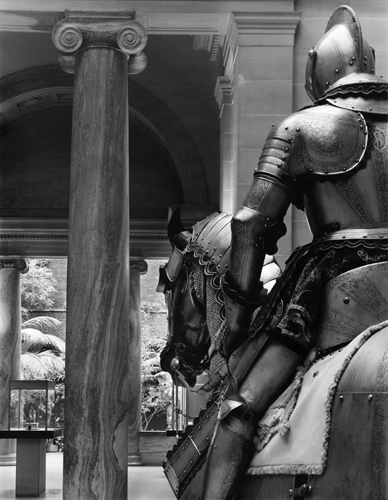
The Jousting Lance Tilts

The Windmills keep turning

I don’t quite know how

I fought them all Bravely

But I’m

Leaving

Now.

© Alfred W. Smith Jr.

December 29th, 2014

Tilting at the Windmills of My Mind

All rights reserved

War Cries (first draft).

Hey readers! Just trying this out. Let me know your thoughts…

1:

A single torch lit the entrance to the private chamber, and as the widows approached, the light revealed their many hues of skin and dress, their jewels sparkled like crystal, rippled like dark red wine, shimmered with the green of a tranquil ocean.

Their collective expressions were somber, sad.

He would be leaving them once again; they never knew for how long, only that they must wake him to go. In their hearts, they grieved, for he would add to their number when he returned.

One of the widows stepped forward, her lithe form whispering against the fabric of her gown; she took the torch in a slender hand, and went into the chamber.

The light almost made it to the high ceiling, and fought bravely against the shadows, but was really little match for the formidable darkness.

“Duilius?” her dulcet voice called, a slight echo bouncing back to her ears.

She waited, knowing he’d heard; as she did, she looked about at the armory surrounding her, weapons he’d inspired in the minds of men. When the carnage was over, he brought them home to show, then to cast aside, as he had all of them, the widows of men.

She smiled at the thought: We, too, are now unused weapons.

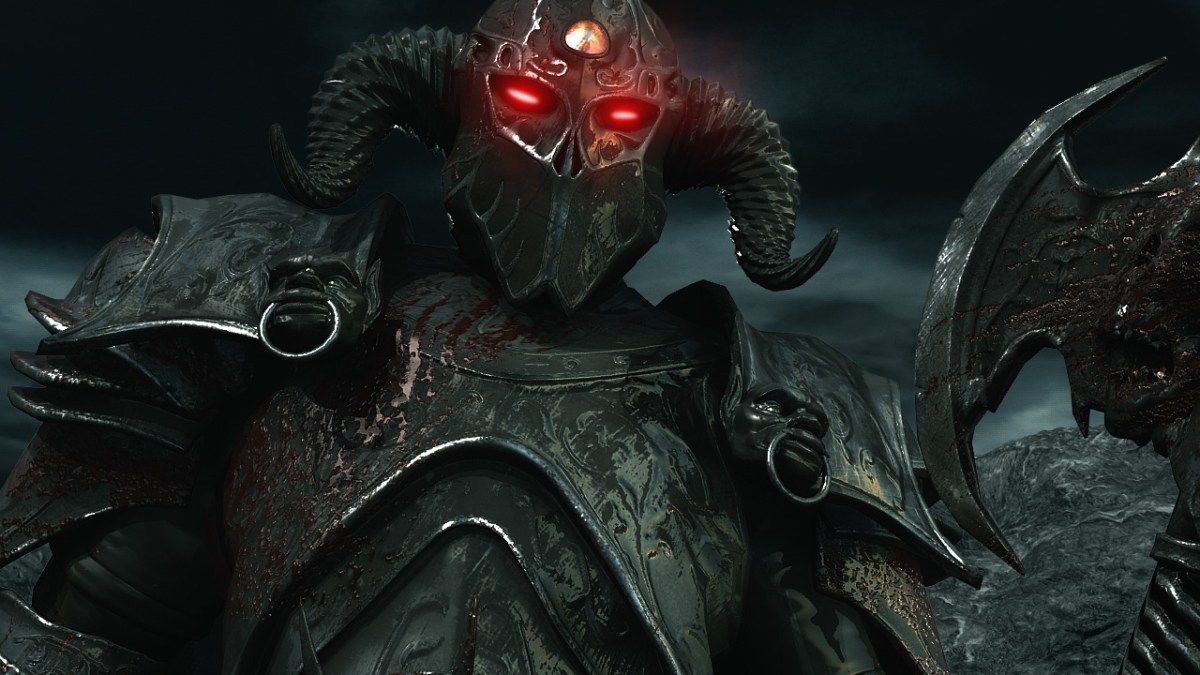
She listened as the armored steps reverberated, a measured tread, slow, steady, and ominous. The sound of metal on metal rang out into the chamber, and he emerged from the semi-darkness into the semi-light, his visage scarred and terrible.

The scents of blood and smoke, waste and corrupted death surrounded him in a nimbus of pungent, horrific odors. It took everything for her not to retch.

Rounding the corner, he looked at her. His red eyes, flaring in the torch light, held her in a freezing grip of fear. He gazed at her a time, lust in his eyes; she saw him wrestling with his desire, and prayed that he would not take her.

Turning aside, he came to himself, and she breathed a sigh of relief.

“Vinya,” he greeted her, the rumble of his voice felt in the tips of her toes. “Where are the others?”

“Outside the chamber.” She managed to keep her voice steady.

“And why are you here?”

“Why do we ever come here, lord?”

He moved closer to her, and she stepped back, but held his gaze, moved the torch a little closer to his face.

His red eyes smoldered like embers, and he smiled; it was lascivious and cruel, mirthless and merciless, but she lifted her chin in defiance.

He reached out to take it between his fingers, his touch burning her cheeks like a high summer sun.

Her lips pulled back in a silent snarl, and her own eyes flared with their own heat.

“Ah, Vinya. You are fiery still. I thought once to break it out of you. I don’t know that I want to, but you should know that I can.”

Against the pressure of his fingers, she formed her words carefully, her hatred for him a rising tide that would one day sweep him away without a single regret.

“I am aware of your powers, Duilius. They frightened me once. Your devil eyes frighten me still, but you’ve done your worst, and yet I’m here. You should know, we are not done, not by any stretch of the imagination.”

He released her face, and she wiped away the crimson ashes his touch always left behind with the back of her free hand. He was blood and fire, indeed, but so was she, in her own way.

He nodded once in acquiescence to her standing up to him, but his patience was thinning; she would persist in her insolence, and he would ruin her beauty for it.

With a pompous air, he seated himself on a stout, high-backed chair, his attention no longer directly on her as a servant scurried to prostrate himself, and Duilius put his feet on a human ottoman, the full weight of his boot heels resting on the servant’s spine.

“Tell me, then. Where am I needed?”

She told him.

The torch sizzled and spit in the ensuing silence.

“Shall I help you prepare?” Vinya asked.

He looked up again, as if she’d just arrived and found him already seated.

There was something on his mind when he was hesitant, but she held her peace.

With a wave of his hand, he dismissed her.

“No. I will leave on the morrow.”

He rose, spared her yet another glance, and she hurled him another haughty look, and turned her back on him, leaving him alone in the darkness, with only his terrible eyes to light his way.

She felt those eyes as if they were hands.The heat from the torch was not enough to keep her from shivering under the weight of his stare between her shoulders, sliding down to her backside.

2:

 Back in his own tower, he took off the armor he’d made and tested in the underworld.

It bore the brunt of bites and claws well enough, and his newly sharpened blades had proven true, but he was running out of test subjects.

His dungeons were almost empty; he would need to remedy that soon.

The silent servants drew his bath, left his supplies and food, and lots of plum wine, and he was soon done with all of it, his eyes heavy, despite his desire not to sleep. It was happening more and more lately, as he got called more infrequently; peace was never kind to a soldier, whom having violently established it, now had to live in it with no further thought to what he’d done.

The thoughts of those men who killed flitted through his mind, as did the thoughts of those killed. The voices never stopped, and they weren’t always men. The higher voices of women and children carried over the lower frequencies of men, their screams of rage, their shocked questions of why, their desperate appeals for mercy, and then their snapping bones, their final moments before the arrows, the swords, the knives, the bolos, the spears, the stones, the molten metal…

He pushed it all back, and lay down, letting the candles gutter.

His sleep, though sound, was never silent, never fully dark. The deepness of it waxed and waned on the grand scales of wheeling stars, changing seasons, shifting tides, the tilt of planetary axis, and on the minutiae of an impulse of animal rage, the calculated, surreptitious slithering of snakes, the vicious, irreversible clamp of creatures with large fangs and evil intentions, the small dramas of life and death between predator and prey always played out before him.

Before he slipped into whatever level of unconsciousness he’d be able to achieve before his journey, the most unlikely thought flashed through his mind:

I no longer wish to be the god of war.


(To be continued)


© Alfred W. Smith Jr.

December 16th, 2014

War Cries

All rights reserved

A Thread of Human-ness

We all have

Uniqueness

in

Common

And

Conform

in

our striving to

be

Individual

© Alfred W. Smith Jr.

November 28th, 2014

A Thread of Human-ness

All rights reserved

Ariana by the Sea

Ariana felt the hot sand sliding between her toes, heard the distant crash of the water smashing on promontory rocks. Not for her the water’s edge. The vastness of the ocean was a strange and fearful thing, and creatures lurked beneath it; she’d heard the sailors’ tales when she worked the tavern houses and inns, and did not wish to find herself bewitched beneath the waves.

And yet, her eyes kept straying there. So beautiful and savage was the sea. Swirling and surging now with a contained rage, blue and green and gray by turns, and powerful, flecked with the gold of a high morning sun, the wind like a child’s fingers on her cheeks and in her hair.

The wind hugged her like a lover; her dress clung to her, and a brief and rueful smile touched her lips, for she felt the curves of her body beneath, her childhood faded like a receding wave, once and done, never to be again, which carried a fear of its own.

Do you want to sail, Ariana?

Her heart beat faster with the thought.

Is there someone across the sea who’s named you for his own?

Her body tingled as an image formed in her mind, faceless, strong, with the hands of a sculptor, the hands of a man who could wring emotions from clay and metal and stone.

But what will he do with your heart, Ariana? What will he do with your heart? Will it still be loving when he’s done? Tender, or will he harden it in the kiln of his own soul?

She couldn’t answer, but did she dare find out?

A prod into the sole of her foot made her wince, and she hopped in the sand. It startled more than hurt.

An empty shell, curved and pink and white, gleamed from its sandy sepulcher.

She lifted its wavy, opalescent edge; it was warm to the touch, though there was no life in it.

She’d heard the stupid stories of how the ocean’s crash could be heard; she knew it was something else, but the notion was appealing, and no one was watching.

Plucking it out, emptying the sand, she walked with it awhile, admiring the useless beauty of it; its owner, no longer needing its protection, either abandoned it or was pulled out by a crafty predator.

Looking up, she saw a lone gull pass overhead; it called to her in solitary greeting, and seeing the shell was empty and the girl alive, he flew on.

Sitting on a dune where the sand grasses tickled her legs, she looked out at the mating blue of sky and water on the horizon, and put the shell to her ear.

And listened to the sea song, her heart beating in harmony, and from her thoughts it brought the face of her shadowy lover, and made the vision clear.

And he would sculpt her heart, and she would sing his hands, and when their work was done….

It would be as timeless as warm sand, enduring as stone and metal, beautiful as a seashell, curled and delicate, with thunder in its midst, tempestuous as a wind tossed wave, and fear of the edge and hiding in shadows would be no more.

You would venture beyond the edge, where you are afraid, Ariana?

The shell slipped from her fingers, its silenced song soaked into her soul.

Yes… yes

She would go.

© Alfred W. Smith Jr.

November 22nd 2014

They Have to be Invited In

They have to be invited in

After they ring the bell

I did, but didn’t know she’d make

my life a living hell

And ever when they lie with you

They lie to you as well

I thought the difference would be plain

But no, I couldn’t tell.

She left a desiccated heart

Inside a broken shell

© Alfred W. Smith Jr.

2014

They Have to be Invited In

All rights reserved

Slaying Songs: A Reaver’s Hymn

Slaying Songs: A Reaver’s Hymn.

Quest

A knight set out upon a Quest

The Lion blazon on his chest

To rescue him a maiden fair

From wizard’s cold and darkened lair

“Fair maiden,” cried he, “I have come

to take thee back to thy kingdom.

“We must make haste! ‘Tis dusk I see

and we have many miles to flee!”

The great oak door that barred his way

Did not yield to the axe’s sway

“Fair maiden, do not take a fright.

I think the moon shall rise tonight.”

He swung until his arm was sore

And in due time broke down the door

He burst inside and flushed deep red

For there he saw upon the bed

The maiden and the wizard locked

And both of them complete defrocked

And breathing hard and laughing soft

within the wicked wizard’s loft

She started up. “Get out!” she cried,

“And tell not what you here espied!”

“But maiden…” cried he, sore and vexed

Not seeing she was oversexed

“Get out, you empty armored head

or ‘pon the road they’ll find ye dead.”

And this was what the wizard said

And so the brave knight turned and fled

The knight, his courage gone astray

Vowed he would Quest no more that day

that month, that year, that century!

He still lives with the memory

Of lovely woman’s treachery.

© Alfred W. Smith Jr.

Quest / Day of the Dark Full Moon (compilation)

December 10th, 1983

All rights reserved

Shadow Whispers

I stared into the Shadows

The Shadows stared at me

And so we asked each other

“What is it that you see?”

I said “I see the ashes of plans

I once did trust”

The Shadows whispered back to me

“We see but blood and dust.”

 © Alfred W. Smith, Jr.
2009
All rights reserved

Waiting on the World to Change

A few years ago, I heard a song by John Mayer called Waiting on the World to Change, a song about idealistic and virtuous youth waiting for the corrupt and evil aged to die off. The song’s most telling lyric went as follows:

“It’s not that we don’t care, we just know that the fight ain’t fair,

So we keep on waiting for the world to change.”

I thought it rather lightweight  for a protest song. I also thought it was the most naive thing I’d ever heard from a young man who’d traveled the world several times over.

Why would you wait?

Still, it will be interesting to see what unfolds while you do. Here’s why:

The ‘love your brother’ and ‘equality for all’ generation, when they began to experience true competition for resources as a result of their policies to ensure that equality in the 60’s, became the ‘angry white men’ of the 90’s and began working to repeal the very laws they enacted, becoming, in the process, worse sell-outs and hypocrites than they accused their corporate fathers of being in the 50’s.

And the computer, an invention of the Boomer generation which Mr. Mayer is waiting to go the way of the dinosaur, has upped the ante considerably, and taken things globally in an instant.

Today, a segment of the 60’s generation of love, peace, equality and freedom throws rocks at immigrant children, repeals voting laws, advances the aims of the very corporations they once vehemently denounced, and seeks to distance themselves from those who they were once like in the past;  the other segment is permissive and apathetic in their adult responsibilities to the point of letting the country fall into anarchy.

So no, dear young people, you can’t afford to wait on the world to change. You are going to have to wade into the American wasteland, and get blood on your clothes, and get in peoples’ faces, and make unpleasant sacrifices, and make your voices heard. There is seldom a birth of a new thing without some labor pains being involved, and getting stoned like your grandfathers did for most of their first thirty years is not the way to go about it.

I’ve heard the saying: “These kids live in a different world.”

No you don’t; you live in a different time.

Yes, it is a scary, parasitic, greedy, lustful, materialistic, and intimidating time enhanced by constant connections and distractions, and things baying at you for your attention and money, but you are not in a different world; you’re on the same planet, and as far as we know, it’s the only where you can live outside of a clunky spacesuit, and without devices that will keep you from becoming a runaway hot air balloon.

So let me ask you, Mr. Mayer and company:

Can you really afford to spend it waiting?

Will you?

Fading Echo: Chapter 2

KurtKomoda_EchoDkSM

In the early afternoon, Echo felt the cool grass under her bare feet, and her white diaphanous dress barely hid her charms for modesty.

She gazed about in amazement, looking for Time, who’d manifested himself to her in the form of a sculptor, and barely pushed her through time before Death’s gory scythe claimed their lives.

Can time be killed?

She dismissed the thought; it was enough that she was free from the rocks that imprisoned her in her grief all those centuries ago.

The gods had long ago abandoned the region, and her, and the rains had stopped, leaving the land to change to desert, and her alone inside her stony dungeon; she no longer had the luxury of even repeating the words of someone else, and her loneliness crushed her spirit as she slept, and woke to silence, and slept again, in a cycle of living death.

And then the netherworld travelers happened to stop in front of her.

And now she was here.

************************

Breathing in the fresh clean scent of the forest, even in its pungency, made her shiver with pleasure at life once more. She wanted to kiss Time again; his scent had stirred her, but he’d hidden himself.

Maybe there will be…time…for that later. Her mischievous thought brought a smile to her lips when she heard someone rushing through the woods in her direction.

Before she could hide, the figure emerged; it was her King, flushed, panting, and looking over his shoulder as if a wild boar pursued him.

She took the knee before him, and he paused a moment in front of her.

“Rise, child.”

She stood. “You do me honor, lord.”

“I would, had I time.” He smiled at her with lust, but time was of the essence, and he’d sated himself elsewhere.

“How may I serve you?”

“Juno pursues me for my dalliances with some of your sisters. I would that you use your skills of conversation to detain her while I escape until she calms down.”

“I am at your service, Majesty.”

“There’s a good nymph.” His hand cupped her cheek in a mix of paternal affection and a lion testing the softness of the skin of its next kill.

There was a rustling behind them, and Echo wanted to laugh as Jupiter bolted like a frightened deer into the woods to escape Juno’s wrath.

*************

The scent of lilac wafted in the air, and Echo walked toward the blooming bush, and gathered some in her hands, letting the scent wash over her, as Juno came from the same direction as Jupiter, her eyes sparking with fury, her nails digging into her palms.

She spied the nymph by the lilac, and rushed over to her.

“Did Jupiter pass through here? Tell me, and don’t you dare lie!”

“To lie to my Queen is to die. I only just arrived, smelling the lilac in the air, and wished to gather some for my bath. Would my Queen like some for her own?”

“No. Thank you. Did you see Jupiter?”

“I did not, my queen. I would run to hide, for I am but in this faerie cloth, and the King is potent in his lust…”

Juno’s eyes flashed.

“…so my sisters say, my queen. He has not taken me to bed, nor would I go, for we are friends, you and I, are we not?”

Her voice softened.

“I have sat at your feet, and eaten from your hand. I live at your pleasure, and die at your command, and my queen has been most gracious not to seek my death. I would not risk such by bedding your lord and husband, though he grow angry with me, and threaten my life.

“So again, I would not lie to you; I did not see my king pass this way.”

Some of Juno’s steam began to dissipate as her gaze scanned helplessly around the woods; it seemed he’d eluded her once again, and her eyes began to shine with welling tears.

“Come, my friend,” Echo smiled, and held out her hand, “come smell the lilacs in full bloom. I will lace some through your hair, along with flowers of white and gold. We will look for them together, and when I am done, my King will be enchanted by you once more, and bring you his heart, cloven in repentance, for you and you alone.”

Juno sighed. “Oh, Echo. Dear, sweet, kind Echo, you are ever my solace, ever my friend.”

“I’ve no other desire, my Queen.”

Echo surreptitiously cast about for Time once more, but he was not present.

********************

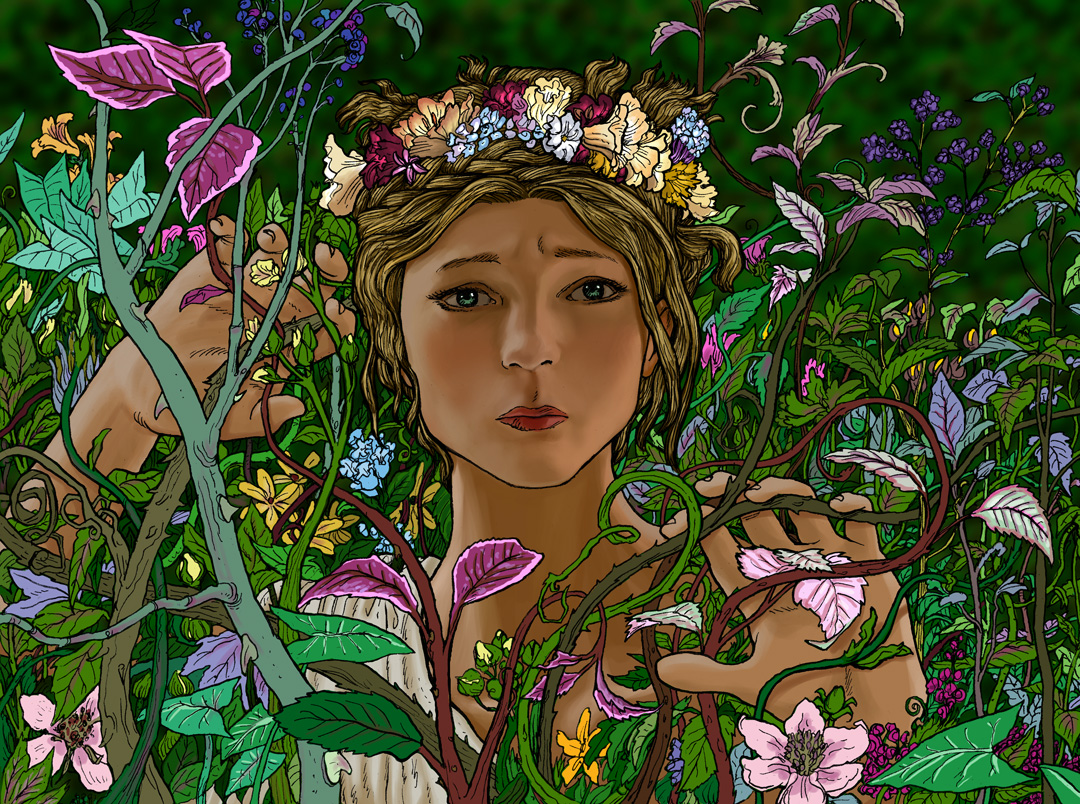
They spent the afternoon together, and Echo chattered away; her knowledge of the woods and all therein was extensive, her curiosity about matters royal always favored Juno’s views, and as the sun wheeled to the chariot house, they gathered the lilac, the yellow posy, blue periwinkle and daisy, and Echo wreathed them round, and crowned Juno, saying she was now a nymph, and had to stay in the forest where Echo could teach her all there was to know.

Juno laughed, and Echo laughed with her, not like her.

And so the afternoon went, until they came to a clearing, and sleeping by the base of a tree, was Jupiter.

Both women stopped in their tracks, and gazed upon the sleeping man, clothed only in a loincloth, his royal vestments left wherever the pool was that he’d indulged himself.

Juno turned to Echo, who in trying not to reveal anything, revealed her guilt.

Slowly, Juno took off the crown of flowers, and her arm flashed, and she caught the nymph across the cheek, knocking her to the ground in a spray of blood and blossoms, her dress now immodestly gathered about her as she scuttled along the ground as Juno bore down on her.

Then Juno stopped, remembering she was queen, and shuddered with unspent energy as she pointed at the nymph, her extended hand alight with power…

***********************

Echo closed her eyes, Time forgotten, reliving the horror of the day of Juno’s curse, unable to scream, or plead, or move, she lay like a newborn babe before a ravening wolf, and suddenly Juno shimmered, and stood still,  immobile as Gorgons’ men, yet not of stone.

Time stepped from the woods, and at first Echo was uncomprehending; then she began to realize what had taken place, and slowly, she got to her feet, and walked over to him.

He’d aged more, his rounded frame now thinning, his beard, neat and trimmed, salt and pepper, was now ragged, stained and unkempt.

His eyes, sharp and keen when he sculpted (for she’d looked deep into them as he cut her out), were now almost rheumy to the point where she wondered if he was blind.

“What happened to you?” she asked.

“This is my gift to you,” his voice rasped in her ears.

“You’re giving me back my voice?” Her eyes welled up in wonder.

“It is better to die than to never speak your own words,” said Time.

Echo was overwhelmed.

“What will happen to them?” her gaze took in Juno and Jupiter.

“She will strike him with the bolt that’s meant for you, and he will lose his ability to charm your sisters to his bed.”

Echo ran to him, embraced him, ironically now speechless with gratitude.

She looked into his eyes, and saw the light go out; he was truly blind now.

Death had his shroud; he didn’t bother to tell her he would not make it back to save himself.

He’d answered her question now: Time could be killed or saved, redeemed or spent.

She found that she had a choice to make, and with her heart quailing inside her, she made it.

© Alfred W. Smith, Jr.

2014

All rights reserved