


In response to The Daily Post’s writing prompt: “Once Upon a Time.”
Once upon a time…
He finally made his way home, weary from the day’s work, looking forward to some downtime, but doing what, he didn’t know.
It didn’t matter, really, as long as it wasn’t work.
He’d been to see the doctor last week, and while the overall health was good, there was an issue with blood pressure.
It was high. His hyperactive thyroid had triggered it, and while that was under control, the blood pressure was a constant tide: low, high, low, high…
The heart was fine, the pulse fine, even the cholesterol was fine, and the sugar too. He had no allergic reactions, gained a couple of pounds, but not much, and felt fine in general, no pain to complain about, but though he was not in danger, he was not entirely out of the woods.
Trudging up the steps, he saw the edge of the white envelope sticking out of the mailbox.
Sighing, he removed it: “An Important Message from Your Health Plan.”
Doctors….
He walked through the living room, looking at the envelope in his hand, pondering the possibilities of what could be important.
Without much preamble, he put down the heavy bag containing his laptop, and ripped the envelope open.
It was indeed from his health insurance, and as he scanned its message, he couldn’t help but smile, the message within making his heart glad and lifting his spirits, and lowering his blood pressure.
“This is not a bill.”
Tag: connection
Victory Flags
You should know:
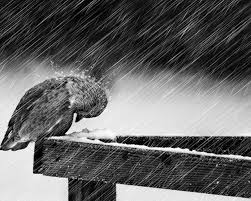
Victory Flags are not always grand, unfurling banners embroidered with gold sigils of lions rampant, soaring eagles, flame-spewing dragons, diving falcons, and weapons of war, planted at the heads of armies, looking down into valleys of defeated foes.
Sometimes…
they’re just the right words of comfort in a time of despair,
or dirty, blood-soaked rags stanching bleeding wounds,
or taking a deep, ragged breath before making the next shaky effort…
sometimes it’s looking up the mountain at the descending hordes gathered against you
and getting back up to stand, and exhale a whispered, defiant declaration
into the howling winds and roiling clouds of your most ferocious storm,
“I’m still here.”
© Alfred W. Smith Jr.
You Might Not Like It

In response to The Daily Post’s writing prompt: “Re-springing Your Step.”
I’d typed the last words to my first novel.
It was done, and I sat, in a state of amazement that after all these years of good intentions, false starts, and distractions, the effort had finally paid off, and it was finished.
It felt good; in fact, it felt great.
“Send it to us,” some of my friends said. “What’s it about?”
“It’s a fantasy novel,” I said. “You might not like it.”
“Naw, man. Go ahead and send it to my email, I’ll check it out. So proud of you, dude!”
And so I sent it out to my friends, eager to hear their response.
One week. Two weeks. A follow up email from me. “Hey guys, it’s been a cupla weeks. How ya likin it?”
Crickets.
Another two weeks, another email. More crickets.
“I’ll read it,” a young man I worked with said. “Not sure you’d like it,” I said. “It’s a fantasy novel.”
“Well, I’ll be honest, Alfred. I’m not much of a reader, but if you send it to me, I’ll read it and tell you what I think.”
Why not?
He gave me his email, and I sent it.
He kept me apprised of his progress, what he liked, what he wasn’t sure about, what was I thinking when I wrote this. It was good so far, he was enjoying it. He could see the descriptions in his mind. He was reading it in the email app on his phone during downtime and lunch. He read it on the weekends.
And then he told me something that sent me to the moon and around it several times:
“I finished it, and I’m looking forward to the second part.”
In that moment, if no one else ever read it, I considered myself a writer.
I got an admitted, self -confessed non-reader to finish my first novel, and he remains, to this day, the first of two who have the unpublished manuscript in their possession.
It was more validation to me than if all my friends had read it and offered their thoughts and opinions.
I was (emotionally) high for a week. I shared it on my fb status, I called my best friend, (a published author, whose book actually contains a line I gave him, but he didn’t pay me. Some friend, huh?) I told my sister.
They congratulated me, they understood what I meant, but they didn’t, well, couldn’t feel the elation that came with hearing those words.
A non-reader who doesn’t read fantasy enjoyed my work, told me to let him know when it was out so he could order it, and was looking forward to reading the second part. And he will order it, because he’s kept his word to me all along.
If that doesn’t put a re-spring in your step, I don’t know what would.
A Chosen Successor

In response to The Daily Post’s writing prompt: “Pleased to Meet You.”
Scrooge had just checked in on the Cratchit family, and all was well.
Mrs. Cratchit had taken up sewing, and Scrooge had funded the shop with his new generosity. In return, having no one to cook meals, Mrs. Cratchit did so, and dropped the meals off, always hot and fresh, smelling delicious, to his door within an hour of his arriving home, or sometimes, he would stop by and take the meal with the family, sometimes even leading the grace.
Tiny Tim, no longer quite so tiny, had grown into a fine and studious boy, much like his father, and Scrooge saw more of Bob in him as the years passed.
But two years after the spirits visited, Scrooge began to notice his health was not as sound as it had been, though he kept active with brisk walks, and social with activities, and even volunteered to help out in the very kitchens he’d once reviled, he did so less frequently, despite his zeal.
Against his will, the idea of a successor began to pull at his coattails like a beggar child’s hand.
He spoke to Mrs. Cratchit about Tim.
“He is more into the sciences than anything, Mr. Scrooge. Always puttering about in his room upstairs with his scopes n’ such. I’m afraid he’d not be one for taking over for Bob; all the others have made their plans, and will soon be leaving.
“But I can put up a sign in the shop, if you’d like, and you can hire out an ad in the paper, and see what happens then.”
“Yes,” said Scrooge, his mind distracted, “I suppose I must.”
******************
By spring, Ebenezer was relying more on his cane to balance him than he would have cared to admit. Upon arriving at the office, he looked up at the old weathered sign:
Scrooge & Marley
He looked at the sign now, remembering that fateful night, and the sound of the heavy chains. Not a day went by he didn’t thank his old friend, and not a day went by that he didn’t remember Bob Cratchit, who shortly after that Christmas, had been run over by an arrogant carriage driver.
Scrooge saw to it he lost his livelihood, and all but carried the man to the border of London himself to throw him over it.
He sighed. “I’ll be seeing the both of you, soon enough, I s’pose.”
Putting the key in the lock, he found it already open.
Cautiously, he cracked the door open, and peered in.
The fireplace was lit, the carpets beaten, the floors swept, and a well dressed young man in a long coat was puttering about Marley’s desk.
He looked up as he heard the door close, and saw the stern visage of the old man in front of him.
Scrooge raised his cane, the only defense he would have against so vigorous a young man, in the prime of his youth, strength, and health.
The young man smiled. “Ah, you must be Mr. Scrooge.”
“I am. And you are an intruder. How did you get in?”
“Oh, I’m sorry, sir. I thought Mrs. Cratchit told you. I answered your ad in the papers. I sent you a letter…”
“I did not receive it.” Scrooge grew hesitant, the cane lowered slightly. “Mrs. Cratchit, you say?”
“Yes, the lovely old woman with the sewing shop. Dandy dresses. I might pick one up-”
“Young man!” Scrooge snapped. “I am not here to discuss the delicates of your lady friends. This is my office, and you don’t belong in it, to the best of my knowledge, so I will ask once again, and finally: who are you?”
The young man, brought up short, bowed his head in acquiescence, and stepped forward smartly, extending his hand.
“Phillip, sir. My name is Phillip Pirrip, at your service.”
Scrooge did not reach out, but Phillip, not put off, took Scrooge’s right in his own and shook it, smiling.
“My friends, for the sake of simplicity, call me Pip. Pleased to meet you.”
Temple of the Wind

Sunlight on stone,
fading,
a royal carpet of vermillion,
lighting the wind’s way
into the
empty chamber
to swirl the
thick dust.
We no longer pray here,
but the
spirits
still come.
© Alfred W. Smith Jr.
The Familiar
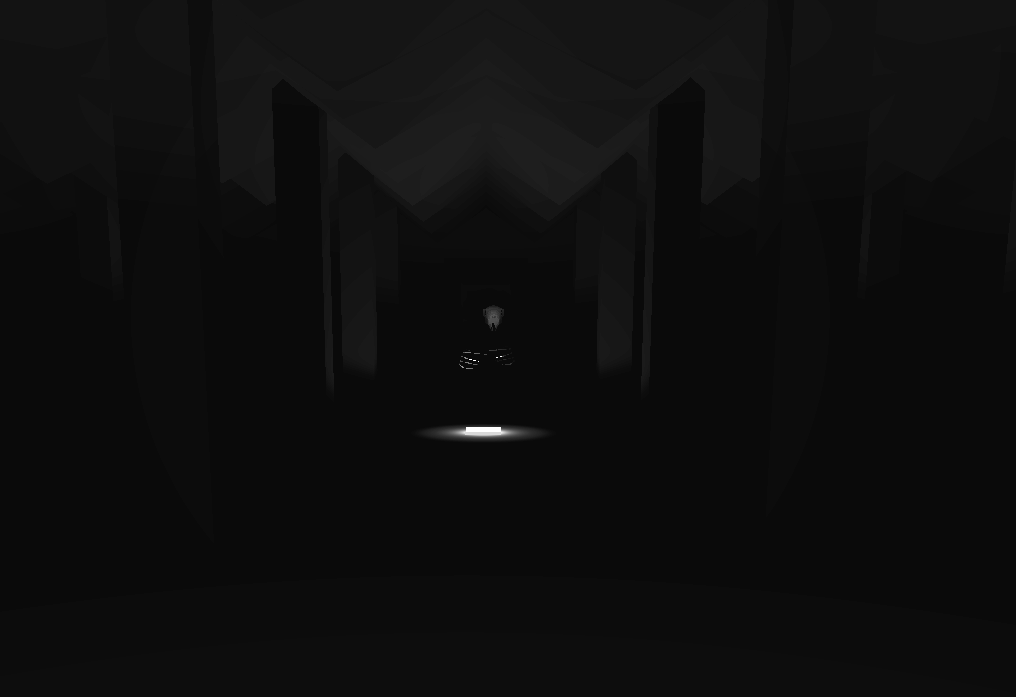
Are you afraid of the
dark
or what
waits
within it?
What is
the thing
with
no eyes
that
sees you
walking blindly?
oh, it hears
your pounding heart,
and it listens,
disturbed by the
noise
of your
silent scream.
The noise
must
stop.
© Alfred W. Smith Jr.
Leaving Letters

In response to The Daily Post’s writing prompt: “Pens and Pencils.”
She was too special to text, to email, to send a selfie.
This had to be from the heart, and would likely be a ‘novel’ experience; he chuckled to himself, being a writer…
There were people about, but he was able to focus.
He even bought a special fancy pen and stationery at the bookstore, just for the occasion; the ink was distinctive, seductively dark, he thought; the yellowed ivory look of the paper gave it just the right look of antiquity, and she would immediately, upon seeing it was his writing, be duly impressed.
The coffee shop, however, was full of college students, much like he’d been not very long ago; loud, boisterous, sure of themselves and their world-changing ideas.
He smiled.
How his world had shrunk, so suddenly, so magically, down to two, and if he had his way, down to one: to her.
This letter, to her. His heart, to her. All that he would be, to her.
He left the coffee shop behind, its murmured ‘walla’ of earnest conversations became meaningless, like the prayers of rabble in the church courtyard to the consecrated priests within.
***********************
Somehow, he found a quiet spot, on a hill where few joggers and dog walkers, parents, and couples out for a romantic walk bothered to venture.
It wasn’t complete solace, but it was the best he would do, and while he burned with the passionate prose he’d composed in his mind, the day was fleeting; soon the night would come, and she’d be home, the element of his elegant surprise lost.
******************
He filled the paper by the light of the westering sun, laboring, reading, reading again, a small mound of pricey parchment in a pyramid of circles on his left, the envelope waiting patiently, resting on blades of grass on his right.
There. It was done. Well and truly done. If he were a girl, (pardon, a woman) who received such a letter, he would surely swoon. Cyrano at his best was a hack compared to this.
*****************
Romantically cryptic, he did not write his full name, just his initials, on the envelope, and he placed it with trembling hand in the mailbox, as if in offering to a god smiling benevolently, condescendingly, upon such a meager, but heartfelt offering.
He left in a high state of anticipatory bliss.
********************
His phone rang at eleven that night.
He’d been pacing, waiting, slowly going out of his mind, but he let it ring four times before he answered it, lest she think him desperate.
“Hello.” His voice came out steadier than he’d hoped for; that was good.
“Is this some kind of joke?” she said.
“Joke? You think I’m joking? You read everything I feel about you, and you think I’m joking? What’s wrong with you?”
Taken aback, her tone softened. “How you feel about me…? But …there’s nothing on this paper.”
“How could that be?”
“I don’t know, but it’s blank; there was a blank envelope too, but I figured with all that, it was probably you, playing a prank on me.”
“But…”
He rifled through his desk, found the pen, hastily scratched the word ‘pen’ on a sticky note, and told her,
“There’s nothing wrong with the pen I had, nothing wrong with the paper.”
They proceeded to talk about what could have happened, and as they talked, he walked through the house, but when he returned to his desk, the word ‘pen’ was gone from the sticky note.
“I’ll call you back…” he said, and hung up.
He took the cartridge out, but there was ink.
He shook the box, and a booklet fell out, splattering on the desk like an blot:
‘Jim’s Novelty Shop: fancy pen with disappearing ink.
Fool your friends…’
Summer Fire

She rises
from the
broken, smoking ruins
of
my dreams.
With
knife in hand
and
lovely eyes
she cuts away
my screams.
And every fantasy I’ve had
And all my secret schemes
Are ripped from me
and cast beside
the
ragged, busted seams.
Little Queen

Little Queen, Little Queen
What can I give?
“Give me your heart,
that I might live.”
Little Queen, Little Queen
What shall I say?
“Tell me you love me,
every day.”
Little Queen, Little Queen
how shall I prove?
“If I come to sit by you,
don’t you move.”
Little Queen, Little Queen
Here is my heart
Long may I love you
Until I depart
“I love you too, daddy.
Now that it’s plain,
Won’t you come play with me
Out in the rain?”
© Alfred W. Smith Jr.
By a Seaport Village

In a cluster of tourist trap
hut-stores
by the Bay
on small,
semi-labyrinthine
streets,
the store
with
the chimes
caught my
fancy.
Weatherbeaten metals
Delicate shells
Wood and stones
Colors and animals
Glass, plain and stained
harmonies blending
in the
evening breeze
Calling
the stars,
Calling
the sea,
to join the
endless
song
of the
voyaging
wind…
© Alfred W. Smith Jr.
 Beyond Panic