Miriam’s Camp (a Darlene story)

Author’s Note: This story features Darlene, the young widow of “Of War and Breakfast”, as an old woman who has lived out her life, dispensing wisdom accumulated from her own experiences and dealings with many people. Her origins start in another story titled, ‘A Journey Home.’ The idea to put several tales from her lecture to her nephew, who comes to visit one summer after many years, of those experiences she shares with him, came when someone suggested I take the experiences from her soliloquy and make them into separate stories. Miriam’s Camp is the third in the series. I hope you enjoy reading it. It is a tale of faith, so if you are not a believer, and wish to comment, please be respectful; I approve all comments prior to them being posted here.
Thank you, and thanks again for taking the time to read my story.  

Alfred

She was never really able to answer why she got off the bus when she did, in front of the old house that lay on the bus route, a road of dust that seemed little traveled except for the people on it going somewhere else.

Every part of her ached from the old bus’s constant jarring, its suspension in dire need of repairs that would likely never happen; the only one it didn’t seem to bother was the driver, who was humming some tuneless song, if there was such a thing, over and over.
If there isn’t, he just invented it Miriam thought.
But she knew her focus was on the wrong stuff; his lack of tonality was not the issue, but a distraction from the truth of why she was coming back.
Get out of here, Miriam, they told her. See the world.
You’re young; you’ve got your whole life ahead of you to do whatever you want.
You’re a beautiful girl, Miriam. Good looks will take you places.
You could be a model.
You could be in movies.
It sounded glamorous, exciting and exotic.
It was actually wrong, crude, cold, and ultimately bloody; the ways of men and beasts, she discovered, were not dissimilar.
And now she was coming home.
******************

She needed time to think.
“I’ll get off here.”
The driver stopped humming.
“You’re a long way from where you belong, miss. That ticket’s only good for one ride.”
“There’s one I haven’t heard,” she muttered.
“Say, miss?”
“I’ll get out here.”
“You sure?”
“ Yes, I’m sure. Thank you.”
“Suit yourself.”
*******************
She stood there in a cloud of wheat colored dust that spun in little dervishes around her like a pulsing aura as the bus pulled off.
Stepping back out of it, she stood there as it settled on and around her, not quite sure what to do next.
“Best get out that sun girl, ‘fore you burn.”
The voice came from across the road; Miriam shielded her eyes from the sun with her hand and peered over.
An old woman sat in a rocking chair on her porch, a cup of coffee in her hand, and a thick book on her knees.
Miriam had never known anyone lived there. Of course not, idiot, this isn’t your side of town.
There were two rocking chairs on the porch. The other one was empty.
The old woman spoke again. “Girl, can you hear me?”
The woman was black; Miriam had never heard a black woman speak to her that way before. It was always, “Yes, Miss Whitcomb,” or “No, Miss Whitcomb,” or “As you please, Miss Whitcomb.”
“Child, come out that sun ‘fore you burn.”
Still somewhat dazed, Miriam found herself crossing the road.
The old woman didn’t stand up. Her brother would’ve called it an anomaly: it was his favorite word. Her father would’ve called it an affront, and dealt with it, but as Miriam got a closer look, probably not with this woman. There was a force to her, and undercurrent of vitality that didn’t seem to encourage or align with the nonsense of modern customs.
“Have a seat, girl. You look done in.”
Miriam looked at the seat, at the woman, at the book in the woman’s lap, and back at the woman’s face. It was old and lined, dark as oak.
“I’ve been sitting for a long time,” Miriam said. “I’ll just lean against this railing, that is, if it’s sound.”
The old woman looked at her then; she had kind and patient eyes that looked not at you, but through.

“My father David, God rest his soul, built this porch with his own two hands. Wasn’t nuthin’ out here before but that dusty road. If it ain’t sound, ain’t ‘cuz he didn’t build it right. Time, termites, and carpenter bees mighta done their share, but you’re welcome to stand, if you choose.”
The railing held.
The old woman went back to her reading, her chair creaking, her finger on the page, tracking the text within.
Miriam watched a hawk circle over a distant field, but the silence pressed.
“Aren’t you going to ask me why I’m here?”
The old woman didn’t look up, kept tracking the words with her finger.
“You here ‘cause I told you to get out of that heat.”
“No, I didn’t mean that, I mean, here.”
“Figured if you wanted me to know, you’d tell me.”
“But you haven’t even asked me my name.”
“Figured if you wanted me to know…”
The girl smiled at that. “It’s Miriam.”
Darlene looked up.
“Well, Miriam, welcome to my home. I’m Darlene. Miss Darlene to you.”
Miriam tossed her hair from her eyes, and said, “And why is that?”
“It’s called, ‘respecting your elders.’ Ain’t you ever heard of it?”
“I guess so.”
“Mm-hmm,” Darlene said. “You can go in the bathroom and freshen up. There’s some clean washcloths in there, and some soap, and lotion, if you’re of a mind. Pour yourself a glass of water too.” She went back to her book.
Miriam did, and came back out in a few minutes, a dampened washcloth in her hand, wrapped around a glass of water.
“Feel better?”
“Yes, thank you, Miss Darlene.”
“You’re welcome.”
Miriam drank her water awhile, her eyes far away.
Darlene finished reading her chapter, and set the book aside.
The words fell in the silence like a stone tossed in the middle of a still lake:
“Comin’ home, ain’t you?”
Miriam went to take a sip of water, and couldn’t raise the glass.
“Yes,” she said, clearing her throat.
She tried to raise the glass again, and couldn’t; her breath hitched, and she tried again.
“You went to the city.” It wasn’t a question.
“Yes…” To her dismay, Miriam felt her face redden, and the tears came so fast and hard they stung. Her reflexes moved her hands to cover her eyes, and the glass fell from her hand as she began to break down.
The glass broke into shiny shards on the sunlit porch, the water spreading, filling the cracks and crevices as Miriam went on her knees.
“I’m sorry!” she cried, “Oh, oh, I’m so sorry!” Darlene knew she didn’t mean the glass.

Miriam bent over, her face in her hands, tears leaking through her fingers, her yellow hair limp and damp from the heat, hiding her face, draped over her shoulders; she could feel tiny splinters poking through her summer dress, and welcomed the pain.
Darlene rose from her chair, and made her slow way over to the young girl.
She raised Miriam off her knees, and held her.
“I know, child. I know.”
She swayed with Miriam in her arms as the girl cried.
“I didn’t mean it,” she said, her voice husky with sorrow.
“I know.”

“I didn’t know!
“How could you know, being so young?”
“Oh, it hurts, Miss Darlene, it hurts so much!” Her body was trembling.
“Yes, baby, it’s gon hurt a lot, and maybe for a long time, but you gon be all right after awhile, Miriam. Time heals. God heals.”
Darlene held her until her sobs became sniffles. Miriam stepped out of the embrace, embarrassed somehow, before this woman, at what she was about to say.
She looked at the water drying on the porch floor.
“I don’t believe in God,” she said.
Darlene kept her hands on the girl’s shoulders, and gave a small smile.
“You don’t, huh? Then I guess you ain’t never heard of your namesake?”
“My…namesake?” She looked up.
“Miriam, the sister of Moses. You ain’t never heard?”
“No. We…we don’t go to church. My father…” she didn’t finish, and averted her eyes again.
“Well, sit down. I’ll be back.”
Miriam sat, wiping her eyes with the washcloth, which was also drying from the heat, but still wet enough for the task. She pulled her hair back off her neck, and tried to compose herself. Something was going on here, something strange and uncomfortable, but not frightening.
In the distance, three more hawks had joined the first. Miriam watched their silent, deadly circles.
And I was the mouse in the meadow.
She thought back to that moment she stepped off the bus, looking around in unadulterated wonder at the crowds, the buildings, the noise assaulting her ears, her senses flooded, and a smooth voice in her ear like a lifeline to someone drowning.
May I help you with your luggage, miss?
She looked away from the hawks.
Darlene came back, handed Miriam a new glass of water along with a fresh wet cloth, cold to the touch, and Miriam wiped her face and neck with it.
“Hang it on the railing with the other one. It’ll dry quick.”
“Okay.”
Darlene waited until Miriam had resettled herself.
“You ready to hear about Miriam?”
“My ‘namesake,’” she tried the word again, and gave a little smile. “I like that word.”
“Yes, she was. Bet your parents didn’t even know.”
“That would be a safe bet, Miss Darlene. I’m ready.”

*******************
Darlene told her of Miriam: how she had watched over Moses as he floated down the Nile and made sure he was safe, and how she led the women out of Egypt in a victory dance, singing songs of praise to God, and how she rebelled against Moses, and God struck her with a skin disease, and they had to put her outside the camp for seven days.
“And you know there ain’t no worse hell for a pretty woman than a skin disease,” Darlene said, laughing.
To her own surprise, Miriam started laughing too.
When the laughter subsided, Darlene continued.
“But you see, Miriam got jealous because God talked to Moses in a way he didn’t speak to her. She got jealous of what Moses had, and forgot that the only reason Moses had that close relationship was because he had a job God wanted him to do.
“See, Miriam had to wait in the same bondage with the rest of her people until her brother came back, and she was older than him. It wasn’t her job to lead the people out, but she did lead the women, ‘cause Moses couldn’t understand how that bondage was for them. Womenfolk’s pain is always different from men; it goes through us in places they don’t have, and I don’t mean what you might think. It goes deeper, and stays longer, and hurts more; you know that now, don’t you?”
“Yes, ma’am.”
“Ain’t no shame in knowin, child, and you found out young. Some women don’t find out til it’s way too late, and they lives is gone. Now this Miriam, she ain’t had no call to rise up against her brother, but y’see, people forget.
“She didn’t know Moses had to keep climbin’ mountains to speak to God, to keep on his knees to stop God from wipin’ the people out, cuz they was always complainin’. He had to work, to judge the people, to deal with their jealousy and pettiness.
“She was there, and she saw it all, but she didn’t know. All she saw was that God was talkin her brother in ways he didn’t talk to her, and it didn’t matter they was free, and on they way to a wonderful place.
“See, folks gets to lookin at what other folks have, and don’t know what they had to go through to get it, but they want it all the same.”
As Darlene spoke, a tear had pooled in the corner of Miriam’s lips, and she licked it off, tasting its bitterness. There had been harsh words and hard feelings at her departure. It all came down to one thing, the last thing she said before leaving: “I deserve better!”
Darlene let her words sink in as she looked at Miriam, who’d begun rocking the chair.
“You made the right choice to come back. Now, truth be told, girl, I don’t know why you got off that bus here, like you asked me earlier, but God knows. Now, you need to get on home, and let your heart and body heal from that beatin’ they done took.” “

“My family doesn’t know I’m here, Miss Darlene. I was afraid to tell them…”
“Honey, they know, and don’t you think they don’t. They didn’t know how long it would be. Soon’s they see you, they’ll know why you came back.”
“They may not be all that happy about it.”
“Well, my dealings with that side of town have not been good, but there’s only one way to find out, and it ain’t by staying here on this porch, now is it?”
“No,” Miriam said, looking at the broken glass.
“Well, I ‘spect they’ll be happier to see you than you think. Come here, girl.”
Miriam went to her, and knelt in front of her, and Darlene took Miriam’s face in her hands, lifting up her sea blue eyes to stare into the depths of her own rich brown ones; Miriam could see they were patient, kind, and full of life, lore, deep sadness and high joy, as her smooth pale cheeks were cupped in dark, calloused hands, like a warrior angel with a new-made chalice.
“You outside the camp now, Miriam, and you’re feeling diseased and wrong, but the only way you gon’ heal is by going back inside, among your own, and let them take care of you. Ain’t got no choice in the matter, no say-so. You spoke out against, and you went through your suffering days, and it’s time to get back. Whatever you do, from here on out, is gonna matter more not just to you, but to other folk, to your family, your husband, when you get one, your kids, when you have some. Your life is gonna be different now.
“You understand that?”
Miriam sighed, and shook her head, and rested it in Darlene’s lap awhile, as the old woman chuckled at the girl’s honesty, and stroked her hair, humming something low and sweet, and Miriam smiled. This was music.
After awhile, Darlene smiled and lifted her up as she got to her feet.
A cloud of dust was visible in the distance as the tires from the approaching bus rumbled over the road. The high sun lit it, fine and floating, a wind blown corona swirling in slow motion through the hot, still air.
“You wait here,” Darlene said, and went inside. She came back out with an old, yellow skinned tambourine, its shakers pitted with rust, its wood worn smooth and bright where hands gripped and slapped. There was a rotted piece of duct tape that was supposed to be a handle, and a smaller piece over a hole where her mother’s fingernail had pierced it.
She held it out to Miriam.
“This belonged to my mother,” said Darlene. “You take it.”
“Oh, Miss Darlene, I couldn’t!”
“Didn’t ask if you could, said I wanted you to take it. I want you to remind yourself of which Miriam you’re supposed to be. See, it’s just like you: it’s been beaten and shaken down to its core, but it’s still here. It got scars and hand marks, scrapes and patches, but it’s still here.”
She held the tambourine out again.
“So are you. You been through it, and now you need to lead others out.
“See, you think you comin’ home in defeat and shame, but you came out of that cesspool in victory, and now you know what to say to those young girls come after you gettin’ on that bus.”
Miriam opened her mouth to say something, but nothing came out. She closed it, her face flushing.
She tried again, but all that came out was, “I don’t know how to play it.”
Darlene laughed.
“Child, neither did Mama! Didn’t stop her none. The deacons had to take this from her she threw the choir off so bad; she’d start out all right, but after ‘while seemed like she just played to the rhythm in her heart, and it wasn’t what was going on up there at all. Happened every Sunday too, sure as sunrise, til she got too old to hold it anymore.
“Then, they just laid it there beside her, and she’d rest her hand on it.”
She wrapped Miriam’s fingers around the worn taped handle.
“Just before she passed on, she told me to keep it, ‘cuz she was gon get a new one when she got home. She don’ need it no more. I don’ either.”
Miriam smiled, and took the gift.
“Thank you.”
The bus pulled to a stop, the nimbus of dust bursting around it like a beggar’s halo.
“You’ll learn to play it in time, and when you’re ready to lead out, you’ll understand. Your time of bondage is over.”
Miriam looked at the worn and battered tambourine, then back at Darlene.
“Over,” she repeated, half in wonder, half in affirmation.
“God bless you, Miriam.”
She kissed Darlene’s wrinkled cheek. “He already has.”
As she crossed the dusty road, she tapped the ancient tambourine lightly against her knee, its rusty jingle breaking the afternoon stillness.
When the bus was gone, Darlene looked at the washcloths hanging like ephods on the old railing, and down at the broken glass, glinting in the sunlight, like the precious stones waiting to be placed on them.
It was a shrine to their time together, and Darlene smiled.
“You gon’ be just fine.”

© Alfred W. Smith Jr.

( May 16, 2014)
Wishing Well

It was a bright spring day, and the last day of the fair was winding down.

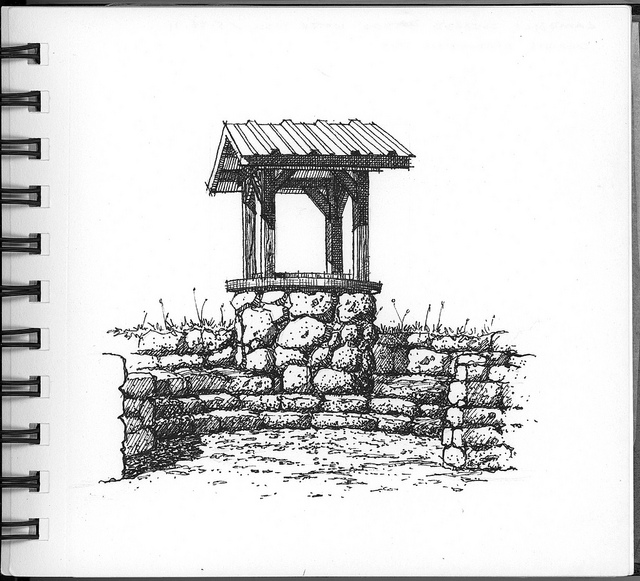
On the path through the exit was a well, dug not too deep, with little water. No one knew if it had always been there, or was built to supply the fair. No one claimed it, as far as anyone knew, but every now and then, just for giggles, a passerby would stand there and look down, close their eyes, and toss in a pocket coin or two, or some worthless trinket, their lips moving soundlessly as they made a supposed wish.

He was just a kid, and still believed in wishes, and the unseen agents that made them come true; fairies, monsters, aliens, and grandparents.

Holding his mother’s hand, he dug into his pocket with his free hand, and threw in a coin, a silver one. He couldn’t remember which one it was, but it flashed in the light of the setting sun as it spun, hit the stones on the far side, and pinged its way down into the brackish water.

He closed his eyes, and made his wish.

His mom looked down at him and smiled.

“What’d you wish for?”

“It’s a secret,” he said, smiling back up at her.

**************************

There was a soft knock on the door to his room, late at night.

Moonlight spilled through his window, lighting the face of his bedtime bear.

“Mom?” he whispered.

No answer.

He got up, rubbed his eyes, and walked barefoot to the door.

Taking a deep breath to stop the little feathers of fear from tickling his spine, he peered out.

She was there, in all her bloody glory, her good eye staring at him from under a crimson crust of dried blood.

“Susie?”

“Ben.”

“I didn’t think you’d come. Not really.”

“Then why’d you make the wish?”

“I wanted to see you; I just thought….I didn’t think you’d come.”

“I have no choice once you make the wish, Ben. Didn’t you know that?”

“No.”

“I wish you hadn’t woke me up, but my wishes don’t count, and I can’t buy one; dead people have no money.”

“I’m sorry, Susie. Should I wish you back?”

“It’s okay. Can I come in? Maybe we can read some comics or something….”

“I was drawing,” Ben said, stepping aside, “but you know where the comics are.”

**************************

They stayed in silence for awhile, but Susie noticed Ben kept glancing at her.

“My face scares you?”

“A little.”

“Sorry. The well doesn’t clean us up, even though it’s got water in it.”

“Oh.”

They lapsed into silence some more before Ben broke it.

“Susie?”

“Yes?”

“I’m sorry about everything. About how everything happened.”

“Me too, Ben. You left me.”

“I know. I shouldn’t have. I got scared, and you were older, and…”

“Still coulda used your help. You were supposed to be my friend.”

“I never stopped being your friend, Susie.”

Susie stood up. “Really?”

“Really.” Ben felt a small pang of nervousness that she’d gotten up.

“Would you do me a favor then?”

“Don’t see how I can. You’re a –”

Susie splashed into his body, squirmed her way past his struggling defenses, and lodged herself inside him.

Ben was frozen with pain, his mouth was stretched, his eyes bulged, his heart raced, and his face was as hot as if he’d put it in a vat full of grease.

“Don’t fight me, Ben.”

He quieted, crying, feeling betrayed and violated, which he was.

“Why’d you do that?”

“You said we were still friends. Now you can prove it.”

“Get out, Susie.”

“No. We’ll never be separated again, Ben.”

Ben regained his composure, sniffling, blowing his nose, feeling Susie flinch inside him at the sensation.

Ben went to the mirror, watched the faint glow in his eyes as her life force pulsed within him, and he smiled.

“That’s where you’re wrong.”

“What do you mean?”

“The day after that happened to you, he came and got me. I was supposed to sleep in her room, but she cried herself to sleep, so I came in here.

Ben held up the picture he’d been drawing.

“My mother threw a coin in the well yesterday at the fair.”

© Alfred W. Smith Jr.

The Mark of Cane

The children were crying, wrapped in chains and manacles, covered in scars from when they’d first resisted.

They didn’t resist now. They couldn’t if they wanted to; they were hungry and tired from their long journey.

The slavers let them sleep, but didn’t feed them for a few nights, though they kept them in drugged water. In days they were gaunt, bedraggled, and dejected.

After five days, they gave them scraps, and watched them pummel, kick, and bite each other for an extra piece, laughing and betting.

After ten days, when they began nearing the city, they fattened the kids who survived the fighting up with full meals to make a decent presentation at auction, and peace reigned in the camp once more, for a time.

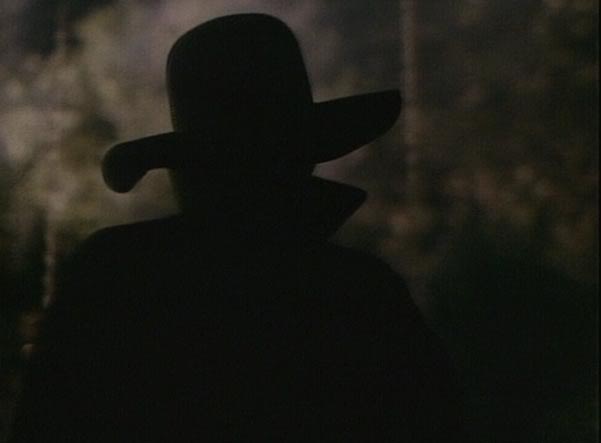
A day’s ride out from the city gates, the slavers woke to find their sentries dead, and the children gone. A dark figure in a broad brimmed hat stood among them as they approached him in a circle, their leader stepping forward, his own knife drawn, to confront the silent intruder, who had his head down inside the hood that hid his face.

“You have until a minute ago to bring those brats back, or tell me where they are.”

The figure, his eyes hidden by the brim, gave an enigmatic smile, and then he lifted his eyes, and looked at the slaver.

The slaver’s skin sloughed off his body in a red, wet heap, and his flesh and bones sagged like sludge, collapsing in red, gory mound, spreading out in a pool of meat and guts and bone.

He heard the sound of men crying out, vomiting, shouting, cursing, praying, and finally, running.

In less than a minute the camp stood abandoned.

The figure turned to go, when the curtain on the leader’s tent parted, and a dark-haired young girl of some twelve or fourteen summers emerged. She looked at the pile of flesh that had only last night claimed her maidenhead, and left her crying and bruised, then she looked at the figure.

“Who are you, mister?”

“My name,” he said, as he removed his hat and bowed to her, “is Cane. Come with me, and I’ll take you to the others.”

Having nowhere to go now, she put out the last of the campfire, and walked toward him, stopping to spit on the red, stinking rubble of her rapist, gave her hand to Cane, and the two of them left the camp without looking back.


© Alfred W. Smith Jr.

Little Queen

Little Queen, Little Queen

What can I give?

“Give me your heart,

that I might live.”

Little Queen, Little Queen

What shall I say?

“Tell me you love me,

every day.”

Little Queen, Little Queen

how shall I prove?

“If I come to sit by you,

don’t you move.”

Little Queen, Little Queen

Here is my heart

Long may I love you

Until I depart

“I love you too, daddy.

Now that it’s plain,

Won’t you come play with me

Out in the rain?”

© Alfred W. Smith Jr.

Throne Room

I died in this chair.

Returning

only to see the

growing shadows

of dusk

once more,

the rusted mailbox

filled

with letters

from my

child,

a portrait

done over

in

webs…

I leave

no footprints,

no tears

to stir

my ashes

mingled

with

dust

on the

creaking floor.

© Alfred W. Smith Jr.

Alis and The Book of Spells

It was after midnight, after the hunters have fed, and the young are asleep, and the night creatures keep watch over them until the break of dawn, when Alis got dressed, found her scarf, took her mother’s apron, and slipped out through the kitchen door.
She loved to explore the woods at night, and she took the apron because sometimes she would gather the herbs her mother would need for the healings scheduled that day. Her mother suspected, scolded her even, on the dangers of being in the woods so late, and Alis tried to listen, but the call of the forest was irresistible to her.
Young as springtime, older than forever, it pulled on her heart until she answered.
When a small light flickered in the tall grass, Alis went to investigate. At first she thought it was a firefly, and went to capture it, but only to hold it; she never captured them.
It pulsed again, way too bright for a firefly; something bigger then, but not large…?
Walking into the high grass, taller than she was, she felt the tendrils brush against her bare arms, and giggled. It was as if someone was painting her into existence, and tickling her at the same time.
The light pulsed, but it was growing weaker the closer she came.
When she stopped walking, the pulse grew stronger.

This was a dilemma; she didn’t know if what she approached was living or not, but she knew she wouldn’t leave until she figured out what the light was doing there.
“I’m sorry, little one,” she said, and walked determined toward her target.
The light seemed to go out, but when she got close enough to see, it still pulsed, barely shining, but it was still there.
It pulsed with the light of a small flame through its red garnet scales: a baby dragon.
Alis gasped in wonder, hurriedly looked about for signs of the mother; surely she would not leave her child here, in mortal danger from predators.
The little thing was on its side, little ribcage huffing out and in, and Alis realized it was dying.
“I’ll take you home.You’ll be safe there,” she said. “If your mother looks for you, she’ll find you safe and warm, and she’ll be grateful to me, and give me a ride, and let me come see you whenever I wish.”
The little dragon pulsed in response as Alis wrapped it tenderly in her scarf, and placed it in an apron pocket.
And there was another glimmer in the moonlight, something that made her look again. On the ground, where the dragon had been, was a small book, bound in black, its cover etched with gold, grand, ornate letters with serifs and flourishes, almost unreadable, but she managed to make it out.

The Book of Spells

The little dragon had been lying on top of the book.
How did she miss that?
Slowly, she looked around, knowing it was ridiculous; who would be watching a lone child in the woods at night?
She picked the book up, dusted it off, and put it in her other apron pocket.
She didn’t really know if she would make it home in time, but she was going to try.

****************
Safely back in her room, she lit some candles, and put the dragon, still swaddled, in an open drawer, and peeled back the folded scarf.
The light was still pulsing, but had definitely dimmed.

Aros, her cat, a black and slender rogue, leaped on the dresser to see what his mistress brought, and licked his lips, looking down at the little red, warm morsel before him.
Alis stared at him, and he gave her an innocent look, as if food was the furthest thing from his mind.
She gave him a smile of quiet menace.
“If you eat him, Aros, I will eat you.”
Aros huffed through his nose, jumped down from the dresser, and curled up in his bed.
Satisfied, Alis went to see what she could find to help her patient.
Puttering around the shelves, she tried to keep the glass bottles from clinking, so her mother wouldn’t wake. In awhile, she managed some combination of herbs she thought would do the trick, crushed them with a pestle, blended them with some fresh water, found a dropper, and went back to her room, hoping against hope the creature wasn’t dead.

********************
It wasn’t, and when she squeezed out what was in the dropper, it licked at the liquid.
Alis smiled in pride and pleasure; she was learning her mother’s craft,

becoming adept.
By the time she reached the end of the dropper, the dragon was able to lift its head.
While the candles burned, she leafed through the Book of Spells, and wondered how it was a small, abandoned baby dragon had come to be in the forest, perishing on top of a book of magic.

Chapter 2:

The spells themselves were magical; when she first opened the book, they were in another language she didn’t know, but as she looked at the letters, they began to writhe and turn and twist, rearranging themselves into her language.
She dropped the book in fright at first, not understanding, but curiosity got the better of her, and she picked it up again, surprised at the power contained in its pages, that it would know how to do such a thing.
Alis smiled, remembering her old beloved science teacher, who muttered

to himself as he went about the class, a ring of white hair around his bald scalp, like a laurel wreath covered in snow, speaking of Great Discoveries.
The way he said it, Alis always thought of the words starting with capital letters: A Great Discovery.
She wondered what he would think of the Book of Spells.
What you have made here, Alis, is a Great Discovery
Or would he be afraid? Was magic just a different sort of science, or something more?

********************
She remembered the marching out of the warlocks and witches to burn in the surrounding lands outside, most of them beaten bloody, some stripped, some whipped, some weeping, and some defiant to the last, but all of them afraid and unwilling to die…
The sound of fires, of screams, of cheers, of screams fading to silence, of leaving feet, and Alis staring, a small child, easily unnoticed in the bloodthirsty gathering, standing just inside the ring of sheltering trees, looking at the blackened bones that had but a while ago supported and framed living flesh.
She stayed, looking, walking about in horrified fascination, staring up at the remains, some of whom still had their eyes somehow, until the first of the crows came in the early evening, when the smoke had cleared…

*********************
She didn’t want to think about that now.
Yes, Alis, you’ve made a Great Discovery, but you had better get some sleep. You didn’t gather any herbs, and Mother may want to go in the morning.
The Book of Spells went under the bed; she decided to leave the drawer open, in case the dragon needed to stretch, and she blew out the candles.
She looked over at Aros, who was still in his basket, sleeping.
She hoped he knew she wouldn’t really eat him, but with Aros, it was better to keep him guessing; he could be such a cuss sometimes.
Pulling her covers up, she took a deep breath, settled in, and looked out at the setting moon until she drifted off to sleep.

© Alfred W. Smith Jr.

Open Space

I like to laugh out loud

over nothing

in

open spaces

so they can’t catch me

with

the net

© Alfred W. Smith Jr.

The Words

The Words

shift

like sliding, overcast

shades of gray,

dark and forbidding

and then the break.

The apple of Apollo’s eye

turns golden

and The Words shift like

rippling waves

of green

in the

windblown grass.

They feel better,

freer,

like bare feet

wriggling toes in the soil.

The Words grow

taller, stronger,

happier

They spill out energetically

like

tossed dice,

for all to see and hear

loaded

with life.

© Alfred W. Smith Jr

Knight’s Watch

Markis was in bed with his headphones on, looking out the window on the wet streets of the Lower East Side.
He lived on the third floor, and his bed was by the window, which was dangerous because bullets were known to fly suddenly and randomly, one could have his name on it.
But tonight, he needed to see outside, and the rain normally kept men who could bench press four hundred pounds or more inside, so there was little chance of anything happening tonight.
It was nine thirty on a Friday. He’d gone to school that day, and there were parties going on, but Markis was tired, and as much as he liked to dance and the attention of girls, his body said no, so no it was.

There was a soft knock on the door.
“Markis?”
“Come in, Dad.”
His father left the door open behind him.
“Are you all right?”
Markis smiled. “Yeah, Dad, just tired.”
He sat up and took off his headphones.
His father sat in the chair at Markis’ desk.
“Not like you to stay in.”
“But you don’t mind,” Markis grinned.
His father chuckled. “Not gonna lie, I breathe easier. I’d breathe easier still if you moved that bed from the window.:
“I will; just needed to look out for a bit.”
“Anything interesting?”
“Just rain, and watching the traffic lights change.”
“Good.”
They both laughed, then his father grew serious.
“I know it’s been hard without your mom, hard for both of us, but you’re all I have left, Markis, and I want you to listen to me: there’s nothing you can’t tell me, y’hear?
“We can talk about anything, for as long as you need to, and I’ll listen.”
He said it again, “Y’hear?”
Markis looked at his dad in the striated street light: tee shirt, slacks, black socks with no shoes, one foot on the toes, digging into the cheap, clean carpet; he was still strong, but a little more stooped these days, more rounded in the shoulders.
The death of his bride had deeply shaken him, taken something out that was vital to his very being. It was almost an aura, vibrating on the verge of a breakdown, but his dad was a fighter.

Markis almost wished he wasn’t, but he knew his dad wanted to be strong for both of them.

He understood his father needed him now as much as he needed his father.
Maybe he cried where Markis couldn’t see him.
“I know, Dad. And I promise to come to you.”
His father was visibly relieved, and trusted Markis to keep his word.
They talked about school for a bit; it was a universal truth that parents liked to hear about school. Markis and his friends could never figure out why, but he appreciated that his Dad asked in spite of how mundane school always seemed to be.
His dad finally yawned, sat on the edge of the bed, gave Markis a hug and a dry kiss on the ear.
“I love you, son.”
“Love you too, Dad.”
His dad left, closing the door behind him, to go to his own bed, now emptier by one.

*******************
Markis was about to put his earbuds back in, when a movement across the street grabbed his attention.
Part of his view included a bar that his parents used to frequent when they wanted to go out, and didn’t want to go far.

It was a neighborhood fixture, and his dad would take him there when he was younger to watch games on the large screen, and the men would give Markis team hats, buy him sodas or juices, and mock argue with him about the players and teams he liked. 
Markis would laugh and his dad would put his arm around his shoulders and say, “Ya’ll better leave my son alone, ‘fore I hurt you.”
Markis loved those days, but as the neighborhood got older, it slipped away, and the men left in various ways: some through crime, some through disease, some through violence, and some through alcohol.

The bar had fallen into disuse, and got boarded up. In a month it was open with a banner that said “Under New Management,” but he and his Dad never went back.

************************

A man came out of the bar, not too steady on his feet, but not stumbling.
He lit a cigarette, giving himself time to get adjusted to the cool autumn air, clear his head, get his bearings before heading home, when a woman in a short black skirt and leather jacket walked up to him.
The man smiled, looked her up and down, interested in what she had to say. Then his face changed, and he began to back up, when a hand came around and covered his mouth, and a knife slit his throat.
The streetlamp that lit the front of the bar flickered and went out, and when it came back on, the man and whoever cut his throat were gone; there was no blood in the street, no body, no weapon, and only the first woman remained, checking up and down the street.
Oh hell! Now I’m a witness, he thought.
The woman was crossing the street, coming toward his building.
He was on the third floor, but he was getting ambient light, and he pushed himself into a shadowed corner.
The woman stopped just before his window, and looked up, right into it, as if he were completely exposed. Her eyes flashed a serpentine yellow for an instant, her full lipped smile was feral.
Are you, Markis? her voice was low and purring, as if she was sitting by his side. Are you sure you want to be a… witness?
She lifted her hand, waggled her fingers at him in a girlish greeting.
You should’ve gone out tonight, baby.

She vanished, leaving a trace of black vapor slowly dissipating in the cool night air.

In the Simple Things

It’s in the simple things:

intimate, small gestures that say you care

a palpable connection felt when eyes meet

knowing the thoughts, finishing the sentences

a connection of hands, the intertwine of fingers

the ebb and flow of bodies

giving and receiving

a binding of hearts and souls

a freeing of spirits

and we understand

the ancient lore of oneness

singing in rounds of alternate harmonies

walking together

down the pleasant path

to

Home.

© Alfred W. Smith Jr.