Night Roads

It started with a lantern on a road at night.

I was traveling alone, as I often did, my senses not on edge, but not dormant. The stars and moon were old friends now, comfortable, and not the beautiful distractions, the harbingers of romantic foolishness they’d been.

My weapons were sharp, my pace was easy, my body was sound, but I was thinking of the rest to come; they day was long, and as the horse clopped along beside me, a light came the opposite way, seeming to dance in the air, clinking as it approached.

Someone was holding up a lantern, the light pushing them into deep shadow so that only part of their face was lit.

I said nothing, and put the knife in my hand.

The light must have glinted off the blade, because they stopped.

“I’ve no money. Please don’t hurt me.”

It was the voice of a child, but that meant nothing; there were people in this world who had no problem using children as a ruse to tragic endings.

“Show yourself.”

They put down the light, and I watched their moonlit shadow as they removed the hood.

“It’s just me…”

I still kept the knife to hand because we had to pass each other.

“Move along, then, and keep to your side of the road. I’ll keep to mine, and we’ll get where we’re going.”

“But it’s you I was looking for.”

I sighed, running out of patience. “Considering we’ve met for the first time, and I don’t count youths among my friends, I doubt it, now–”

“She told me I’d find you here, on this road.”

“Who did?”

“The woman at the cottage on the hill. She said you called her ‘Amia.'”

It sent a jolt through me, because I thought I’d lost her. In fact, I had, but here she found me.

“She’s there, waiting for you. She asked me to meet you and show you the way back.”

“And what’s your name…?”

“Alazne.”

I half expected her to say she was my daughter, but nothing else seemed forthcoming, and I stood there for a moment or two longer than necessary.

“It’s getting late, sir. Will you come, or not? I am to either bring you, or tell her why.”

Nothing in me rang any warning bells; I was curious as to what happened to her, how she knew I was here, why she sent this young girl through a night forest to an empty road, and how at precisely the time of night I’d be on it.

As I recalled, she had no great powers to speak of, at least, of the supernatural kind.

Still, the best decisions throughout history were seldom made by moonlight, and perhaps a little of the old magic from those celestial bodies that have wreaked havoc on the heart were not quite done with me.

“Lead on, Alazne.”

© Alfred W. Smith Jr.

RAIN

As I listen the rain

Each new drop’s a fresh new pain

Memories blossom in my brain

As I listen to the rain


To new places you have gone

Laughing as you travel on

Never caring, dusk til dawn

It’s my heart you’ve walked upon


As I sit and watch the sky

Cry the tears I cannot cry

Clouds all hide the reasons why

As I sit and watch the sky


Others hold you in their arms

Never hearing the alarms

Muffled by your many charms

Unaware your poison harms


Solitude’s new denizen

Seems the sun won’t shine again

I was very happy then

Guess I’ll just remember when….


© Alfred W. Smith Jr.


The Mark of Cane

The children were crying, wrapped in chains and manacles, covered in scars from when they’d first resisted.

They didn’t resist now. They couldn’t if they wanted to; they were hungry and tired from their long journey.

The slavers let them sleep, but didn’t feed them for a few nights, though they kept them in drugged water. In days they were gaunt, bedraggled, and dejected.

After five days, they gave them scraps, and watched them pummel, kick, and bite each other for an extra piece, laughing and betting.

After ten days, when they began nearing the city, they fattened the kids who survived the fighting up with full meals to make a decent presentation at auction, and peace reigned in the camp once more, for a time.

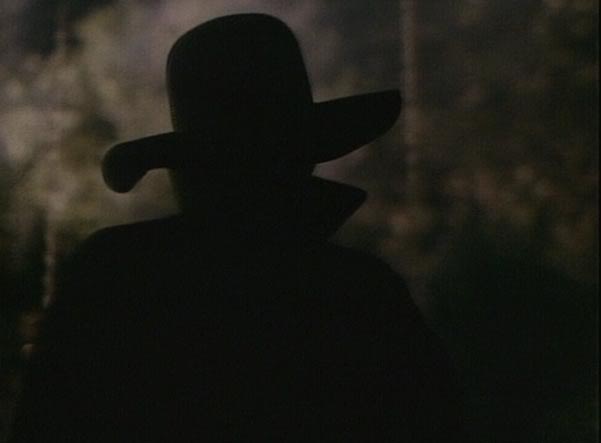
A day’s ride out from the city gates, the slavers woke to find their sentries dead, and the children gone. A dark figure in a broad brimmed hat stood among them as they approached him in a circle, their leader stepping forward, his own knife drawn, to confront the silent intruder, who had his head down inside the hood that hid his face.

“You have until a minute ago to bring those brats back, or tell me where they are.”

The figure, his eyes hidden by the brim, gave an enigmatic smile, and then he lifted his eyes, and looked at the slaver.

The slaver’s skin sloughed off his body in a red, wet heap, and his flesh and bones sagged like sludge, collapsing in red, gory mound, spreading out in a pool of meat and guts and bone.

He heard the sound of men crying out, vomiting, shouting, cursing, praying, and finally, running.

In less than a minute the camp stood abandoned.

The figure turned to go, when the curtain on the leader’s tent parted, and a dark-haired young girl of some twelve or fourteen summers emerged. She looked at the pile of flesh that had only last night claimed her maidenhead, and left her crying and bruised, then she looked at the figure.

“Who are you, mister?”

“My name,” he said, as he removed his hat and bowed to her, “is Cane. Come with me, and I’ll take you to the others.”

Having nowhere to go now, she put out the last of the campfire, and walked toward him, stopping to spit on the red, stinking rubble of her rapist, gave her hand to Cane, and the two of them left the camp without looking back.


© Alfred W. Smith Jr.

I Am the Headsman

I am the headsman.

I collect

the blank stares of the

stupid,

the ineptitude of the

clueless,

the relentless levity of the

perpetual clown.

I am the headsman.

I collect

the pride of the

arrogant,

the boasts of the

insecure,

the innocence of the

naive.

I am the headsman,

I collect

the schemes of

my enemies,

the dreams of

my friends,

the fantasies of

my lovers.

And when I can

no longer

lift the gift of death

I bear,

I will set the bloody basket afire,

and climb on top

to burn

away,

the final dissolution

of

disillusions…

© Alfred W. Smith Jr.

Ariana by the Sea

smithaw50's avatarBeyond Panic

Ariana felt the hot sand sliding between her toes, heard the distant crash of the water smashing on promontory rocks. Not for her the water’s edge. The vastness of the ocean was a strange and fearful thing, and creatures lurked beneath it; she’d heard the sailors’ tales when she worked the tavern houses and inns, and did not wish to find herself bewitched beneath the waves.

And yet, her eyes kept straying there. So beautiful and savage was the sea. Swirling and surging now with a contained rage, blue and green and gray by turns, and powerful, flecked with the gold of a high morning sun, the wind like a child’s fingers on her cheeks and in her hair.

The wind hugged her like a lover; her dress clung to her, and a brief and rueful smile touched her lips, for she felt the curves of her body beneath, her childhood faded…

View original post 427 more words

You Might Not Like It

In response to The Daily Post’s writing prompt: “Re-springing Your Step.”

I’d typed the last words to my first novel.

It was done, and I sat, in a state of amazement that after all these years of good intentions, false starts, and distractions, the effort had finally paid off, and it was finished.

It felt good; in fact, it felt great.

“Send it to us,” some of my friends said. “What’s it about?”

“It’s a fantasy novel,” I said. “You might not like it.”

“Naw, man. Go ahead and send it to my email, I’ll check it out. So proud of you, dude!”

And so I sent it out to my friends, eager to hear their response.

One week. Two weeks. A follow up email from me. “Hey guys, it’s been a cupla weeks. How ya likin it?”

Crickets.

Another two weeks, another email. More crickets.

“I’ll read it,” a young man I worked with said. “Not sure you’d like it,” I said. “It’s a fantasy novel.”

“Well, I’ll be honest, Alfred. I’m not much of a reader, but if you send it to me, I’ll read it and tell you what I think.”

Why not?

He gave me his email, and I sent it.

He kept me apprised of his progress, what he liked, what he wasn’t sure about, what was I thinking when I wrote this. It was good so far, he was enjoying it. He could see the descriptions in his mind. He was reading it in the email app on his phone during downtime and lunch. He read it on the weekends.

And then he told me something that sent me to the moon and around it several times:

“I finished it, and I’m looking forward to the second part.”

In that moment, if no one else ever read it, I considered myself a writer.

I got an admitted, self -confessed non-reader to finish my first novel, and he remains, to this day, the first of two who have the unpublished manuscript in their possession.

It was more validation to me than if all my friends had read it and offered their thoughts and opinions.

I was (emotionally) high for a week. I shared it on my fb status, I called my best friend, (a published author, whose book actually contains a line I gave him, but he didn’t pay me. Some friend, huh?) I told my sister.

They congratulated me, they understood what I meant, but they didn’t, well, couldn’t feel the elation that came with hearing those words.

A non-reader who doesn’t read fantasy enjoyed my work, told me to let him know when it was out so he could order it, and was looking forward to reading the second part. And he will order it, because he’s kept his word to me all along.

If that doesn’t put a re-spring in your step, I don’t know what would.

A Chosen Successor

In response to The Daily Post’s writing prompt: “Pleased to Meet You.”

Scrooge had just checked in on the Cratchit family, and all was well.

Mrs. Cratchit had taken up sewing, and Scrooge had funded the shop with his new generosity. In return, having no one to cook meals, Mrs. Cratchit did so, and dropped the meals off, always hot and fresh, smelling delicious, to his door within an hour of his arriving home, or sometimes, he would stop by and take the meal with the family, sometimes even leading the grace.

Tiny Tim, no longer quite so tiny, had grown into a fine and studious boy, much like his father, and Scrooge saw more of Bob in him as the years passed.

But two years after the spirits visited, Scrooge began to notice his health was not as sound as it had been, though he kept active with brisk walks, and social with activities, and even volunteered to help out in the very kitchens he’d once reviled, he did so less frequently, despite his zeal.

Against his will, the idea of a successor began to pull at his coattails like a beggar child’s hand.

He spoke to Mrs. Cratchit about Tim.

“He is more into the sciences than anything, Mr. Scrooge. Always puttering about in his room upstairs with his scopes n’ such. I’m afraid he’d not be one for taking over for Bob; all the others have made their plans, and will soon be leaving.

“But I can put up a sign in the shop, if you’d like, and you can hire out an ad in the paper, and see what happens then.”

“Yes,” said Scrooge, his mind distracted, “I suppose I must.”

******************

By spring, Ebenezer was relying more on his cane to balance him than he would have cared to admit. Upon arriving at the office, he looked up at the old weathered sign:

Scrooge & Marley

He looked at the sign now, remembering that fateful night, and the sound of the heavy chains. Not a day went by he didn’t thank his old friend, and not a day went by that he didn’t remember Bob Cratchit, who shortly after that Christmas, had been run over by an arrogant carriage driver.

Scrooge saw to it he lost his livelihood, and all but carried the man to the border of London himself to throw him over it.

He sighed. “I’ll be seeing the both of you, soon enough, I s’pose.”

Putting the key in the lock, he found it already open.

Cautiously, he cracked the door open, and peered in.

The fireplace was lit, the carpets beaten, the floors swept, and a well dressed young man in a long coat was puttering about Marley’s desk.

He looked up as he heard the door close, and saw the stern visage of the old man in front of him.

Scrooge raised his cane, the only defense he would have against so vigorous a young man, in the prime of his youth, strength, and health.

The young man smiled. “Ah, you must be Mr. Scrooge.”

“I am. And you are an intruder. How did you get in?”

“Oh, I’m sorry, sir. I thought Mrs. Cratchit told you. I answered your ad in the papers. I sent you a letter…”

“I did not receive it.” Scrooge grew hesitant, the cane lowered slightly. “Mrs. Cratchit, you say?”

“Yes, the lovely old woman with the sewing shop. Dandy dresses. I might pick one up-”

“Young man!” Scrooge snapped. “I am not here to discuss the delicates of your lady friends. This is my office, and you don’t belong in it, to the best of my knowledge, so I will ask once again, and finally: who are you?”

The young man, brought up short, bowed his head in acquiescence, and stepped forward smartly, extending his hand.

“Phillip, sir. My name is Phillip Pirrip, at your service.”

Scrooge did not reach out, but Phillip, not put off, took Scrooge’s right in his own and shook it, smiling.

“My friends, for the sake of simplicity, call me Pip. Pleased to meet you.”

Temple of the Wind

Sunlight on stone,

fading,

a royal carpet of vermillion,

lighting the wind’s way

into the

empty chamber

to swirl the

thick dust.

We no longer pray here,

but the

spirits

still come.

© Alfred W. Smith Jr.

The Familiar

Are you afraid of the

dark

or what

waits

within it?

What is

the thing

with

no eyes

that

sees you

walking blindly?

oh, it hears

your pounding heart,

and it listens,

disturbed by the

noise

of your

silent scream.

The noise

must

stop.

© Alfred W. Smith Jr.

Throne of Armageddon

Empty scabbards

and

broken swords

carelessly tossed

before the

empty throne

Dead torches hang on dampened walls

lighting

Death’s way in perfect

darkness

Distant thunder,

softly rumbling, makes

gentle inquiries,

whispering names of

souls long

vanquished.

All is

ended.

All is

lost.

Behold the throne

of

Armageddon

who no longer

reigns

© Alfred W. Smith Jr.