Night Roads (con’t 3)

3)


Alazne led me back to the road where she met me, again in the lead, using that unerring, unnerving, confident stride she used at the start of the night, as if the sun was shining and she could see every tangled root underfoot.


“The inn’s about a mile that way; you’re going to need this.”

She handed me the lantern.

“And you won’t?”

She just smiled, and slipped back into the forest, the dark swallowing her up.


********************

The windows of the inn were dark, but the moon was beginning to set; I was loathe to knock, but I was tired, cold, and hungry, and thanks to Amia’s generosity, I would be able to afford to alleviate all three.

My knock was answered by a grizzled old man made of whipcord muscles and whiskers.

His eyes were small and mean, and he only opened the door a crack.

“I’m of a mind to leave you outside, ‘cept the missus would have m’ hide. Yer not runnin’ from the law, are ya?”

I tried a smile. “Not at the moment.”

He didn’t see the humor, and reluctantly let me inside.

“We keep a room prepared for such emergencies. Ain’t much to look at, but it will serve for the rest of the night.”

He took my lantern and led the way.

The room was as he said it would be, functional with not much in the way of luxury.

“I’ll take yer coin now, in case yer of a mind to leave earlier than we get up.”

I felt bad for his wife; left to his own devices, there’d be no inn.

His unnecessary surliness was also starting to annoy me; while it was true I woke him up, I was no beggar looking for scraps.

I paid him, and he left without another word.

Stripping down to what I would be comfortable leaving on in case of running outside in an emergency, I gave myself over to the exhaustion that had already seeped into my bones.


**************

In the morning, bathed, shaved, fed, and feeling relatively like a part of the human race again, I was back out on the road.

Finding a shady spot by mid-morning, I stopped and took a look at the list of council members.

Turns out I knew the first name: Jonas Noll.

He’d been a hunter of some renown in this area for quite some time; it was safe to assume that the game he once hunted was now faster and smarter, and he decided to stop before the law of averages worked against him.

Smart hunter, but dumb if he thought Amia was going to let him run roughshod over her opportunity to advance. He’d had some experiences with her as well, and probably decided there’d be safety in numbers.

He was wrong, and I would be the one to tell him so by ending his life, or die trying: older hunters grew craftier with the years. I would really have to plan where to move, and it had to be out of his sphere of influence, with no witnesses.

I scanned through the rest; some I knew casually, others were strangers. Out of all of them, Jonas probably posed the biggest threat.

It would best to work through the strangers first; there were five of them. Two lived some distance away, and while I didn’t really see why they’d get caught up in local politics in this place, it was a safe bet money was involved, probably in matters of voting or breaking bones, or both.

This would have to be a one day event; to spread it out would mean mounting suspicion, and while I was careful, if the right person was in the right place at the wrong time, it could mean the difference between life and death.

To hit them at a meeting would be the most practical; there’d be anonymity in the crowd, but it wouldn’t be a real test of my skills.

What Amia said about my taunting came back to mind; it was a cautionary tease: don’t mess this up.

I sighed, wanting to draw it out against my better judgment and Amia’s wishes.

All right. A one shot deal. I could use Alazne’s stalking skills to good advantage.

I put the parchment back in the back; the gold was secure under a floorboard in the room, and I got up slower than I remembered getting up before, to go get the layout of the town, a bit of trepidation in my step, because this place attracted a lot of travelers

Hopefully, no one would recognize me from a past adventure in a distant land; if they did, the assignment would stop before it began.

I decided I couldn’t take the chance.

Amia was going to have to help me. My face needed to change, but not drastically. It was the small changes in details that threw off eyewitnesses: a moustache where there wasn’t one, a scar, an eye patch, or just growing longer hair, could make all the difference in escaping bounty hunters leafing a town with Wanted posters.

Unfortunately, I’d learned through experience.

With everything in me thrumming with resistance, I began walking the path back up to her place. She wouldn’t be happy to see me, but she might help me, and I really did need to speak with her about utilizing her mysterious protégé.

© Alfred W. Smith Jr
Night Roads (con’t 2)

We walked back in silence; that is to say, Alazne and I were silent. The thick forest was alive with sounds of the creatures of night, hunting and being hunted, croaking, cricketing, rustling, whooshing, hooting, clicking, buzzing and glimmering.

Alazne knew the way back, with no second guessing. As a tracker and hunter, I was impressed, if a little unnerved. She had advanced skills for someone her age, and I had questions I didn’t want answers to, so I stayed quiet and followed in the wake of light from her lantern.

Walking down the paved path to Amia’s door, my heart began to beat faster, part nervousness, part excitement, and if I had to really analyze it, part fear. It had been years since we were together, and though I had no idea how time had been to her, I knew what it had done to me, and it wasn’t pretty, and it hadn’t been kind.

She sat in the light of a healthy hearth fire, her legs curled under her, her auburn hair gleaming in the firelight. Her evening dress was a sky blue trimmed with dark blue curlicues that ran the length of her sleeves and around her waist.

Fixing her bright green eyes on me, I almost stumbled.

“Haskell, my friend! It is good to see you.”

“Hello, Amia.”

She rose from the chair like a queen about to spit on a peasant’s head, and kissed me lightly on the cheek.

Alazne had made herself disappear; I could tell it was something she had a lot of practice doing.

“Sit, please.” Amia indicated the chair opposite her. I sat, and she poured something into a cup and passed it to me. It was steaming, and smelled like bitten warm plums in high summer.

“The best of Inkara wines.”

“I’ve always liked Inkara.”

“You’ve always had reason to.” She smiled at me, and against my better judgement, I smiled too.

“It’s where we met,” she reminded me.

“How could I forget?”

“If you didn’t forget, why didn’t you come for me?”

“If I’d known you wanted to be found, I would have.”

“You left me, Haskell. I can’t begin to tell you what I needed to do to survive.”

“Do I need to know?”

“You selfish, pigheaded–”
I put the cup on the table next to me, and stood up.

“Where are you going?”

“I’m leaving again. You have no claim on me, Amia, and I’ve none on you. Whatever game you’re playing, I want no part in it. I don’t know how you found me,  I don’t know why you sent a child I don’t know to bring me here, but to invite me here to reprimand me because I’m not a mind reader–”

She stopped, and seemed to collect herself. “I’m sorry, Haskell. Please, sit down.”

“No.”

“Suit yourself,” she said, sitting. “I need your help.”

“You…”

“Yes, Haskell. I need your help. I have no one else to turn to. I made inquiries, and they told me you were traveling here, to my homeland. I left this place, but I had Alazne stay and tend it, and keep away intruders.”

I sat, curiosity getting the better of me; Alazne was slight of build. She looked like a waif that would reach a weight of ninety pounds in a soaking rain.

“Who is she?”

Amia smiled. “There’ll be time for that later. She’s more formidable than she looks.”

I let that pass, and after an appropriate moment, I brought it back to the subject.

“What’s your problem?”

“I came across some information I wasn’t supposed to; there’s a council gathering against the Priestess Guild. They’ve been accused of sorcery. I need to warn them.”

“Are you part of them?”

“I made my attempt, and they were to get back to me. I don’t know my status.”

“So what role does the council play?”

“They want to kill them. They’re afraid of the arts the priestesses use, and they think they’re going to take over the land.”

“They have more than enough power to do that if they want; the council should know that.”

“The old council did. This new one is headed by a firebrand named Malika. She’s made it her mission to disband the Priestesses and see them executed for witchcraft.”

“But they’re mostly Healers, right?”

“There are some who dabble in the darker arts. We, or I should say, ‘they’, have their secret sects as well, but they are not involved in a take-over bid. That isn’t true, and the council knows it isn’t.”

I sipped some more of the plum wine, and savored it this time.

The fire crackled cheerfully in the silence we’d left as Amia took a sip for herself.

I sighed, knowing I shouldn’t have asked, but those green eyes were pulling me back out of the center of myself, and my resistance crumbled like a fortress of sand.

“What do you want me to do?”

She threw a purse of gold and a rolled up scroll at my feet. “Hire some mercenaries, or whoever you trust, and kill the men on the council. Their names are on the scroll. Take as long as you need to, and don’t say a word to them; I know how much you like to talk, even during a fight.”

I swallowed. She had the truth of it; if I knew I was better than the person I was against, and going to win, the taunting was inevitable, though completely unnecessary. I couldn’t help it.

“And Malika?”

Her green eyes sparkled like emeralds with a phosphorous center. It gave me chills, and I quickly suppressed the memory of the last time I saw that fire.

“I’ll take care of her. Since I’m not one of them yet, it can’t count as betrayal.”

“All right.” I picked up the pen and signed the agreement, then the other form for the supplies. “Where do I sleep?”

Amia laughed, and it was like chimes ringing in a major key, in a gentle wind, on a cloudless day.

“Alazne will show you out,” she said.

Alazne was at the door, holding it open, lantern in hand, the wind frippering her cloak about her.
I chuckled at my stupidity, but there it was.

I made a grand sweeping motion with my arm.

“Lead on, Alazne,” I said, slipping out after her as the door closed by itself behind us, driven by Amia’s power, and I heard the lock click.

© Alfred W. Smith Jr.

Wishing Well

It was a bright spring day, and the last day of the fair was winding down.

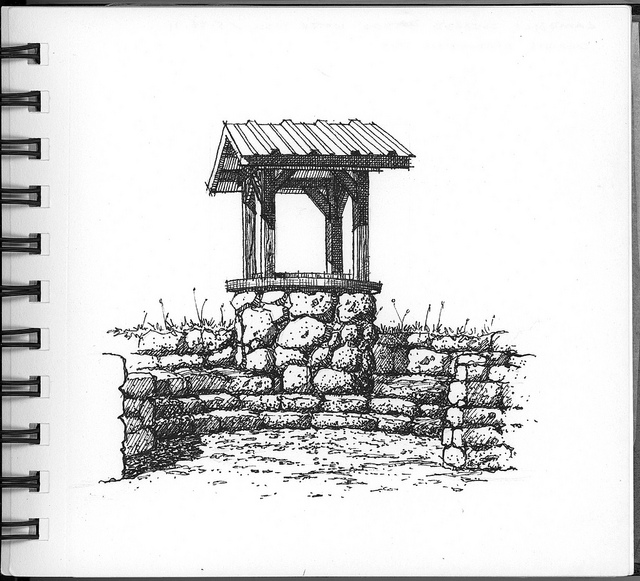
On the path through the exit was a well, dug not too deep, with little water. No one knew if it had always been there, or was built to supply the fair. No one claimed it, as far as anyone knew, but every now and then, just for giggles, a passerby would stand there and look down, close their eyes, and toss in a pocket coin or two, or some worthless trinket, their lips moving soundlessly as they made a supposed wish.

He was just a kid, and still believed in wishes, and the unseen agents that made them come true; fairies, monsters, aliens, and grandparents.

Holding his mother’s hand, he dug into his pocket with his free hand, and threw in a coin, a silver one. He couldn’t remember which one it was, but it flashed in the light of the setting sun as it spun, hit the stones on the far side, and pinged its way down into the brackish water.

He closed his eyes, and made his wish.

His mom looked down at him and smiled.

“What’d you wish for?”

“It’s a secret,” he said, smiling back up at her.

**************************

There was a soft knock on the door to his room, late at night.

Moonlight spilled through his window, lighting the face of his bedtime bear.

“Mom?” he whispered.

No answer.

He got up, rubbed his eyes, and walked barefoot to the door.

Taking a deep breath to stop the little feathers of fear from tickling his spine, he peered out.

She was there, in all her bloody glory, her good eye staring at him from under a crimson crust of dried blood.

“Susie?”

“Ben.”

“I didn’t think you’d come. Not really.”

“Then why’d you make the wish?”

“I wanted to see you; I just thought….I didn’t think you’d come.”

“I have no choice once you make the wish, Ben. Didn’t you know that?”

“No.”

“I wish you hadn’t woke me up, but my wishes don’t count, and I can’t buy one; dead people have no money.”

“I’m sorry, Susie. Should I wish you back?”

“It’s okay. Can I come in? Maybe we can read some comics or something….”

“I was drawing,” Ben said, stepping aside, “but you know where the comics are.”

**************************

They stayed in silence for awhile, but Susie noticed Ben kept glancing at her.

“My face scares you?”

“A little.”

“Sorry. The well doesn’t clean us up, even though it’s got water in it.”

“Oh.”

They lapsed into silence some more before Ben broke it.

“Susie?”

“Yes?”

“I’m sorry about everything. About how everything happened.”

“Me too, Ben. You left me.”

“I know. I shouldn’t have. I got scared, and you were older, and…”

“Still coulda used your help. You were supposed to be my friend.”

“I never stopped being your friend, Susie.”

Susie stood up. “Really?”

“Really.” Ben felt a small pang of nervousness that she’d gotten up.

“Would you do me a favor then?”

“Don’t see how I can. You’re a –”

Susie splashed into his body, squirmed her way past his struggling defenses, and lodged herself inside him.

Ben was frozen with pain, his mouth was stretched, his eyes bulged, his heart raced, and his face was as hot as if he’d put it in a vat full of grease.

“Don’t fight me, Ben.”

He quieted, crying, feeling betrayed and violated, which he was.

“Why’d you do that?”

“You said we were still friends. Now you can prove it.”

“Get out, Susie.”

“No. We’ll never be separated again, Ben.”

Ben regained his composure, sniffling, blowing his nose, feeling Susie flinch inside him at the sensation.

Ben went to the mirror, watched the faint glow in his eyes as her life force pulsed within him, and he smiled.

“That’s where you’re wrong.”

“What do you mean?”

“The day after that happened to you, he came and got me. I was supposed to sleep in her room, but she cried herself to sleep, so I came in here.

Ben held up the picture he’d been drawing.

“My mother threw a coin in the well yesterday at the fair.”

© Alfred W. Smith Jr.

The Mark of Cane

The children were crying, wrapped in chains and manacles, covered in scars from when they’d first resisted.

They didn’t resist now. They couldn’t if they wanted to; they were hungry and tired from their long journey.

The slavers let them sleep, but didn’t feed them for a few nights, though they kept them in drugged water. In days they were gaunt, bedraggled, and dejected.

After five days, they gave them scraps, and watched them pummel, kick, and bite each other for an extra piece, laughing and betting.

After ten days, when they began nearing the city, they fattened the kids who survived the fighting up with full meals to make a decent presentation at auction, and peace reigned in the camp once more, for a time.

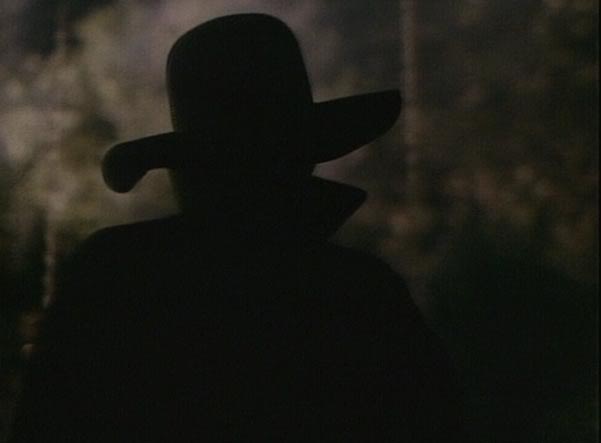
A day’s ride out from the city gates, the slavers woke to find their sentries dead, and the children gone. A dark figure in a broad brimmed hat stood among them as they approached him in a circle, their leader stepping forward, his own knife drawn, to confront the silent intruder, who had his head down inside the hood that hid his face.

“You have until a minute ago to bring those brats back, or tell me where they are.”

The figure, his eyes hidden by the brim, gave an enigmatic smile, and then he lifted his eyes, and looked at the slaver.

The slaver’s skin sloughed off his body in a red, wet heap, and his flesh and bones sagged like sludge, collapsing in red, gory mound, spreading out in a pool of meat and guts and bone.

He heard the sound of men crying out, vomiting, shouting, cursing, praying, and finally, running.

In less than a minute the camp stood abandoned.

The figure turned to go, when the curtain on the leader’s tent parted, and a dark-haired young girl of some twelve or fourteen summers emerged. She looked at the pile of flesh that had only last night claimed her maidenhead, and left her crying and bruised, then she looked at the figure.

“Who are you, mister?”

“My name,” he said, as he removed his hat and bowed to her, “is Cane. Come with me, and I’ll take you to the others.”

Having nowhere to go now, she put out the last of the campfire, and walked toward him, stopping to spit on the red, stinking rubble of her rapist, gave her hand to Cane, and the two of them left the camp without looking back.


© Alfred W. Smith Jr.

Ariana by the Sea

smithaw50's avatarBeyond Panic

Ariana felt the hot sand sliding between her toes, heard the distant crash of the water smashing on promontory rocks. Not for her the water’s edge. The vastness of the ocean was a strange and fearful thing, and creatures lurked beneath it; she’d heard the sailors’ tales when she worked the tavern houses and inns, and did not wish to find herself bewitched beneath the waves.

And yet, her eyes kept straying there. So beautiful and savage was the sea. Swirling and surging now with a contained rage, blue and green and gray by turns, and powerful, flecked with the gold of a high morning sun, the wind like a child’s fingers on her cheeks and in her hair.

The wind hugged her like a lover; her dress clung to her, and a brief and rueful smile touched her lips, for she felt the curves of her body beneath, her childhood faded…

View original post 427 more words

Death to Lizzington

The psychiatrist watched him as he pulled back the curtains, looking out at the pleasant meadow of his new home.

“How are you today, Mr. Smith?”

“That’s a pleasant looking meadow.”

“Aren’t most meadows?”

He looked at her, astonished. “Oh no! No, not at all. Some are quite dark, with things crawling around inside them, things you don’t want to see…”

She wrote a note, but didn’t dwell on it.

“Why do you think you’re here?”

He let the curtain fall. Now it was just the fluorescent lights in the office.

“She ruined my show.”

“Who did?”

“That young woman, on the blog. She ruined it. She sent a petition, and they read it, and did it, and ruined it all…

He was getting agitated; she signaled, and the burly attendants moved closer to the door.

“Do you not understand?” he said. “It’s a pattern: from ‘Moonlighting’ to ‘Who’s the Boss’ to ‘Cheers’ to ‘Night Court’ to ‘Family Matters’ to ‘Boy Meets World,’ the pattern is always the same, the question is always the same:  Will they do it?

“And they always, always do! But this was a haven. I found it after its first season. I watched it, and watched it again, enjoying the byplay, the intrigue; I’ve never seen Spader more brilliant, and the young actress had looks and talent, well matched with him. I had finally found a show worthy of my attention, but shortly after I’d found season one, I met her, the one who ruined things.”

“How did you meet?”

“Not physically. It was on a writing site, before the Internet chips we now have in our brains. She’s since gone on to fame and fortune as an author.”

He sat back, a wan smile on his face: “She posted about her first book signing, and I sent her a congratulatory note. I confessed to a bit of jealousy. Humorously, of course…”

“Of course.” (note scribble)

“But then, I saw her next post, and it was the beginning of the end: a petition for Lizzington!”

“Lizzington?”

He sighed. Was she not listening?

“Yes, Lizzington. It was trendy back in those days to combine the names of couples. Google it, or whatever it is you do now. Brangelina, Bennifer, Kimye, and other assorted nonsense. This was the pairing of Lizzie, a detective, and Ray Reddington, a mastermind and villain. First part of her name, last part of his: Lizzington.”

“I see…” (note scribble)

He leaned forward, holding on to the arms of the chair, sneering.

“No, you don’t see. They listened to her. They received her petition, and they listened to her, and created Lizzington.”

He sat back, deflated. “And in season 3, the detective and villain kissed. The show was over for me then. I’d begged her not to send it in, pleaded.

“Do you know what her answer was?”

The shrink shook her head.

“A quote from Spock: ‘The needs of the many outweigh the needs of the few.’ I knew who Spock was before she was born, and she sends me a quote from Spock!”

The attendants looked inside.

“That’s rather cryptic.” (note scribble)

He sat back, wiping the tears away.

“Oh, oh yes. Cryptic. Cruel, even. High-handed. Dismissive. There’s a bunch more. Shall I recite them all?”

“No. No Mr. Smith, I think we’ve got enough to go on.” (note scribble)

“I’m suggesting you spend a few days with us; we’ll notify your job, and these nice young men will escort you to your room.”

“Is there a window?”

“Yes, I believe there’s a window.”

“May I walk in the meadow?”

“After dinner, yes, you may walk in the meadow.”

“Oh, good. It’s such a pleasant meadow…”

She stood up.

“I’ll be by to check on you tomorrow, Mr. Smith.”

He smiled, endearingly. “Very well.”

The attendants came in, and lifted him gently to his feet.

“This way, sir.”

Wherefore didst thou do this, Megan?”

“Did you say something, sir?”

“No, no young man. Lead on. Lead on…”

You Might Not Like It

In response to The Daily Post’s writing prompt: “Re-springing Your Step.”

I’d typed the last words to my first novel.

It was done, and I sat, in a state of amazement that after all these years of good intentions, false starts, and distractions, the effort had finally paid off, and it was finished.

It felt good; in fact, it felt great.

“Send it to us,” some of my friends said. “What’s it about?”

“It’s a fantasy novel,” I said. “You might not like it.”

“Naw, man. Go ahead and send it to my email, I’ll check it out. So proud of you, dude!”

And so I sent it out to my friends, eager to hear their response.

One week. Two weeks. A follow up email from me. “Hey guys, it’s been a cupla weeks. How ya likin it?”

Crickets.

Another two weeks, another email. More crickets.

“I’ll read it,” a young man I worked with said. “Not sure you’d like it,” I said. “It’s a fantasy novel.”

“Well, I’ll be honest, Alfred. I’m not much of a reader, but if you send it to me, I’ll read it and tell you what I think.”

Why not?

He gave me his email, and I sent it.

He kept me apprised of his progress, what he liked, what he wasn’t sure about, what was I thinking when I wrote this. It was good so far, he was enjoying it. He could see the descriptions in his mind. He was reading it in the email app on his phone during downtime and lunch. He read it on the weekends.

And then he told me something that sent me to the moon and around it several times:

“I finished it, and I’m looking forward to the second part.”

In that moment, if no one else ever read it, I considered myself a writer.

I got an admitted, self -confessed non-reader to finish my first novel, and he remains, to this day, the first of two who have the unpublished manuscript in their possession.

It was more validation to me than if all my friends had read it and offered their thoughts and opinions.

I was (emotionally) high for a week. I shared it on my fb status, I called my best friend, (a published author, whose book actually contains a line I gave him, but he didn’t pay me. Some friend, huh?) I told my sister.

They congratulated me, they understood what I meant, but they didn’t, well, couldn’t feel the elation that came with hearing those words.

A non-reader who doesn’t read fantasy enjoyed my work, told me to let him know when it was out so he could order it, and was looking forward to reading the second part. And he will order it, because he’s kept his word to me all along.

If that doesn’t put a re-spring in your step, I don’t know what would.

A Chosen Successor

In response to The Daily Post’s writing prompt: “Pleased to Meet You.”

Scrooge had just checked in on the Cratchit family, and all was well.

Mrs. Cratchit had taken up sewing, and Scrooge had funded the shop with his new generosity. In return, having no one to cook meals, Mrs. Cratchit did so, and dropped the meals off, always hot and fresh, smelling delicious, to his door within an hour of his arriving home, or sometimes, he would stop by and take the meal with the family, sometimes even leading the grace.

Tiny Tim, no longer quite so tiny, had grown into a fine and studious boy, much like his father, and Scrooge saw more of Bob in him as the years passed.

But two years after the spirits visited, Scrooge began to notice his health was not as sound as it had been, though he kept active with brisk walks, and social with activities, and even volunteered to help out in the very kitchens he’d once reviled, he did so less frequently, despite his zeal.

Against his will, the idea of a successor began to pull at his coattails like a beggar child’s hand.

He spoke to Mrs. Cratchit about Tim.

“He is more into the sciences than anything, Mr. Scrooge. Always puttering about in his room upstairs with his scopes n’ such. I’m afraid he’d not be one for taking over for Bob; all the others have made their plans, and will soon be leaving.

“But I can put up a sign in the shop, if you’d like, and you can hire out an ad in the paper, and see what happens then.”

“Yes,” said Scrooge, his mind distracted, “I suppose I must.”

******************

By spring, Ebenezer was relying more on his cane to balance him than he would have cared to admit. Upon arriving at the office, he looked up at the old weathered sign:

Scrooge & Marley

He looked at the sign now, remembering that fateful night, and the sound of the heavy chains. Not a day went by he didn’t thank his old friend, and not a day went by that he didn’t remember Bob Cratchit, who shortly after that Christmas, had been run over by an arrogant carriage driver.

Scrooge saw to it he lost his livelihood, and all but carried the man to the border of London himself to throw him over it.

He sighed. “I’ll be seeing the both of you, soon enough, I s’pose.”

Putting the key in the lock, he found it already open.

Cautiously, he cracked the door open, and peered in.

The fireplace was lit, the carpets beaten, the floors swept, and a well dressed young man in a long coat was puttering about Marley’s desk.

He looked up as he heard the door close, and saw the stern visage of the old man in front of him.

Scrooge raised his cane, the only defense he would have against so vigorous a young man, in the prime of his youth, strength, and health.

The young man smiled. “Ah, you must be Mr. Scrooge.”

“I am. And you are an intruder. How did you get in?”

“Oh, I’m sorry, sir. I thought Mrs. Cratchit told you. I answered your ad in the papers. I sent you a letter…”

“I did not receive it.” Scrooge grew hesitant, the cane lowered slightly. “Mrs. Cratchit, you say?”

“Yes, the lovely old woman with the sewing shop. Dandy dresses. I might pick one up-”

“Young man!” Scrooge snapped. “I am not here to discuss the delicates of your lady friends. This is my office, and you don’t belong in it, to the best of my knowledge, so I will ask once again, and finally: who are you?”

The young man, brought up short, bowed his head in acquiescence, and stepped forward smartly, extending his hand.

“Phillip, sir. My name is Phillip Pirrip, at your service.”

Scrooge did not reach out, but Phillip, not put off, took Scrooge’s right in his own and shook it, smiling.

“My friends, for the sake of simplicity, call me Pip. Pleased to meet you.”

Alis and The Book of Spells

It was after midnight, after the hunters have fed, and the young are asleep, and the night creatures keep watch over them until the break of dawn, when Alis got dressed, found her scarf, took her mother’s apron, and slipped out through the kitchen door.
She loved to explore the woods at night, and she took the apron because sometimes she would gather the herbs her mother would need for the healings scheduled that day. Her mother suspected, scolded her even, on the dangers of being in the woods so late, and Alis tried to listen, but the call of the forest was irresistible to her.
Young as springtime, older than forever, it pulled on her heart until she answered.
When a small light flickered in the tall grass, Alis went to investigate. At first she thought it was a firefly, and went to capture it, but only to hold it; she never captured them.
It pulsed again, way too bright for a firefly; something bigger then, but not large…?
Walking into the high grass, taller than she was, she felt the tendrils brush against her bare arms, and giggled. It was as if someone was painting her into existence, and tickling her at the same time.
The light pulsed, but it was growing weaker the closer she came.
When she stopped walking, the pulse grew stronger.

This was a dilemma; she didn’t know if what she approached was living or not, but she knew she wouldn’t leave until she figured out what the light was doing there.
“I’m sorry, little one,” she said, and walked determined toward her target.
The light seemed to go out, but when she got close enough to see, it still pulsed, barely shining, but it was still there.
It pulsed with the light of a small flame through its red garnet scales: a baby dragon.
Alis gasped in wonder, hurriedly looked about for signs of the mother; surely she would not leave her child here, in mortal danger from predators.
The little thing was on its side, little ribcage huffing out and in, and Alis realized it was dying.
“I’ll take you home.You’ll be safe there,” she said. “If your mother looks for you, she’ll find you safe and warm, and she’ll be grateful to me, and give me a ride, and let me come see you whenever I wish.”
The little dragon pulsed in response as Alis wrapped it tenderly in her scarf, and placed it in an apron pocket.
And there was another glimmer in the moonlight, something that made her look again. On the ground, where the dragon had been, was a small book, bound in black, its cover etched with gold, grand, ornate letters with serifs and flourishes, almost unreadable, but she managed to make it out.

The Book of Spells

The little dragon had been lying on top of the book.
How did she miss that?
Slowly, she looked around, knowing it was ridiculous; who would be watching a lone child in the woods at night?
She picked the book up, dusted it off, and put it in her other apron pocket.
She didn’t really know if she would make it home in time, but she was going to try.

****************
Safely back in her room, she lit some candles, and put the dragon, still swaddled, in an open drawer, and peeled back the folded scarf.
The light was still pulsing, but had definitely dimmed.

Aros, her cat, a black and slender rogue, leaped on the dresser to see what his mistress brought, and licked his lips, looking down at the little red, warm morsel before him.
Alis stared at him, and he gave her an innocent look, as if food was the furthest thing from his mind.
She gave him a smile of quiet menace.
“If you eat him, Aros, I will eat you.”
Aros huffed through his nose, jumped down from the dresser, and curled up in his bed.
Satisfied, Alis went to see what she could find to help her patient.
Puttering around the shelves, she tried to keep the glass bottles from clinking, so her mother wouldn’t wake. In awhile, she managed some combination of herbs she thought would do the trick, crushed them with a pestle, blended them with some fresh water, found a dropper, and went back to her room, hoping against hope the creature wasn’t dead.

********************
It wasn’t, and when she squeezed out what was in the dropper, it licked at the liquid.
Alis smiled in pride and pleasure; she was learning her mother’s craft,

becoming adept.
By the time she reached the end of the dropper, the dragon was able to lift its head.
While the candles burned, she leafed through the Book of Spells, and wondered how it was a small, abandoned baby dragon had come to be in the forest, perishing on top of a book of magic.

Chapter 2:

The spells themselves were magical; when she first opened the book, they were in another language she didn’t know, but as she looked at the letters, they began to writhe and turn and twist, rearranging themselves into her language.
She dropped the book in fright at first, not understanding, but curiosity got the better of her, and she picked it up again, surprised at the power contained in its pages, that it would know how to do such a thing.
Alis smiled, remembering her old beloved science teacher, who muttered

to himself as he went about the class, a ring of white hair around his bald scalp, like a laurel wreath covered in snow, speaking of Great Discoveries.
The way he said it, Alis always thought of the words starting with capital letters: A Great Discovery.
She wondered what he would think of the Book of Spells.
What you have made here, Alis, is a Great Discovery
Or would he be afraid? Was magic just a different sort of science, or something more?

********************
She remembered the marching out of the warlocks and witches to burn in the surrounding lands outside, most of them beaten bloody, some stripped, some whipped, some weeping, and some defiant to the last, but all of them afraid and unwilling to die…
The sound of fires, of screams, of cheers, of screams fading to silence, of leaving feet, and Alis staring, a small child, easily unnoticed in the bloodthirsty gathering, standing just inside the ring of sheltering trees, looking at the blackened bones that had but a while ago supported and framed living flesh.
She stayed, looking, walking about in horrified fascination, staring up at the remains, some of whom still had their eyes somehow, until the first of the crows came in the early evening, when the smoke had cleared…

*********************
She didn’t want to think about that now.
Yes, Alis, you’ve made a Great Discovery, but you had better get some sleep. You didn’t gather any herbs, and Mother may want to go in the morning.
The Book of Spells went under the bed; she decided to leave the drawer open, in case the dragon needed to stretch, and she blew out the candles.
She looked over at Aros, who was still in his basket, sleeping.
She hoped he knew she wouldn’t really eat him, but with Aros, it was better to keep him guessing; he could be such a cuss sometimes.
Pulling her covers up, she took a deep breath, settled in, and looked out at the setting moon until she drifted off to sleep.

© Alfred W. Smith Jr.

Soyala and the Traveler

I was lost in a strange forest.

Looking about, exploring, the trace of a finger on a blossom, the parting of the river current with a dipped finger, the dappled sunlight of high summer in a shady grove, I called out to answer a whispering voice.

A rustle of branches, so slight I thought it a woodland creature, and she emerged into the clearing, saw me seated on the rock, my knife at work on an apple, and without fear she approached.

Her flowing, bell-sleeved gown was the pale green of a young pine and didn’t seem to bend the grass with its trailing train.

“Why are you here?”

I looked up, bemused more than startled. “Why do you ask?”

“For the sake of knowing.”

“I was…called…here…” I gestured with my knife to take in the grove in general.

“Who called you?”
I smiled. “Was it not you?”

She did not smile. “If it were me, I would not have asked.”

“I don’t know, then.  Am I not welcome?”

She came further toward me, stood before me, examining, her eyes large and luminous. They were just shy of hypnotic, but with power, nonetheless.

“All are welcome here.” Looking deeper, her eyes sparkled with many things, magic, mischief, mystery…

“Ah, good.” I sliced the apple and offered it to her on the tip of the knife She took it with her fingers, munched awhile, looked about the grove.

“You live here?”

She seemed to give it thought before she answered.

“It is more like we live in each other.”

I began to think she might be mad, so I grew cautious.

“May I ask your name?”

She sighed.

“I have many, and they are all equally unimportant, but if you would name me, I am Soyala.”

I offered her another piece, which she also took.

“I’m pleased to meet you, Soyala.”

“And I you, Traveler.”

“How did you know I was here.”

“I heard your call. There was something in it worth seeing.”

Again, the hint of madness. “How can you see inside a call?”

She looked at me as if I were the dumbest of beasts, then smiled indulgently, and placed her slender hand on my chest.

“The heart, Traveler. The heart speaks for the soul; there is music in the call, and yours was sad. It ached with loneliness, and so I came to keep you company for awhile. ”

I looked at her in amazement, surprised to find a tear rolling down my cheek.

With profound tenderness she took the hem of her green robe, and daubed it off my cheek.

There was a stain of blue there, swirling with various shades of it, before finally deepening, and staying dark.

She looked into my eyes. “You have been alone a very long time. It is love you seek, but I cannot offer it to you, Traveler, or I would give it freely, and you could stay here forever.”

“No one lives forever.”

“But love does, Traveler.”

She pulled back, straightened, smoothed her robes, looked off into the distance, and said it again, softer. “Love does.”

She took my hand and led me from the rock.

“Come, I will walk with you to the edge of the grove, back to the road, and our time here together will end.”

“But you said I was welcome.”

She smiled. “I said all are welcome, and they are. But none may stay.”

We walked in silence, the only sound the random trill of birds, and the rustling of her robes, and the crunch of my boots.

Finally we emerged into the light of a westering sun, deepening in shades of amber and tangerine and persimmon, lighting the stitching of cirrus clouds afire from below.

“Will I see you again?” I asked.

She took my face in her hands, and searched my eyes for the depth of the question.

“When you love again, Traveler.”

She released me, took the rest of my apple, and walked away; I heard the rustling of her robes as she left me, and watched her disappear into the trees.

I started down the road and looked up.

The last of the sun was almost gone, and the darkening sky was blue and green, trimmed with a vestige of gold.

And the evening star slipped across the sky, a silver tear from the moon’s saffron cheek, and guided me home.