Night Roads

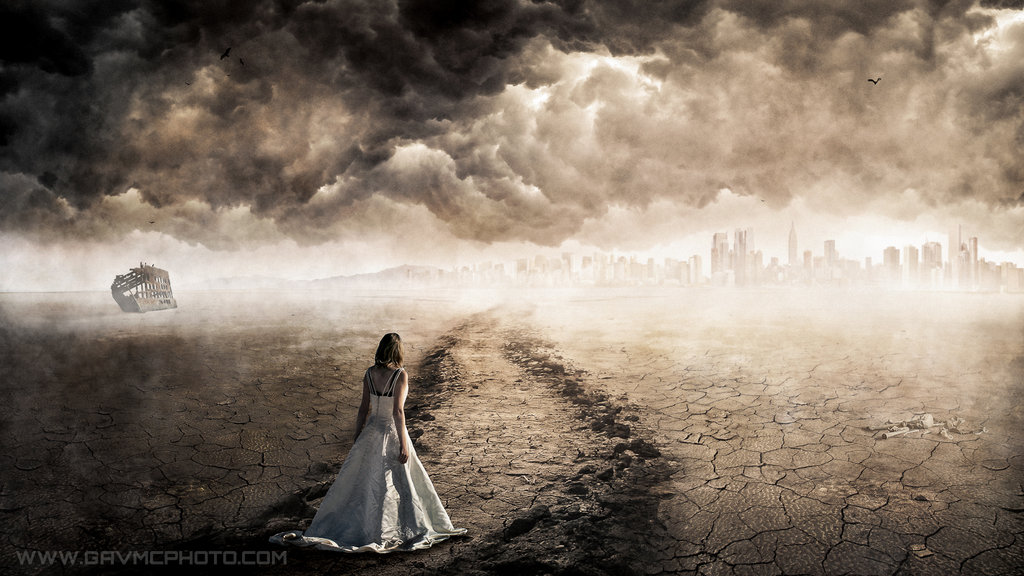
It started with a lantern on a road at night.

I was traveling alone, as I often did, my senses not on edge, but not dormant. The stars and moon were old friends now, comfortable, and not the beautiful distractions, the harbingers of romantic foolishness they’d been.

My weapons were sharp, my pace was easy, my body was sound, but I was thinking of the rest to come; they day was long, and as the horse clopped along beside me, a light came the opposite way, seeming to dance in the air, clinking as it approached.

Someone was holding up a lantern, the light pushing them into deep shadow so that only part of their face was lit.

I said nothing, and put the knife in my hand.

The light must have glinted off the blade, because they stopped.

“I’ve no money. Please don’t hurt me.”

It was the voice of a child, but that meant nothing; there were people in this world who had no problem using children as a ruse to tragic endings.

“Show yourself.”

They put down the light, and I watched their moonlit shadow as they removed the hood.

“It’s just me…”

I still kept the knife to hand because we had to pass each other.

“Move along, then, and keep to your side of the road. I’ll keep to mine, and we’ll get where we’re going.”

“But it’s you I was looking for.”

I sighed, running out of patience. “Considering we’ve met for the first time, and I don’t count youths among my friends, I doubt it, now–”

“She told me I’d find you here, on this road.”

“Who did?”

“The woman at the cottage on the hill. She said you called her ‘Amia.'”

It sent a jolt through me, because I thought I’d lost her. In fact, I had, but here she found me.

“She’s there, waiting for you. She asked me to meet you and show you the way back.”

“And what’s your name…?”

“Alazne.”

I half expected her to say she was my daughter, but nothing else seemed forthcoming, and I stood there for a moment or two longer than necessary.

“It’s getting late, sir. Will you come, or not? I am to either bring you, or tell her why.”

Nothing in me rang any warning bells; I was curious as to what happened to her, how she knew I was here, why she sent this young girl through a night forest to an empty road, and how at precisely the time of night I’d be on it.

As I recalled, she had no great powers to speak of, at least, of the supernatural kind.

Still, the best decisions throughout history were seldom made by moonlight, and perhaps a little of the old magic from those celestial bodies that have wreaked havoc on the heart were not quite done with me.

“Lead on, Alazne.”

© Alfred W. Smith Jr.
The Mark of Cane

The children were crying, wrapped in chains and manacles, covered in scars from when they’d first resisted.

They didn’t resist now. They couldn’t if they wanted to; they were hungry and tired from their long journey.

The slavers let them sleep, but didn’t feed them for a few nights, though they kept them in drugged water. In days they were gaunt, bedraggled, and dejected.

After five days, they gave them scraps, and watched them pummel, kick, and bite each other for an extra piece, laughing and betting.

After ten days, when they began nearing the city, they fattened the kids who survived the fighting up with full meals to make a decent presentation at auction, and peace reigned in the camp once more, for a time.

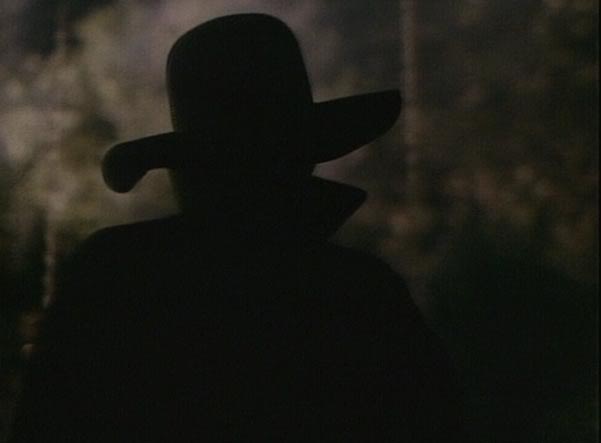
A day’s ride out from the city gates, the slavers woke to find their sentries dead, and the children gone. A dark figure in a broad brimmed hat stood among them as they approached him in a circle, their leader stepping forward, his own knife drawn, to confront the silent intruder, who had his head down inside the hood that hid his face.

“You have until a minute ago to bring those brats back, or tell me where they are.”

The figure, his eyes hidden by the brim, gave an enigmatic smile, and then he lifted his eyes, and looked at the slaver.

The slaver’s skin sloughed off his body in a red, wet heap, and his flesh and bones sagged like sludge, collapsing in red, gory mound, spreading out in a pool of meat and guts and bone.

He heard the sound of men crying out, vomiting, shouting, cursing, praying, and finally, running.

In less than a minute the camp stood abandoned.

The figure turned to go, when the curtain on the leader’s tent parted, and a dark-haired young girl of some twelve or fourteen summers emerged. She looked at the pile of flesh that had only last night claimed her maidenhead, and left her crying and bruised, then she looked at the figure.

“Who are you, mister?”

“My name,” he said, as he removed his hat and bowed to her, “is Cane. Come with me, and I’ll take you to the others.”

Having nowhere to go now, she put out the last of the campfire, and walked toward him, stopping to spit on the red, stinking rubble of her rapist, gave her hand to Cane, and the two of them left the camp without looking back.


© Alfred W. Smith Jr.

You Might Not Like It

In response to The Daily Post’s writing prompt: “Re-springing Your Step.”

I’d typed the last words to my first novel.

It was done, and I sat, in a state of amazement that after all these years of good intentions, false starts, and distractions, the effort had finally paid off, and it was finished.

It felt good; in fact, it felt great.

“Send it to us,” some of my friends said. “What’s it about?”

“It’s a fantasy novel,” I said. “You might not like it.”

“Naw, man. Go ahead and send it to my email, I’ll check it out. So proud of you, dude!”

And so I sent it out to my friends, eager to hear their response.

One week. Two weeks. A follow up email from me. “Hey guys, it’s been a cupla weeks. How ya likin it?”

Crickets.

Another two weeks, another email. More crickets.

“I’ll read it,” a young man I worked with said. “Not sure you’d like it,” I said. “It’s a fantasy novel.”

“Well, I’ll be honest, Alfred. I’m not much of a reader, but if you send it to me, I’ll read it and tell you what I think.”

Why not?

He gave me his email, and I sent it.

He kept me apprised of his progress, what he liked, what he wasn’t sure about, what was I thinking when I wrote this. It was good so far, he was enjoying it. He could see the descriptions in his mind. He was reading it in the email app on his phone during downtime and lunch. He read it on the weekends.

And then he told me something that sent me to the moon and around it several times:

“I finished it, and I’m looking forward to the second part.”

In that moment, if no one else ever read it, I considered myself a writer.

I got an admitted, self -confessed non-reader to finish my first novel, and he remains, to this day, the first of two who have the unpublished manuscript in their possession.

It was more validation to me than if all my friends had read it and offered their thoughts and opinions.

I was (emotionally) high for a week. I shared it on my fb status, I called my best friend, (a published author, whose book actually contains a line I gave him, but he didn’t pay me. Some friend, huh?) I told my sister.

They congratulated me, they understood what I meant, but they didn’t, well, couldn’t feel the elation that came with hearing those words.

A non-reader who doesn’t read fantasy enjoyed my work, told me to let him know when it was out so he could order it, and was looking forward to reading the second part. And he will order it, because he’s kept his word to me all along.

If that doesn’t put a re-spring in your step, I don’t know what would.

Temple of the Wind

Sunlight on stone,

fading,

a royal carpet of vermillion,

lighting the wind’s way

into the

empty chamber

to swirl the

thick dust.

We no longer pray here,

but the

spirits

still come.

© Alfred W. Smith Jr.

The Familiar

Are you afraid of the

dark

or what

waits

within it?

What is

the thing

with

no eyes

that

sees you

walking blindly?

oh, it hears

your pounding heart,

and it listens,

disturbed by the

noise

of your

silent scream.

The noise

must

stop.

© Alfred W. Smith Jr.

Throne of Armageddon

Empty scabbards

and

broken swords

carelessly tossed

before the

empty throne

Dead torches hang on dampened walls

lighting

Death’s way in perfect

darkness

Distant thunder,

softly rumbling, makes

gentle inquiries,

whispering names of

souls long

vanquished.

All is

ended.

All is

lost.

Behold the throne

of

Armageddon

who no longer

reigns

© Alfred W. Smith Jr.

Crystalline

The madness stirs.

I feel it in the pit of my belly, I see it by the light of my mind

its eyes are open, fully focused on its target.

Like a snake on a branch, it incrementally inches, painstakingly progresses

My mind strikes out in fear, but it is not vanquished

My soul screams, but its approach is relentless

My heart quails in terror, but its eyes are merciless

Unwavering,

it wraps me in its writhing,

cold coils

and

bites

the heart

And for the first and last time

I lose myself

to

Love

© Alfred W. Smith Jr.

Alis and The Book of Spells

It was after midnight, after the hunters have fed, and the young are asleep, and the night creatures keep watch over them until the break of dawn, when Alis got dressed, found her scarf, took her mother’s apron, and slipped out through the kitchen door.
She loved to explore the woods at night, and she took the apron because sometimes she would gather the herbs her mother would need for the healings scheduled that day. Her mother suspected, scolded her even, on the dangers of being in the woods so late, and Alis tried to listen, but the call of the forest was irresistible to her.
Young as springtime, older than forever, it pulled on her heart until she answered.
When a small light flickered in the tall grass, Alis went to investigate. At first she thought it was a firefly, and went to capture it, but only to hold it; she never captured them.
It pulsed again, way too bright for a firefly; something bigger then, but not large…?
Walking into the high grass, taller than she was, she felt the tendrils brush against her bare arms, and giggled. It was as if someone was painting her into existence, and tickling her at the same time.
The light pulsed, but it was growing weaker the closer she came.
When she stopped walking, the pulse grew stronger.

This was a dilemma; she didn’t know if what she approached was living or not, but she knew she wouldn’t leave until she figured out what the light was doing there.
“I’m sorry, little one,” she said, and walked determined toward her target.
The light seemed to go out, but when she got close enough to see, it still pulsed, barely shining, but it was still there.
It pulsed with the light of a small flame through its red garnet scales: a baby dragon.
Alis gasped in wonder, hurriedly looked about for signs of the mother; surely she would not leave her child here, in mortal danger from predators.
The little thing was on its side, little ribcage huffing out and in, and Alis realized it was dying.
“I’ll take you home.You’ll be safe there,” she said. “If your mother looks for you, she’ll find you safe and warm, and she’ll be grateful to me, and give me a ride, and let me come see you whenever I wish.”
The little dragon pulsed in response as Alis wrapped it tenderly in her scarf, and placed it in an apron pocket.
And there was another glimmer in the moonlight, something that made her look again. On the ground, where the dragon had been, was a small book, bound in black, its cover etched with gold, grand, ornate letters with serifs and flourishes, almost unreadable, but she managed to make it out.

The Book of Spells

The little dragon had been lying on top of the book.
How did she miss that?
Slowly, she looked around, knowing it was ridiculous; who would be watching a lone child in the woods at night?
She picked the book up, dusted it off, and put it in her other apron pocket.
She didn’t really know if she would make it home in time, but she was going to try.

****************
Safely back in her room, she lit some candles, and put the dragon, still swaddled, in an open drawer, and peeled back the folded scarf.
The light was still pulsing, but had definitely dimmed.

Aros, her cat, a black and slender rogue, leaped on the dresser to see what his mistress brought, and licked his lips, looking down at the little red, warm morsel before him.
Alis stared at him, and he gave her an innocent look, as if food was the furthest thing from his mind.
She gave him a smile of quiet menace.
“If you eat him, Aros, I will eat you.”
Aros huffed through his nose, jumped down from the dresser, and curled up in his bed.
Satisfied, Alis went to see what she could find to help her patient.
Puttering around the shelves, she tried to keep the glass bottles from clinking, so her mother wouldn’t wake. In awhile, she managed some combination of herbs she thought would do the trick, crushed them with a pestle, blended them with some fresh water, found a dropper, and went back to her room, hoping against hope the creature wasn’t dead.

********************
It wasn’t, and when she squeezed out what was in the dropper, it licked at the liquid.
Alis smiled in pride and pleasure; she was learning her mother’s craft,

becoming adept.
By the time she reached the end of the dropper, the dragon was able to lift its head.
While the candles burned, she leafed through the Book of Spells, and wondered how it was a small, abandoned baby dragon had come to be in the forest, perishing on top of a book of magic.

Chapter 2:

The spells themselves were magical; when she first opened the book, they were in another language she didn’t know, but as she looked at the letters, they began to writhe and turn and twist, rearranging themselves into her language.
She dropped the book in fright at first, not understanding, but curiosity got the better of her, and she picked it up again, surprised at the power contained in its pages, that it would know how to do such a thing.
Alis smiled, remembering her old beloved science teacher, who muttered

to himself as he went about the class, a ring of white hair around his bald scalp, like a laurel wreath covered in snow, speaking of Great Discoveries.
The way he said it, Alis always thought of the words starting with capital letters: A Great Discovery.
She wondered what he would think of the Book of Spells.
What you have made here, Alis, is a Great Discovery
Or would he be afraid? Was magic just a different sort of science, or something more?

********************
She remembered the marching out of the warlocks and witches to burn in the surrounding lands outside, most of them beaten bloody, some stripped, some whipped, some weeping, and some defiant to the last, but all of them afraid and unwilling to die…
The sound of fires, of screams, of cheers, of screams fading to silence, of leaving feet, and Alis staring, a small child, easily unnoticed in the bloodthirsty gathering, standing just inside the ring of sheltering trees, looking at the blackened bones that had but a while ago supported and framed living flesh.
She stayed, looking, walking about in horrified fascination, staring up at the remains, some of whom still had their eyes somehow, until the first of the crows came in the early evening, when the smoke had cleared…

*********************
She didn’t want to think about that now.
Yes, Alis, you’ve made a Great Discovery, but you had better get some sleep. You didn’t gather any herbs, and Mother may want to go in the morning.
The Book of Spells went under the bed; she decided to leave the drawer open, in case the dragon needed to stretch, and she blew out the candles.
She looked over at Aros, who was still in his basket, sleeping.
She hoped he knew she wouldn’t really eat him, but with Aros, it was better to keep him guessing; he could be such a cuss sometimes.
Pulling her covers up, she took a deep breath, settled in, and looked out at the setting moon until she drifted off to sleep.

© Alfred W. Smith Jr.

Soyala and the Traveler

I was lost in a strange forest.

Looking about, exploring, the trace of a finger on a blossom, the parting of the river current with a dipped finger, the dappled sunlight of high summer in a shady grove, I called out to answer a whispering voice.

A rustle of branches, so slight I thought it a woodland creature, and she emerged into the clearing, saw me seated on the rock, my knife at work on an apple, and without fear she approached.

Her flowing, bell-sleeved gown was the pale green of a young pine and didn’t seem to bend the grass with its trailing train.

“Why are you here?”

I looked up, bemused more than startled. “Why do you ask?”

“For the sake of knowing.”

“I was…called…here…” I gestured with my knife to take in the grove in general.

“Who called you?”
I smiled. “Was it not you?”

She did not smile. “If it were me, I would not have asked.”

“I don’t know, then.  Am I not welcome?”

She came further toward me, stood before me, examining, her eyes large and luminous. They were just shy of hypnotic, but with power, nonetheless.

“All are welcome here.” Looking deeper, her eyes sparkled with many things, magic, mischief, mystery…

“Ah, good.” I sliced the apple and offered it to her on the tip of the knife She took it with her fingers, munched awhile, looked about the grove.

“You live here?”

She seemed to give it thought before she answered.

“It is more like we live in each other.”

I began to think she might be mad, so I grew cautious.

“May I ask your name?”

She sighed.

“I have many, and they are all equally unimportant, but if you would name me, I am Soyala.”

I offered her another piece, which she also took.

“I’m pleased to meet you, Soyala.”

“And I you, Traveler.”

“How did you know I was here.”

“I heard your call. There was something in it worth seeing.”

Again, the hint of madness. “How can you see inside a call?”

She looked at me as if I were the dumbest of beasts, then smiled indulgently, and placed her slender hand on my chest.

“The heart, Traveler. The heart speaks for the soul; there is music in the call, and yours was sad. It ached with loneliness, and so I came to keep you company for awhile. ”

I looked at her in amazement, surprised to find a tear rolling down my cheek.

With profound tenderness she took the hem of her green robe, and daubed it off my cheek.

There was a stain of blue there, swirling with various shades of it, before finally deepening, and staying dark.

She looked into my eyes. “You have been alone a very long time. It is love you seek, but I cannot offer it to you, Traveler, or I would give it freely, and you could stay here forever.”

“No one lives forever.”

“But love does, Traveler.”

She pulled back, straightened, smoothed her robes, looked off into the distance, and said it again, softer. “Love does.”

She took my hand and led me from the rock.

“Come, I will walk with you to the edge of the grove, back to the road, and our time here together will end.”

“But you said I was welcome.”

She smiled. “I said all are welcome, and they are. But none may stay.”

We walked in silence, the only sound the random trill of birds, and the rustling of her robes, and the crunch of my boots.

Finally we emerged into the light of a westering sun, deepening in shades of amber and tangerine and persimmon, lighting the stitching of cirrus clouds afire from below.

“Will I see you again?” I asked.

She took my face in her hands, and searched my eyes for the depth of the question.

“When you love again, Traveler.”

She released me, took the rest of my apple, and walked away; I heard the rustling of her robes as she left me, and watched her disappear into the trees.

I started down the road and looked up.

The last of the sun was almost gone, and the darkening sky was blue and green, trimmed with a vestige of gold.

And the evening star slipped across the sky, a silver tear from the moon’s saffron cheek, and guided me home.

He Had No Favorites

He had no favorites.

He loved them all.

He would hold them in bunches and bundles

until his hands and arms were filled

Though they loved him,

they would not always go willingly

They flourished elsewhere

in other worlds

in other times

in other limbos

When they left him,

he cried for them all.

He had no favorites.

© Alfred W. Smith Jr.