The Muted Muse

She appeared to him at the oddest times, putting visions in his head, ideas, characters, grand plots and glorious villains; he was voracious, and she enjoyed being around him, flitting, flirting, whispering creative seduction in his ear.

But when the darkness came, he became sullen.

When the chill winds blew, he became just like them. Hard and fast was her rejection, sudden and without reason.

She stood close, but he ignored her.

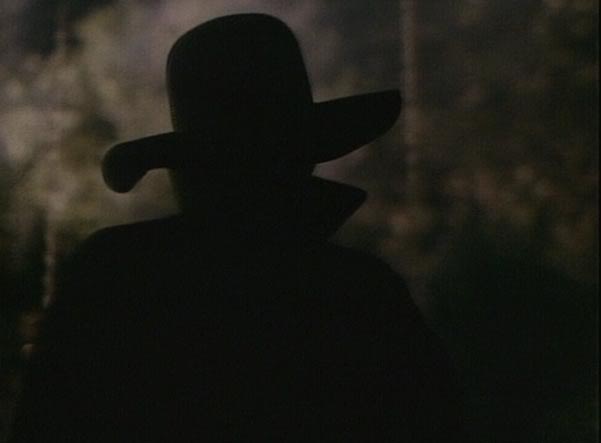
She tried to whisper to him, but his ears were tucked under the folds of his hat, and he couldn’t hear. When his hat was off, he strained to hear her still; her lips were moving, but he couldn’t read them, and all he heard was silence.

The fact that he could see her speaking, the look in her eyes of desperation, of sadness for the time lost that he could not reclaim, tortured him, and drove him further out.

“I’ve nothing to say, and nowhere to say it. I haven’t read anything, or anyone, and I can’t write.”

He cried for his loss, and she put her hand on the glass of his laptop monitor, looking at him from the inside, and lowered her eyes. He saw the tear splatter on the keys, and mingled his own with it.

There was nothing left to say; he’d silenced her, and she was out of time.

“I loved you once.” he said.

“I love you still,” she answered.

“Will I see you again?”

“Maybe one day, when you open your heart to me. I hope it’s soon. My sisters and I have other places to be. They say I’ve already delayed them. You’ve never taken this long to catch fire.”

“I don’t know why it’s happening now.”

“We’ll have to talk about it later. You’ll have to write without me. It will be harder for you.”

He nodded, not trusting his voice.

When he looked up, the blank screen stared at him, unsmiling, with its empty gaze.

It mocked him. “So, writer, where have you been?”

“I don’t need to explain myself.”

“Oh, but see, you do. You are a writer who doesn’t write; it’s why you remain unpublished, and unread, and unknown, even a little.”

“Shut up,” he said. “I’m trying to think of an idea.”

“Then the battle is already lost, ‘writer’. You should sit down with an idea already, or don’t sit down.”

“I  said ‘shut up.’ ”

“That’s the height of rudeness; you can ask me nicer than that.”

“Please. Be. Quiet.”

“That’s much better…now about your Muse…”

“What about her?”

“Do you think she’ll return?”

“Don’t see why she would.”

“Me neither. Write something.”

“I can’t, and you’re not helping.”

“I’m not a muse.”

He could sense it smiling, even though it was blank.

He stared at the page, and nothing came. No images, no great lines, no what-ifs….

“Good night, Toshiba..”

“Good night. Perhaps tomorrow….?”

“We’ll see.”

He closed the lid, and went to bed.

The muse, lovely, loving and loyal, had left.

The word processing screen was as devoid of compassion as it was of words.

He would try again tomorrow, if tomorrow ever came.
Wishing Well

It was a bright spring day, and the last day of the fair was winding down.

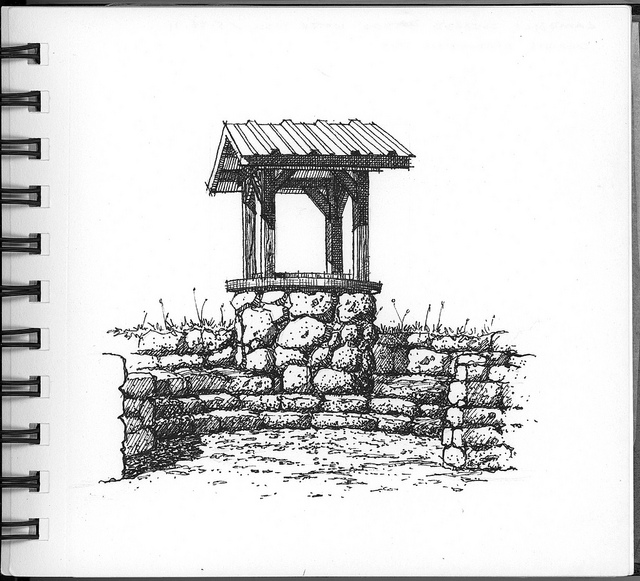
On the path through the exit was a well, dug not too deep, with little water. No one knew if it had always been there, or was built to supply the fair. No one claimed it, as far as anyone knew, but every now and then, just for giggles, a passerby would stand there and look down, close their eyes, and toss in a pocket coin or two, or some worthless trinket, their lips moving soundlessly as they made a supposed wish.

He was just a kid, and still believed in wishes, and the unseen agents that made them come true; fairies, monsters, aliens, and grandparents.

Holding his mother’s hand, he dug into his pocket with his free hand, and threw in a coin, a silver one. He couldn’t remember which one it was, but it flashed in the light of the setting sun as it spun, hit the stones on the far side, and pinged its way down into the brackish water.

He closed his eyes, and made his wish.

His mom looked down at him and smiled.

“What’d you wish for?”

“It’s a secret,” he said, smiling back up at her.

**************************

There was a soft knock on the door to his room, late at night.

Moonlight spilled through his window, lighting the face of his bedtime bear.

“Mom?” he whispered.

No answer.

He got up, rubbed his eyes, and walked barefoot to the door.

Taking a deep breath to stop the little feathers of fear from tickling his spine, he peered out.

She was there, in all her bloody glory, her good eye staring at him from under a crimson crust of dried blood.

“Susie?”

“Ben.”

“I didn’t think you’d come. Not really.”

“Then why’d you make the wish?”

“I wanted to see you; I just thought….I didn’t think you’d come.”

“I have no choice once you make the wish, Ben. Didn’t you know that?”

“No.”

“I wish you hadn’t woke me up, but my wishes don’t count, and I can’t buy one; dead people have no money.”

“I’m sorry, Susie. Should I wish you back?”

“It’s okay. Can I come in? Maybe we can read some comics or something….”

“I was drawing,” Ben said, stepping aside, “but you know where the comics are.”

**************************

They stayed in silence for awhile, but Susie noticed Ben kept glancing at her.

“My face scares you?”

“A little.”

“Sorry. The well doesn’t clean us up, even though it’s got water in it.”

“Oh.”

They lapsed into silence some more before Ben broke it.

“Susie?”

“Yes?”

“I’m sorry about everything. About how everything happened.”

“Me too, Ben. You left me.”

“I know. I shouldn’t have. I got scared, and you were older, and…”

“Still coulda used your help. You were supposed to be my friend.”

“I never stopped being your friend, Susie.”

Susie stood up. “Really?”

“Really.” Ben felt a small pang of nervousness that she’d gotten up.

“Would you do me a favor then?”

“Don’t see how I can. You’re a –”

Susie splashed into his body, squirmed her way past his struggling defenses, and lodged herself inside him.

Ben was frozen with pain, his mouth was stretched, his eyes bulged, his heart raced, and his face was as hot as if he’d put it in a vat full of grease.

“Don’t fight me, Ben.”

He quieted, crying, feeling betrayed and violated, which he was.

“Why’d you do that?”

“You said we were still friends. Now you can prove it.”

“Get out, Susie.”

“No. We’ll never be separated again, Ben.”

Ben regained his composure, sniffling, blowing his nose, feeling Susie flinch inside him at the sensation.

Ben went to the mirror, watched the faint glow in his eyes as her life force pulsed within him, and he smiled.

“That’s where you’re wrong.”

“What do you mean?”

“The day after that happened to you, he came and got me. I was supposed to sleep in her room, but she cried herself to sleep, so I came in here.

Ben held up the picture he’d been drawing.

“My mother threw a coin in the well yesterday at the fair.”

© Alfred W. Smith Jr.

Night Roads

It started with a lantern on a road at night.

I was traveling alone, as I often did, my senses not on edge, but not dormant. The stars and moon were old friends now, comfortable, and not the beautiful distractions, the harbingers of romantic foolishness they’d been.

My weapons were sharp, my pace was easy, my body was sound, but I was thinking of the rest to come; they day was long, and as the horse clopped along beside me, a light came the opposite way, seeming to dance in the air, clinking as it approached.

Someone was holding up a lantern, the light pushing them into deep shadow so that only part of their face was lit.

I said nothing, and put the knife in my hand.

The light must have glinted off the blade, because they stopped.

“I’ve no money. Please don’t hurt me.”

It was the voice of a child, but that meant nothing; there were people in this world who had no problem using children as a ruse to tragic endings.

“Show yourself.”

They put down the light, and I watched their moonlit shadow as they removed the hood.

“It’s just me…”

I still kept the knife to hand because we had to pass each other.

“Move along, then, and keep to your side of the road. I’ll keep to mine, and we’ll get where we’re going.”

“But it’s you I was looking for.”

I sighed, running out of patience. “Considering we’ve met for the first time, and I don’t count youths among my friends, I doubt it, now–”

“She told me I’d find you here, on this road.”

“Who did?”

“The woman at the cottage on the hill. She said you called her ‘Amia.'”

It sent a jolt through me, because I thought I’d lost her. In fact, I had, but here she found me.

“She’s there, waiting for you. She asked me to meet you and show you the way back.”

“And what’s your name…?”

“Alazne.”

I half expected her to say she was my daughter, but nothing else seemed forthcoming, and I stood there for a moment or two longer than necessary.

“It’s getting late, sir. Will you come, or not? I am to either bring you, or tell her why.”

Nothing in me rang any warning bells; I was curious as to what happened to her, how she knew I was here, why she sent this young girl through a night forest to an empty road, and how at precisely the time of night I’d be on it.

As I recalled, she had no great powers to speak of, at least, of the supernatural kind.

Still, the best decisions throughout history were seldom made by moonlight, and perhaps a little of the old magic from those celestial bodies that have wreaked havoc on the heart were not quite done with me.

“Lead on, Alazne.”

© Alfred W. Smith Jr.

RAIN

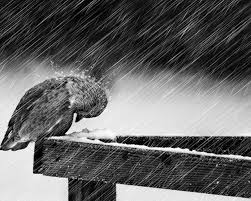
As I listen the rain

Each new drop’s a fresh new pain

Memories blossom in my brain

As I listen to the rain


To new places you have gone

Laughing as you travel on

Never caring, dusk til dawn

It’s my heart you’ve walked upon


As I sit and watch the sky

Cry the tears I cannot cry

Clouds all hide the reasons why

As I sit and watch the sky


Others hold you in their arms

Never hearing the alarms

Muffled by your many charms

Unaware your poison harms


Solitude’s new denizen

Seems the sun won’t shine again

I was very happy then

Guess I’ll just remember when….


© Alfred W. Smith Jr.


The Mark of Cane

The children were crying, wrapped in chains and manacles, covered in scars from when they’d first resisted.

They didn’t resist now. They couldn’t if they wanted to; they were hungry and tired from their long journey.

The slavers let them sleep, but didn’t feed them for a few nights, though they kept them in drugged water. In days they were gaunt, bedraggled, and dejected.

After five days, they gave them scraps, and watched them pummel, kick, and bite each other for an extra piece, laughing and betting.

After ten days, when they began nearing the city, they fattened the kids who survived the fighting up with full meals to make a decent presentation at auction, and peace reigned in the camp once more, for a time.

A day’s ride out from the city gates, the slavers woke to find their sentries dead, and the children gone. A dark figure in a broad brimmed hat stood among them as they approached him in a circle, their leader stepping forward, his own knife drawn, to confront the silent intruder, who had his head down inside the hood that hid his face.

“You have until a minute ago to bring those brats back, or tell me where they are.”

The figure, his eyes hidden by the brim, gave an enigmatic smile, and then he lifted his eyes, and looked at the slaver.

The slaver’s skin sloughed off his body in a red, wet heap, and his flesh and bones sagged like sludge, collapsing in red, gory mound, spreading out in a pool of meat and guts and bone.

He heard the sound of men crying out, vomiting, shouting, cursing, praying, and finally, running.

In less than a minute the camp stood abandoned.

The figure turned to go, when the curtain on the leader’s tent parted, and a dark-haired young girl of some twelve or fourteen summers emerged. She looked at the pile of flesh that had only last night claimed her maidenhead, and left her crying and bruised, then she looked at the figure.

“Who are you, mister?”

“My name,” he said, as he removed his hat and bowed to her, “is Cane. Come with me, and I’ll take you to the others.”

Having nowhere to go now, she put out the last of the campfire, and walked toward him, stopping to spit on the red, stinking rubble of her rapist, gave her hand to Cane, and the two of them left the camp without looking back.


© Alfred W. Smith Jr.

On Black History Month

“They did not take slaves from Africa; they took people from Africa, and made them slaves.”

For years, they brought them out like Christmas decorations, only it was February: Frederick Douglass, Benjamin Banneker, Fannie Lou Hamer, and the ever-ubiquitous Dr. Martin Luther King, Jr., Langston Hughes and Lorraine Hansberry, Mahalia Jackson and Louis Armstrong.

No one but my father ever spoke of those with more militant stances, more edgy, prickly points of view: Eldridge Cleaver (Iceberg Slim) Huey P. Newton and Bobby Seale (founders of the Black Panthers) Malcolm X before his renouncing of the Nation of Islam under Elijah Muhammad, and Imiri Baraka (LeRoi Jones).

I did not know of the brilliant, biting edge of James Baldwin, the struggles of Josephine Baker, the strength and vulnerability of the tragic, plaintive-voiced Billie Holiday, the towering courage of Paul Robeson and the fiery Vernon Jordan.

These figures made people ‘afraid’ and ‘uncomfortable.’

We learned that 6 million Jews died and saw films on the horrors of the Holocaust, but as black children we were not taught about the 9 million Africans who died on the journey across the Atlantic Ocean on a sailing lane called the Middle Passage, where slaves still chained together were tossed overboard, either deliberately to lighten cargo, or jumped willingly in order to die free, or just because they didn’t survive, but neither did we learn about Nat Turner (except that he led a rebellion and died, as if that was all there was to know) or the legal victory of the black men of the HMS Amistad.

And over the years, we learned the stories of our annual decorations. We saw films on the Civil Rights movement taking place in the south, having no idea those attitudes existed in the north, and given no awareness through our history textbooks that it was a global truth, if not universal:

Dark skin is evil.

It didn’t matter what form of evil, because all sorts of stories were concocted based generally around these two principals: Black was unclean, White was pure. Black was inferior, White was superior.

Yet, I was taught in science class that in the spectrum, black is the absence of color, and white contained them all. Why were we being persecuted for something we were not?

When I sang, My Country ‘Tis of Thee, until fourth grade I did not know my fathers died differently, I believed that Pilgrims and Indians lived in harmony. When I sang America the Beautiful, I did not know that its Natives had been stripped of their dignity, slaughtered like sheep, ravaged like Sabine virgins, and tossed aside as rubble.

I didn’t even know that as low as they were, they still owned Black men and women.

I was taught that the Quakers helped slaves escape to Canada to freedom. I have learned, only recently, that it was not so. There were slaves in Canada, too, and some who were free, were sold back.

Long buried in the archives of old libraries lay the story of my people, the mixing of my own ancestry, not just here in America, but across the world, doomed to die dusty deaths in the recessed shadows of long abandoned archives, unless one truly took the time to unearth them.

And then the Internet came, and grew, and evolved, and the archives were dredged and lovingly sorted, restored, and made available. And I learned that far more Black people achieved great things in the face of impossible odds and incredible oppression: denied admission, having no transportation, being ripped off, gutting of project financing, threats of death, and they kept going and became pilots and doctors, nurses and teachers, judges and lawmen, cowboys and business owners, so many, many names bubbling out of the soil after so much blood soaked in…

Their vision was clear and focused, their drive to succeed unstoppable, unshakable, and unswerving.

And all, all, having one common thread: ancestors brought here not to live, but to work, as commodities, not people, as beasts, and not men.

And they survived.

And I do indeed live here now, a free man in America, because of their sacrifice and vision, not limited to twenty-eight days in a government building. The storehouse is mine to visit, whenever I choose:

blackpast.org

blackhistorypages

blackhistory.com

These are just a few of the storerooms available online these days, rich with information. If you would gain some perspective, I invite you to celebrate with us, and not just for the month.

There are no ‘colored only’ signs on these doors….

I Am the Headsman

I am the headsman.

I collect

the blank stares of the

stupid,

the ineptitude of the

clueless,

the relentless levity of the

perpetual clown.

I am the headsman.

I collect

the pride of the

arrogant,

the boasts of the

insecure,

the innocence of the

naive.

I am the headsman,

I collect

the schemes of

my enemies,

the dreams of

my friends,

the fantasies of

my lovers.

And when I can

no longer

lift the gift of death

I bear,

I will set the bloody basket afire,

and climb on top

to burn

away,

the final dissolution

of

disillusions…

© Alfred W. Smith Jr.

They Have to be Invited In

smithaw50's avatarBeyond Panic

They have to be invited in

After they ring the bell

I did, but didn’t know she’d make

my life a living hell

And ever when they lie with you

They lie to you as well

I thought the difference would be plain

But no, I couldn’t tell.

She left a desiccated heart

Inside a broken shell

© Alfred W. Smith Jr.

2014

They Have to be Invited In

All rights reserved

View original post

Ariana by the Sea

smithaw50's avatarBeyond Panic

Ariana felt the hot sand sliding between her toes, heard the distant crash of the water smashing on promontory rocks. Not for her the water’s edge. The vastness of the ocean was a strange and fearful thing, and creatures lurked beneath it; she’d heard the sailors’ tales when she worked the tavern houses and inns, and did not wish to find herself bewitched beneath the waves.

And yet, her eyes kept straying there. So beautiful and savage was the sea. Swirling and surging now with a contained rage, blue and green and gray by turns, and powerful, flecked with the gold of a high morning sun, the wind like a child’s fingers on her cheeks and in her hair.

The wind hugged her like a lover; her dress clung to her, and a brief and rueful smile touched her lips, for she felt the curves of her body beneath, her childhood faded…

View original post 427 more words

Victory Flags (Daily Post repost)

In response to The Daily Post’s writing prompt: “Enough Is Enough.”

You should know:

Victory Flags are not always grand, unfurling banners embroidered with gold sigils of lions rampant, soaring eagles, flame-spewing dragons, diving falcons, and weapons of war, planted at the heads of armies, looking down into valleys of defeated foes.

Sometimes…

they’re just the right words of comfort in a time of despair,
or dirty, blood-soaked rags stanching bleeding wounds,
or taking a deep, ragged breath before making the next shaky effort…

sometimes it’s looking up the mountain at the descending hordes gathered against you

and getting back up to stand, and exhale a whispered, defiant declaration
into the howling winds and roiling clouds of your most ferocious storm,

“I’m still here.”

© Alfred W. Smith Jr.